
Shanghai Flower Port is located at No. 2 Zhendong Road, Donghai Farm, Shuyuan Town, Pudong New Area, Shanghai. Situated between Pudong International Airport and Yangshan Deep-Water Port and adjacent to Dishui Lake, it is a national 4A-level tourist attraction. The planned area of the scenic spot is 10 square kilometers, with a core area of 1 square kilometer. Among them, the modern greenhouse complex covers 36 hectares, the New Flower Exhibition Garden (Tulip Park) 28 hectares, the science popularization and leisure area 15 hectares, the education, R&D and promotion area 7 hectares, and the supporting service area 3 hectares. It is a modern agricultural demonstration zone integrating flower planting, new product exhibition, science education, leisure tourism, research and development, and production. It is also the largest tulip-themed tourist attraction in China with the most varieties and the strongest Dutch exotic style. The park houses a 3,200-square-meter flower new product technology R&D center, an 800-square-meter flower science museum, a 4,000-square-meter flower science popularization ecological park, and two 600-square-meter temporary exhibition halls for new flower varieties. Every spring, the scenic area plants 3.2 million tulips of more than 300 varieties, forming a spectacular 200,000-square-meter sea of flowers, known as the "Keukenhof of the East".
History and Culture
Shanghai Flower Port Enterprise Development Co., Ltd. was founded on September 28, 2002. It was jointly funded by three parties: the Sino-Dutch Ministry of Agriculture Shanghai Horticultural Training and Demonstration Center, Shanghai Nonggongshang (Group) Corporation, and Shanghai Nonggongshang Group Donghai Corporation. With a registered capital of 50 million RMB, it is a leading enterprise in agricultural industrialization in Shanghai. Based on Sino-Dutch agricultural cooperation, the scenic area is deeply integrated with Dutch flower planting and windmill culture. Construction started in 2002, and it officially opened to the public in 2005, becoming a Shanghai science popularization education base.
The scenic area has achieved many industry firsts in its development: its shareholder, the Sino-Dutch Ministry of Agriculture Shanghai Horticultural Training and Demonstration Center, is the first international horticultural training institution in China, having trained more than 12,000 flower professionals for 31 provinces, municipalities, autonomous regions and Southeast Asia. During the 2010 Shanghai World Expo, Shanghai Flower Port overcame technical difficulties to achieve an extra-long blooming period from March to October for lotus flowers in the China Pavilion, praised by the China Flower Association as a new chapter in the history of Chinese lotus cultivation. The scenic area has successively won titles such as national key leading enterprise in agricultural industrialization, national agricultural tourism demonstration site, and Shanghai civilized unit. It receives more than 200,000 tourists annually, becoming an important window for displaying modern agriculture and flower culture in Shanghai.
Main Attractions
Tulip Flower Fields
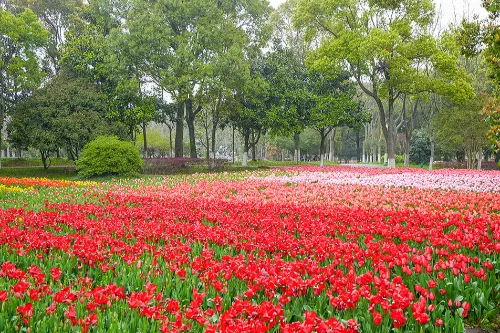
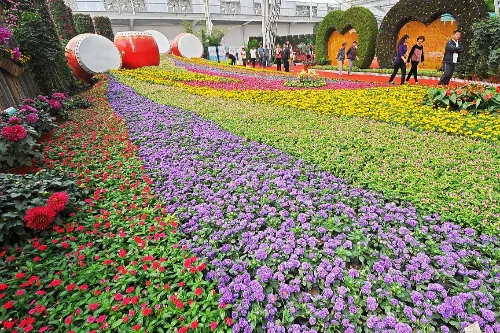
The Tulip Flower Fields, the core attraction of the scenic area, cover 28 hectares. From March to May each year, 3.2 million tulips of over 300 varieties are planted here. The fields are arranged in carpet-like color blocks, matched with bulb flowers such as hyacinths, daffodils and anemones, forming a rainbow sea of flowers interwoven with red, yellow, pink, purple and white. Winding footpaths are set in the fields, allowing visitors to view rare varieties such as "Queen of the Night" and "Pure Gold" up close. The Dutch Street area by East Lake, with three Dutch windmills as the backdrop, is the best spot for viewing and photography.
Dutch Street and Windmill Complex
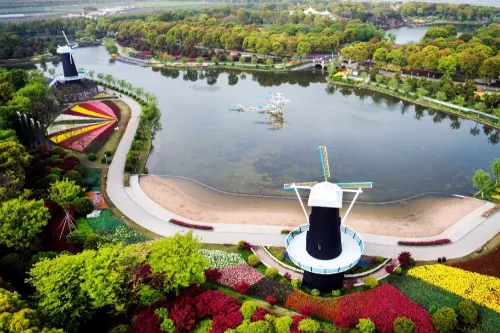
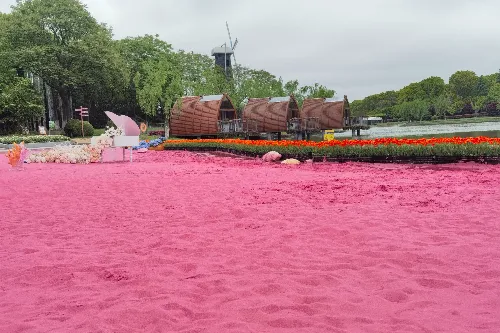
Dutch Street is located by East Lake, with three iconic Dutch windmills as the core symbol of the scenic area’s exotic charm. The middle windmill is the largest, equipped with an observation deck and café; the south windmill has a convenience store, and the north windmill is adjacent to the Pink Sand Beach. The street integrates Dutch elements such as wooden shoes, canal waterscapes and European-style farm decorations, fully presenting Dutch pastoral scenery. The reflections of windmills and flower fields create a picturesque scene, a must-visit classic spot for tourists.
Monet Garden
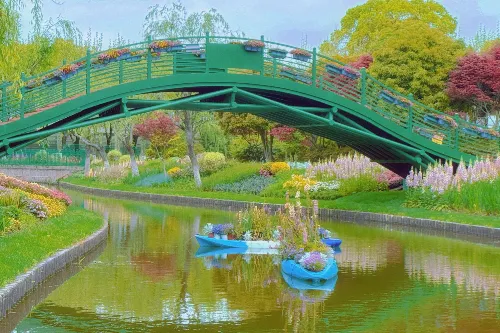
Monet Garden is modeled after the former residence garden of the French Impressionist painter Claude Monet. The garden features a moss-green wooden arch bridge, clear streams, and aquatic flowers such as irises, calamus and water lilies. Colorful orchids hang beside the bridge, with weeping willows brushing the water surface. Flowers and waterscapes form a dreamy scene in light and shadow, perfectly recreating classic paintings such as Water Lilies and The Japanese Bridge. It is a distinctive attraction combining artistic sense and natural landscape.
Shengcai Square
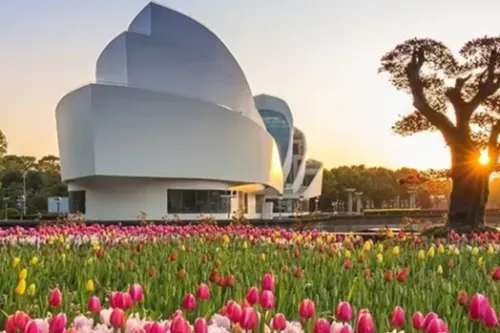
Shengcai Square is at the entrance of the scenic area and serves as the main venue for the tulip exhibition. The square has a rockery and waterfall landscape, with flowing water intertwined with tulips, roses and other flowers, forming a layered garden view. A large flower-themed sculpture stands in the center, surrounded by a flower avenue. It is the first gathering and viewing spot for tourists after entering the park.
Pink Sand Beach
The Pink Sand Beach lies beneath the north windmill, creating a fairy-tale atmosphere with dreamy pink sand. Matching floral wooden boats and flower installations form a sharp visual contrast with the colorful tulips nearby, making it an ideal place for parent-child interaction and fresh-style photography.
Tropical Plant Garden
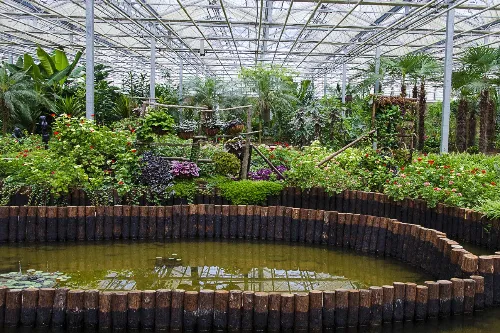
The Tropical Plant Garden is a unique indoor attraction, built as a rainforest secret land based on seven plant ecological communities. It displays tropical orchids, bromeliads, ferns and other plants, with check-in areas such as Rainforest Habitat and Butterfly Dream Space, showing the diverse forms and growing environments of tropical plants, combining ornamental and science popularization functions.
Flower Science Museum
The Flower Science Museum covers a building area of 800 square meters. It displays flower knowledge, planting techniques and industrial development history through pictures, specimens and interactive equipment. The museum houses an orchid science exhibition area with hundreds of orchids including Phalaenopsis, Dendrobium and Cattleya, including rare hybrid varieties and award-winning selections.
Tour Routes
Classic Leisure Flower Viewing Route: Enter through the main gate and first arrive at Shengcai Square to enjoy the waterfall and entrance flower landscape; then walk along Tulip Avenue into the core Tulip Flower Fields, stroll through the 28-hectare sea of flowers and view various bulb flowers; next head to Monet Garden to experience the Impressionist waterscape; pass Windbell Avenue and Bromeliad Fields to reach Love Island and the floating bridge area to enjoy the blending of lake and flower views; then walk along the lakeside path to Dutch Street to view the three windmills and Dutch-style landscape; finally visit the eastern science popularization area and tulip picking area, and return to the main gate near Guangming Flower Life · TOPFLOWER Horticulture Center. The total distance is about 3.5 kilometers, taking 3 to 4 hours. Flower Science Popularization Route: Start from the flower R&D center at the main gate, visit the Flower Science Museum to learn about flowers, then enter the Tulip Flower Fields for viewing, followed by Monet Garden, Windbell Avenue and Bromeliad Fields, go to Starry Camping Site and Love Island, and finally experience the picking garden, Tropical Plant Garden and Pink Sand Beach, suitable for science study tours and in-depth visits.
Visiting Tips
- Best time to visit: Late March to late April each year during the full tulip bloom. It is recommended to enter before 9:00 or after 16:00 on weekdays to avoid crowds and strong midday sunlight.
- Clothing advice: The scenic area involves long walks, so wear comfortable sports shoes; ultraviolet rays are strong during spring flowering, so sun hats and sunglasses are recommended.
- Photography advice: Choose light-colored clothes such as white and beige. Shoot from the opposite side of the windmills, low angles in the flower fields, and during backlight hours for better photos.
- Duration advice: Ordinary visits take 3 to 4 hours; photography or study enthusiasts are advised to set aside a full day.
- Supply advice: There are restaurants and vending machines in the park; you may also bring a small amount of snacks and drinking water.
- Experience advice: Paid activities such as flower picking and DIY flower arrangement are available during spring flowering and require advance reservation.
Notes
- It is strictly forbidden to trample on flowers, break branches or pick flowers in the scenic area; violators will be punished in accordance with regulations.
- Pets are not allowed in the park. Aerial photography by drone is prohibited; application to the scenic area is required in advance if needed.
- Smoking and open flames are prohibited in indoor areas such as greenhouses and science museums; please abide by fire safety regulations.
- Pay attention to safety on lake banks and floating bridges. Climbing and playing in water are forbidden. Children must be accompanied by adults.
- Some areas of the scenic area are closed in winter (October to March of the following year). Opening hours are subject to the scenic area’s announcement.
- Flowering periods and landscapes change with seasons. It is recommended to check the latest flower information before traveling.
- Green travel or off-peak self-driving is recommended.
Transportation
- Metro and bus: Take Metro Line 16 to Lingang Avenue Station, exit from Gate 1 and transfer to Bus No. 1078 to reach the main gate directly.
- Self-driving route: From the urban area, take S2 Hulu Expressway to Liangang Avenue, drive along Zhendong Road to the scenic area. Navigate to "Shanghai Flower Port".
- Parking information: The scenic area has a large parking lot.
- Taxi: Take a taxi from Lingang Avenue Station to the scenic area, about 10 minutes’ ride.
Opening Hours
From mid-March to October every year, 8:30–17:00 daily, with last entry at 16:30. During the spring tulip exhibition (mid-March to late April), hours are 8:00–18:00. The core area is closed to the public in winter (October to mid-March). Specific opening and closing dates are subject to the annual announcement of the scenic area.
Admission
Tickets start from 39 RMB per person.
Online Booking
Click here to jump to the Trip.com ticketing platform for ticket purchase.