
China Maritime Museum is located at No. 197 Shenggang Avenue, Lingang New City, Pudong New Area, Shanghai. It is the first national-level maritime museum approved by the State Council in China and a national AAAA tourist attraction. Jointly built by the Ministry of Transport and the Shanghai Municipal Government, the museum aims to fully display China's maritime history, culture, and technological achievements, and promote the maritime spirit. The museum features a white spiral-shaped structure, integrating the images of sailing boats and seashells. It has a total construction area of 46,434 square meters, including an exhibition area of approximately 21,000 square meters, and a total land area of about 24,830 square meters. The museum houses a large collection of precious maritime cultural relics, ship models, and navigation instruments, covering a full range of content from ancient maritime civilization to modern maritime technology. It is a comprehensive maritime-themed museum integrating cultural relics collection, academic research, social education, and cultural exchange.
History and Culture
The preparation for China Maritime Museum began in 2005, construction officially started in January 2006, and it was fully completed and opened to the public on July 5, 2010, filling the gap of a national-level maritime museum in China. The core purpose of its establishment is to systematically sort out and display China's thousands of years of maritime development history, and inherit and promote the maritime culture of the Chinese nation.
China boasts a long-standing maritime culture. From the canoes of the Neolithic Age, the embryonic form of ocean-going navigation in the Qin and Han dynasties, the flourishing of the Maritime Silk Road in the Tang and Song dynasties, to the great maritime feat of Zheng He's seven voyages to the Western Seas in the Ming Dynasty, all form the core historical context displayed by China Maritime Museum. Through cultural relics, documents, and scene restoration, the museum fully presents the evolution of China's maritime technology from tradition to modern times. In particular, inventions such as the compass, watertight compartments, and stern rudder in ancient China have not only advanced China's maritime development but also exerted a profound influence on world maritime civilization.
The cultural value of the museum is also reflected in its documentation of modern and contemporary maritime development, including the rise of China's modern shipping industry, modern port construction, ocean transportation, and naval development, comprehensively showcasing China's journey from an ancient maritime country to a maritime power.
Main Attractions
Maritime History Hall
The Maritime History Hall is one of the core exhibition halls of China Maritime Museum, covering an area of about 5,000 square meters and divided into three sections: ancient, modern, and contemporary. The hall displays various maritime cultural relics from the Neolithic Age to the Ming and Qing dynasties, including a full-size replica of a Ming Dynasty Fu ship (31.3 meters long and 8.8 meters wide), remnants of Song Dynasty sea vessels, ancient navigation instruments such as compasses and star-finding boards, as well as replicas and documents related to Zheng He's voyages. It systematically presents the development and key milestones of China's maritime history.
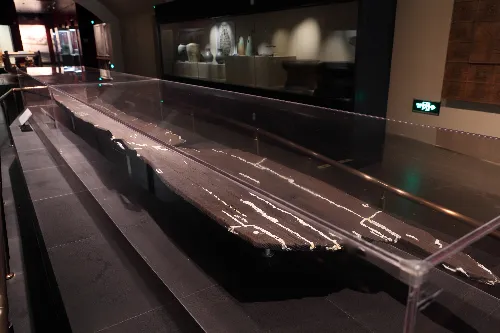
Ship Hall
The Ship Hall covers an area of about 2,000 square meters, focusing on ship structure, construction, and equipment. It displays dozens of ship models from different historical periods and types, ranging from ancient sand ships and Guangzhou-style ships to modern container ships and aircraft carrier models, as well as a 1:10 scale replica of the Yuanwang survey ship. In addition, the hall exhibits core shipbuilding techniques such as demonstrations of watertight compartment structures and the evolution of ship power systems, allowing visitors to intuitively understand ship structure and development.
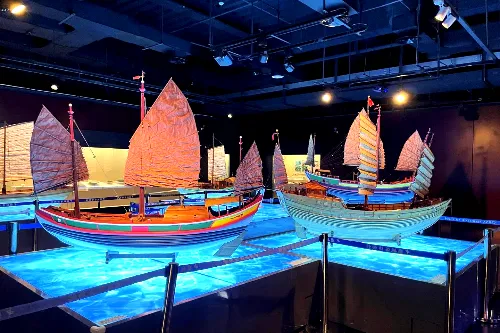
Navigation and Port Hall
The Navigation and Port Hall covers an area of about 1,500 square meters, focusing on modern navigation and port operation systems. Through dynamic sand tables and scene simulations, the hall displays the layout of major Chinese ports, container loading and unloading processes, ocean shipping routes, and large equipment models such as port cranes and ship navigation systems, restoring modern port operation scenarios and showing the modern development level of China's port and shipping industry.
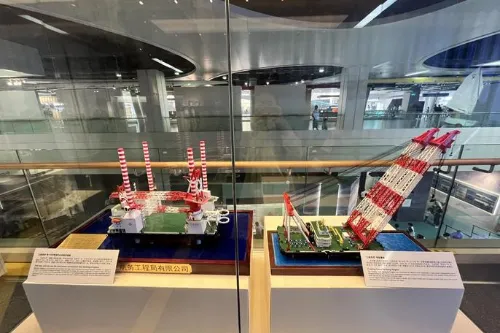
Maritime and Maritime Safety Hall
The Maritime and Maritime Safety Hall covers an area of about 1,000 square meters, mainly displaying maritime administration, maritime rescue, and ship safety. It features a ship fire-fighting simulation experience area, a maritime lifesaving equipment display area, as well as models of maritime law enforcement ships and maritime search and rescue helicopters. Visitors can learn about maritime safety knowledge and the importance of maritime law enforcement through interactive experiences.
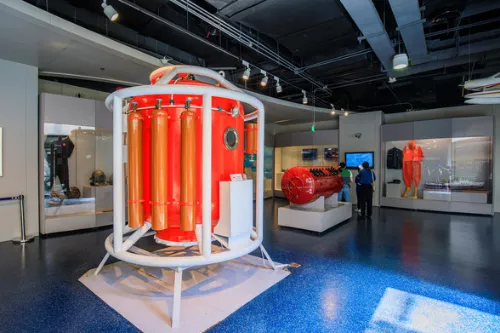
Astronomical Navigation Hall
The Astronomical Navigation Hall is themed "Navigating by Observing the Sky" and covers an area of about 800 square meters. It restores scenes of ancient astronomical navigation, displaying traditional navigation methods such as star-finding techniques and astronomical positioning. It also exhibits modern satellite navigation systems and GPS terminals, comparing the evolution of astronomical navigation technology from tradition to modern times. There is also an astronomical demonstration area that simulates starry sky changes in different sea areas, helping visitors understand the close connection between astronomy and navigation.
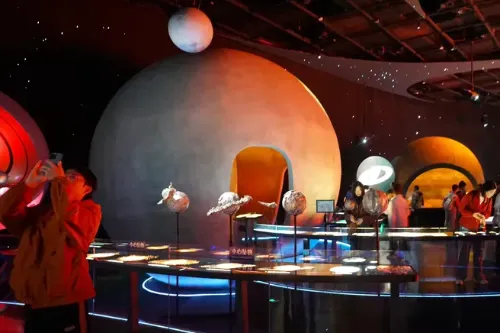
Temporary Exhibition Hall
The Temporary Exhibition Hall covers an area of about 3,000 square meters and is used for various temporary maritime-themed exhibitions, including international and domestic maritime cultural relic exchange exhibitions and maritime technology achievement exhibitions. The exhibition content is updated regularly, providing visitors with diverse maritime cultural experiences.
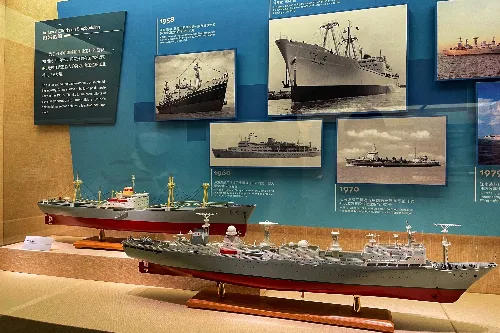
Outdoor Exhibition Area
The Outdoor Exhibition Area covers an area of about 6,000 square meters, displaying several real ships including a 16.5-meter-long antique sailing boat, a retired naval gunboat, and lifeboats, as well as large maritime facilities such as lighthouses and anchor chains. Visitors can closely observe and experience various real ships and maritime equipment.
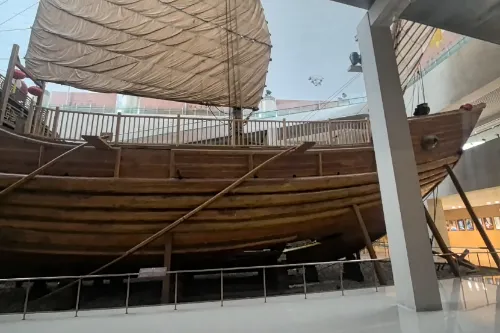
Visiting Route
The recommended visiting route of China Maritime Museum follows the logic of "history-technology-application-experience" and takes about 2.5 to 3 hours. Start from the Maritime History Hall on the first floor and spend about 40 minutes learning about China's maritime development from ancient to modern times, focusing on the Zheng He's Voyages section and the full-size Fu ship replica. Then proceed to the Ship Hall for about 30 minutes to understand ship structures and models. Next, visit the Navigation and Port Hall for about 25 minutes to watch port operation simulations and modern shipping displays. After that, go to the Maritime and Maritime Safety Hall on the second floor for about 20 minutes to experience interactive programs such as fire-fighting simulations. Then visit the Astronomical Navigation Hall for about 15 minutes to learn about astronomical navigation. Finally, tour the Temporary Exhibition Hall (about 20 minutes, depending on the current exhibition) and the Outdoor Exhibition Area (about 30 minutes) to complete the visit. If time permits, you can participate in interactive experiences such as ship driving simulation and maritime knowledge quizzes to enrich your visit.
Visiting Tips
- Best visiting time: It is recommended to enter the museum between 9:30 and 10:00 on weekdays when there are fewer visitors. Spring and autumn (March to May, September to November) have pleasant weather and a comfortable environment around Lingang New City.
- Duration: It is recommended to set aside 3–4 hours. For families with children, you may extend it to 4–5 hours to fully enjoy the interactive experiences.
- Guided services: Free scheduled tours are available at 10:00 a.m. and 14:00 p.m. You can also rent an electronic audio guide to better understand the history and culture behind the exhibits.
- Family-friendly: The museum has a children's maritime experience area suitable for kids aged 5–12. You may prepare maritime-related picture books in advance for basic knowledge.
- Extended experience: After the visit, you can go to Dishui Lake Scenic Area in Lingang New City (about 3 kilometers away) to enjoy natural scenery and enrich your trip.
Notes
- Food and drinks are not allowed inside the museum. Designated drinking and resting areas are available.
- Flash photography and touching of exhibits are prohibited in the exhibition halls. Photography is allowed in designated areas of the Outdoor Exhibition Area, but climbing is forbidden.
- Interactive programs have height or age restrictions (e.g., ship driving simulation requires children over 1.2 meters). Please follow the instructions of staff.
- The museum is closed on Mondays (except legal holidays). Please confirm opening hours before your visit.
- The indoor temperature is kept at around 22°C. Please wear comfortable clothes for long walks.
- Luggage storage is available free of charge at the entrance. Please keep valuables with you.
Transportation
- Public transport: Take Metro Line 16 to Lingang Avenue Station (Exit 3), transfer to Bus No. 1077 to China Maritime Museum Station, then walk about 200 meters. Alternatively, take Yangshan Special Line or Lingang Bus No. 4 to Shenggang Avenue & Huanhu West 3rd Road Station, then walk about 500 meters.
- Self-driving: From the city center, take S2 Hulu Expressway to Lingang New City Exit, drive straight along Shenggang Avenue for about 3 kilometers. Free parking is available at the museum.
- Taxi / Ride-hailing: Set destination to "China Maritime Museum (No. 197 Shenggang Avenue)". The journey from the city center takes about 1 hour, depending on traffic.
Opening Hours
Tuesday to Sunday: 9:00–17:00 (last entry at 16:00). Closed on Mondays (except legal holidays). During legal holidays (e.g., Spring Festival, National Day), opening hours are 9:00–17:00 (last entry at 16:00). Specific arrangements will be announced in advance through official channels.
Admission
Ticket: 30 yuan per person. You can search for the official WeChat account "中国航海博物馆" for the latest updates and online ticket booking.
Online Booking
Click here to jump to the Trip.com ticketing platform for ticket purchase.