
Tianzifang is located at Lane 210, Taikang Road, Huangpu District, Shanghai. It is a distinctive creative industry cluster in Shanghai. The core feature of Tianzifang lies in preserving the original style of Shanghai's old alleyways while integrating cultural creativity, art, cuisine, and daily life, making it a typical representative of Shanghai's urban culture. Its architecture mainly consists of Shikumen (stone-gate) lane houses from the 1930s, encompassing various building types such as old Shikumen residences, lane factories, and warehouses. There are currently 78 large and small lanes. The core building complex covers an area of about 7.6 mu, and the entire Tianzifang cultural and creative area radiates approximately 0.2 square kilometers. It not only retains the texture of old Shanghai's lanes but also gathers artists' studios, specialty shops, handicraft stores, cafes, and more from all over the world, serving as a unique space where Shanghai's local culture collides and integrates with diverse creative cultures.
History and Culture
The history of Tianzifang can be traced back to the early 20th century. The Taikang Road area where it is located was originally on the edge of the Shanghai French Concession, dominated by farmland and shanties in the early days. With the urban development of Shanghai, Shikumen lane complexes gradually took shape. From the 1930s to the 1950s, small lane factories such as cotton mills, hardware factories, and food processing factories were built here one after another, becoming a microcosm of Shanghai's national light industry at that time. These industrial buildings also laid the spatial foundation for the later transformation of Tianzifang.
In the 1990s, artist Huang Yongyu named this area "Tianzifang", inspired by Tian Zifang, an ancient Chinese painter, symbolizing the integration of art and life. Starting from 1998, with renowned artists such as Chen Yifei and Er Dongqiang setting up studios here, Tianzifang began to transform from an old lane industrial area into an artistic and creative zone. Unlike other commercially renovated blocks, Tianzifang preserves the living conditions of the original residents. The daily life atmosphere of old Shanghai coexists with the modern art atmosphere. This "living" cultural protection model has made it a classic case of Shanghai's urban renewal and has given new interpretations to the historical and cultural value of Shikumen architecture.
Main Attractions
Main Lane, Lane 210, Taikang Road
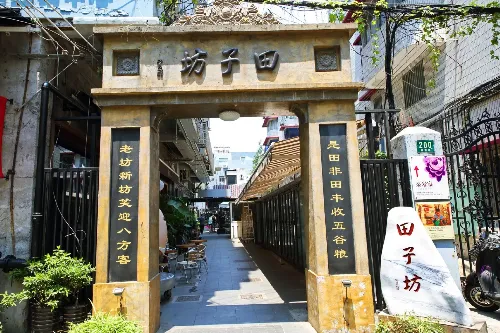
Lane 210, Taikang Road is the core area of Tianzifang and the earliest developed lane. It is about 150 meters long and 3 to 5 meters wide. Both sides retain the complete architectural style of Shikumen, with details such as lintels, carvings, and blue brick walls restoring the architectural characteristics of old Shanghai. This lane gathers dozens of specialty shops and art studios, including the former residence and studio of Mr. Chen Yifei (now an exhibition hall), as well as various handicraft stores and cultural and creative shops. It is the core path to experience the artistic atmosphere of Tianzifang and attracts a large number of tourists to stop, visit, and take photos every day.
Tiancheng Li
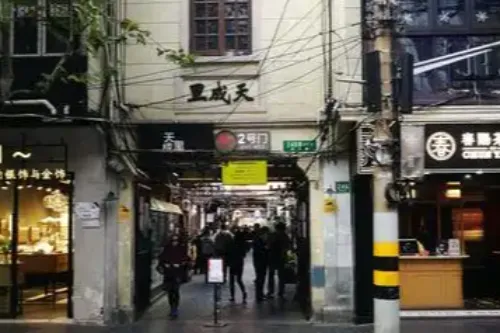
Tiancheng Li is one of the best-preserved Shikumen lanes in Tianzifang. Built in 1930, it consists of 12 row-style Shikumen residences, covering an area of about 800 square meters. The buildings here adopt a typical "lane-style" layout, with each household having an independent patio and attic. The walls still retain the red bricks and cement stucco craftsmanship of that year. At present, some residences are still inhabited by original residents, and some have been transformed into characteristic homestays and cafes. Tourists can intuitively experience the residential culture of old Shanghai.
Er Dongqiang Art Center
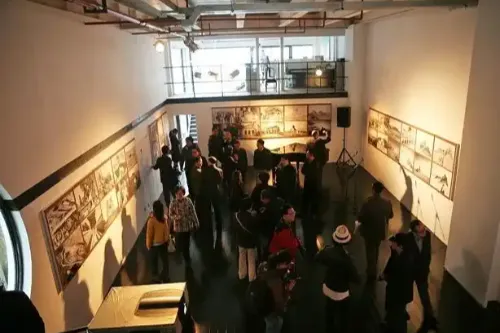
Located in the core area of Tianzifang, the Er Dongqiang Art Center is transformed from an old lane factory, with a building area of about 500 square meters. It is one of the earliest art institutions in Tianzifang. Focusing on displaying Shanghai's urban history and historical materials of Sino-Western cultural exchanges, the center collects a large number of old photos, documents, and artifacts of modern Shanghai, and regularly holds photography exhibitions, historical and cultural lectures, and other activities. It is an important window to understand the modern development history of Shanghai and the integration of Chinese and Western cultures.
Shikumen House Museum
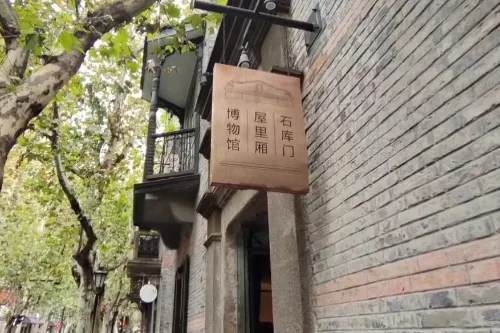
The Shikumen House Museum is located at Lane 248, Taikang Road. It is transformed from a complete old Shikumen house, with a building area of about 200 square meters. It is divided into multiple exhibition areas such as the main hall, study, bedroom, and kitchen. Restored according to the living scene of an ordinary middle-class family in Shanghai in the 1930s, it displays furniture, home appliances, daily necessities, and other artifacts of that time, fully showing the lifestyle in old Shanghai's Shikumen. It is an important carrier to understand Shikumen culture.
Shanghai Museum of Glass Art
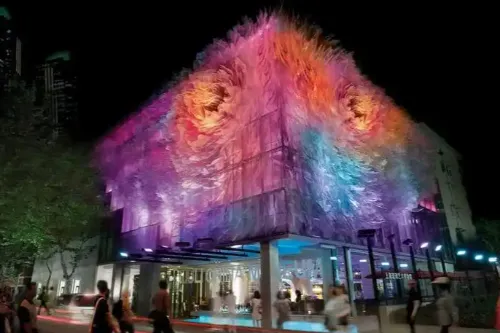
Adjacent to Tianzifang, it was founded by Taiwanese artists Chang Yi and Yang Huishan. It is the first professional museum in China and Asia to comprehensively display glass art, with a building area of 2,400 square meters and a four-story height of 14.7 meters. Its exterior wall is inlaid with more than 4,800 transparent glass bricks, matched with giant golden peony decorations, which has a strong visual impact under the night light. The second floor of the museum exhibits ancient Chinese glass treasures and works by international masters such as Émile Gallé, the "Father of World Glass" in France, while the third floor focuses on Yang Huishan's glass Buddha statues series.
Visiting Route
The recommended visiting route for Tianzifang starts from the entrance of Lane 210, Taikang Road. First, visit the main lane area, tour the former site of Chen Yifei's studio and various cultural and creative shops to experience the core artistic atmosphere. This section is about 150 meters long and takes about 30 minutes. Then turn into Tiancheng Li to experience the original style of Shikumen residences, visit the Shikumen Museum to learn about the residential culture of old Shanghai. This section is about 200 meters long and takes about 40 minutes. Next, go to the Er Dongqiang Art Center to visit the modern history exhibition of Shanghai, which takes about 30 minutes. Finally, stroll along the side lanes from Lane 248, Taikang Road to Jianguo Middle Road to explore hidden characteristic cafes, handicraft stores, and the living areas of original residents. This section is about 300 meters long and takes about 50 minutes. The entire core route is about 750 meters long, and the recommended total visiting time is 2 to 3 hours. You can adjust the staying time according to personal interests. If you want a deep experience, you can add about 1 hour for cultural and creative experiences and food tasting.
Visiting Tips
- The best visiting time is from 9:00 to 11:00 in the morning or after 15:00 in the afternoon on weekdays, when there are fewer tourists and you can better feel the quiet atmosphere of the lanes. There are many tourists on weekends and holidays, so it is recommended to avoid the peak period from 10:00 to 14:00.
- The recommended visiting duration is 2 to 4 hours, which can cover the core attractions without causing fatigue due to the narrow and crowded blocks.
- You can learn about the relevant knowledge of Shikumen architecture in advance or hire a commentator in the scenic area to better understand the historical and cultural value of Tianzifang.
- It is recommended to taste local specialties of Shanghai, such as xiaolongbao (soup dumplings), shengjian (pan-fried buns), and fresh meat mooncakes.
- It is suitable to carry a light backpack and avoid large suitcases or backpacks, as the lanes are narrow and large luggage will affect passage.
Notes
- The lanes in Tianzifang are crisscrossed, and some side lanes have no obvious signs. It is recommended to turn on the mobile map positioning to avoid getting lost. There are scenic guide maps in the core area, which can be viewed as needed.
- Most areas in the block are pedestrian-only, and non-motor vehicles are prohibited. Tourists need to walk throughout the visit.
- Respect the lives of the original residents. Do not enter unopened residences at will, and ask for the consent of merchants or residents before taking photos.
- The prices of shops in the scenic area are relatively high. You can compare prices before buying cultural and creative products and handicrafts. Some shops support bargaining, and you can communicate as needed.
- Take good care of your personal belongings. There are many tourists in the scenic area, so beware of pickpockets. There are security booths in the core area, and you can ask for help in time if you encounter problems.
- There is no centralized parking lot in Tianzifang. It is recommended to travel green and avoid self-driving.
Transportation
- Metro: Take Shanghai Metro Line 9 to Dapuqiao Station, exit from Exit 1, and walk east along Taikang Road for about 300 meters to reach the main entrance of Tianzifang. Or take Metro Line 13 to Madang Road Station and walk west along Jianguo Middle Road for about 500 meters to reach.
- Bus: Take bus routes such as 17, 24, 36, 41, 146, 780, and 864 to Dapuqiao Station and walk 50 to 100 meters to reach.
- Shared bikes/electric vehicles: You can ride to the non-motor vehicle parking spots along Taikang Road and walk into Tianzifang (riding is prohibited in the scenic area).
- Taxi/online car-hailing: You can locate to "Entrance of Lane 210, Taikang Road, Tianzifang". Vehicles can temporarily stop for passengers to get off on Taikang Road and cannot enter the scenic area.
Opening Hours
The public areas of the block are open all day. Among them, the business hours of various shops and exhibition halls vary: most cultural and creative shops and cafes are open from 10:00 to 22:00; catering shops are open from 9:00 to 23:00; art exhibition halls and museums are mostly open from 10:00 to 18:00 (some exhibition halls are closed for renovation on Mondays). It is recommended that tourists visit between 10:00 and 20:00, when most merchants are open normally for the best visiting experience.
Tickets
Free admission. The ticket price for the Shanghai Museum of Glass Art is 54 yuan per person.
Online Booking
Click here to jump to the Trip.com ticketing platform for ticket purchase.