
Shanghai Museum is located at 201 People's Avenue, Huangpu District, Shanghai, adjacent to the south side of People's Square. It is a large-scale museum of Chinese ancient art, a National First-Class Museum, and one of the landmark cultural venues in Shanghai. As a public welfare cultural institution, Shanghai Museum holds a pivotal position in the field of cultural relics and museums. It houses nearly 1.02 million cultural relics, covering multiple categories such as bronze, ceramics, calligraphy and painting, sculpture, jade, coins, seals, and textiles, with bronze, ceramics, and calligraphy and painting as its three major characteristic collections, systematically showcasing the glorious course of Chinese ancient art. The overall architecture combines a square base with a circular dome, symbolizing "Heaven is round and the Earth is square". The total building area reaches 39,200 square meters, including approximately 12,000 square meters of exhibition space. It has one basement floor and four upper floors, with complete facilities providing an excellent viewing experience for visitors.
History and Culture
The history of Shanghai Museum can be traced back to 1952, when it opened at 325 West Nanjing Road. Its initial collection mainly came from the collections of the former Shanghai Municipal Museum, Shanghai Cultural Relics Administration Commission, and donations from various sectors of society. At the beginning of its establishment, the museum had limited facilities and underwent several relocations. On October 12, 1996, the new museum located at People's Square officially opened to the public. The completion of the new museum greatly enhanced the museum's exhibition and collection capabilities.
In terms of cultural value, Shanghai Museum has a complete collection system with cultural relics spanning from the Neolithic Age to modern times, including many national treasure-level cultural relics. For example, the Da Ke Ding (Great Ke Tripod) from the Shang Dynasty, the Jin Hou Su Bell from the Western Zhou Dynasty, the "Gao Yi Tu" (Lofty Ease Painting) by Sun Wei from the Tang Dynasty, and the "You Gu Tu" (Valley in Solitude Painting) by Guo Xi from the Northern Song Dynasty. These cultural relics are not only treasures of Chinese ancient art but also important physical materials for researching Chinese history, culture, and art. The museum has always adhered to the concept of "serving the public and inheriting culture", and through various forms such as exhibitions, research, and education, it promotes excellent traditional Chinese culture and serves as an important window for cultural exchanges between China and foreign countries.
In the field of academic research, Shanghai Museum has a professional research team that has long been committed to the protection, restoration, research, and interpretation of cultural relics, publishing a large number of academic works and research reports, promoting the development of China's cultural relics and museum cause. At the same time, the museum actively carries out international exchanges and cooperation, holding joint exhibitions with museums in many countries and regions around the world, promoting the international dissemination of Chinese culture.
Main Attractions
Bronze Gallery
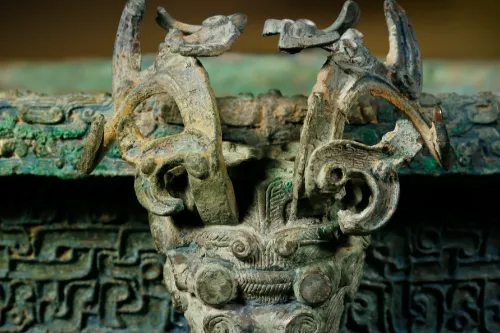
The Bronze Gallery is located on the first floor of Shanghai Museum, with an exhibition area of approximately 1,200 square meters, making it one of the core exhibition halls of the museum. It houses over 7,000 bronze cultural relics, and the displayed cultural relics are selected from the treasures among them, spanning from the Xia and Shang dynasties to the Warring States, Qin, and Han dynasties, covering various types of artifacts such as ritual vessels, musical instruments, weapons, tools, and chariot and horse fittings. The Da Ke Ding in the gallery is a heavy vessel from the late Western Zhou Dynasty, known as one of the "Three Treasures Under Heaven" along with the Da Meng Ding (Great Meng Tripod) and Mao Gong Ding (Mao Gong Tripod). The body of the tripod is inscribed with a long text, which has extremely high historical and calligraphic value; the Jin Hou Su Bell is a set of bronze bianzhong (a set of tuned bells) from the Western Zhou Dynasty, consisting of 16 pieces, and the inscriptions record the historical facts of Jin Hou Su's participation in battles with the Zhou king, serving as an important physical evidence for researching the history of the Western Zhou Dynasty. Through scientific exhibition methods combined with artifact interpretation and scene restoration, the Bronze Gallery showcases the exquisite craftsmanship and rich connotation of Chinese bronze culture.
Ceramic Gallery
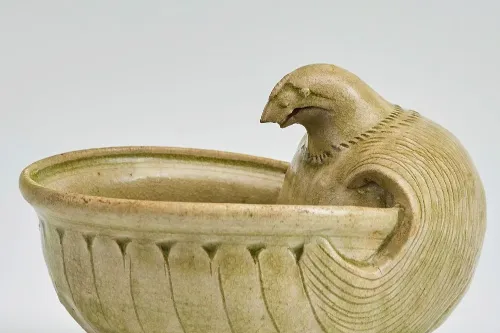
The Ceramic Gallery is located on the second floor of Shanghai Museum, with an exhibition area of approximately 1,300 square meters. It houses over 30,000 ceramic cultural relics, with a time span from the Neolithic Age's painted pottery and black pottery to the primitive celadon of the Shang and Zhou dynasties, then to the celadon and white porcelain of the Han and Jin dynasties, and finally to the famous kiln masterpieces of the Tang, Song, Yuan, Ming, and Qing dynasties. The Tang Yue Kiln Celadon Begonia-shaped Bowl, Song Ru Kiln Plate, Yuan Blue and White Interlocking Peony Pattern Jar, Ming Yongle Blue and White Interlocking Lotus Pattern Pressure Hand Cup, and Qing Kangxi Wucai Twelve Months Flower Pattern Cup collected in the gallery are all representative works of ceramic craftsmanship of their respective eras. The Ceramic Gallery divides exhibition areas by era and kiln system, systematically displaying the development context of Chinese ceramic craftsmanship, from raw material selection and molding techniques to glazing and firing, comprehensively presenting the profoundness of Chinese ceramic culture.
Calligraphy and Painting Gallery
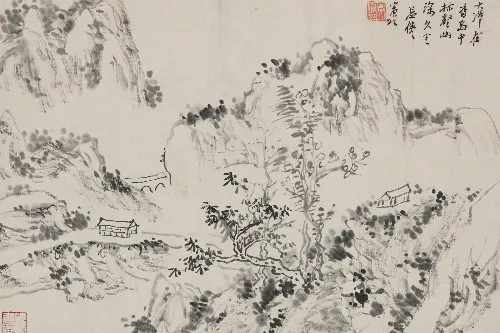
The Calligraphy and Painting Gallery is located on the third floor of Shanghai Museum, with an exhibition area of approximately 1,000 square meters. It houses over 12,000 calligraphy and painting cultural relics, mainly focusing on the calligraphy and painting of famous artists from various dynasties, covering the Jin, Tang, Five Dynasties, Song, Yuan, Ming, and Qing dynasties. The "Gao Yi Tu" (Lofty Ease Painting) by Sun Wei in the gallery is one of the earliest surviving Tang Dynasty figure paintings, depicting the image of the "Seven Sages of the Bamboo Grove" during the Wei and Jin dynasties; the "You Gu Tu" (Valley in Solitude Painting) by Guo Xi from the Northern Song Dynasty shows the magnificent momentum of northern landscapes; the "Fuchun Mountain Residence Painting" (Remaining Mountain Section) by Huang Gongwang from the Yuan Dynasty is one of his representative works, with extremely high artistic value. The Calligraphy and Painting Gallery adopts a constant temperature and humidity exhibition environment, and some precious calligraphy and paintings are displayed in rotation, which not only protects the cultural relics but also allows visitors to appreciate more art treasures, comprehensively showcasing the aesthetic connotation and development course of Chinese calligraphy and painting art.
Jade Gallery
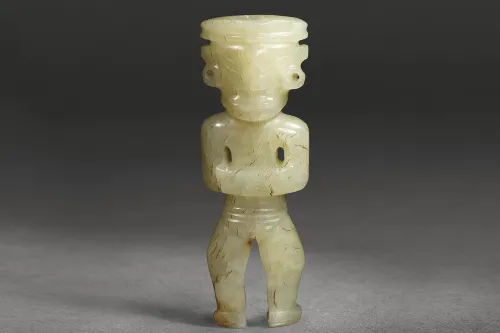
The Jade Gallery is located on the fourth floor of Shanghai Museum, with an exhibition area of approximately 800 square meters. It houses over 5,000 jade cultural relics, with a time span from the Neolithic Age's Hongshan Culture and Liangzhu Culture jade artifacts to the jade masterpieces of the Shang and Zhou, Qin and Han, Tang, Song, Yuan, Ming, and Qing dynasties. The Liangzhu Culture Jade Cong (a cylindrical jade artifact with square holes in the center) is an important collection in the gallery, with regular shape and exquisite decorations, reflecting the superb jade-making craftsmanship of the Neolithic Age; the Han Dynasty Gold Thread Jade Burial Suit (fragments) and the Qing Dynasty Jade Carved Bird Pattern Flower Vase are also distinctive. Through displaying the production craftsmanship, functional uses, and cultural connotations of jade, the Jade Gallery showcases the spiritual essence of Chinese jade culture of "gentle and smooth like jade" and the style evolution of jade art in different eras.
Coin Gallery
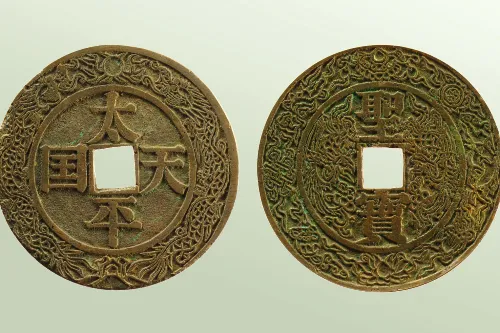
The Coin Gallery is located on the fourth floor of Shanghai Museum, with an exhibition area of approximately 600 square meters. It houses over 70,000 coin cultural relics, covering various categories such as shell money, spade money, knife money, ring money, square-hole round money, paper money, gold and silver coins, with a time span from the Shang Dynasty's shell money to the modern paper money. The Warring States Period "Ying Yuan" (a gold coin) collected in the gallery, the Song Dynasty "Jiaozi" (a paper currency, imitation), and the Qing Dynasty "Xianfeng Yuanbao" (a large coin) are among the systematic exhibitions of the development course of Chinese currency and the rich connotation of currency culture. Through physical display and graphic interpretation, the Coin Gallery introduces the shape evolution, casting craftsmanship, and economic background of Chinese currency, serving as an important window for understanding the economic history of ancient China.
Sculpture Gallery
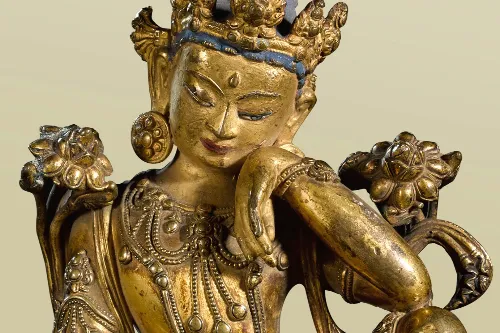
A large number of sculptures made of various materials have been unearthed in Neolithic sites. In the Xia, Shang, and Zhou dynasties, on the basis of early sculptures, exquisite craft sculptures such as jade, stone, bone carving, and bronze casting were formed. The sculptures of the Qin and Han dynasties were diverse in categories and exquisite in craftsmanship, with large-scale tomb sculptures and distinctive portrait brick and stone art.
Seal and Inscription Gallery
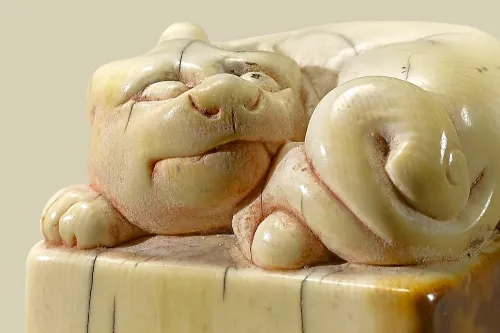
A total of 573 pieces of fine cultural relics are displayed, with the total number increasing by nearly 100 compared to before, and new items accounting for about 35%. In the new display, for the first time, the occurrence and development of Chinese seals are placed in the context of the main origin systems of seals in ancient world civilizations, and a special topic on "Main Origin Systems of Seals" is set up. Taking the early seals of the Two Rivers Basin, Nile River Basin, Indus River Basin, and Yellow River Basin as the opening chapter, the general history display of Chinese seals and inscriptions throughout the dynasties is launched.
Tour Route
A recommended tour route covering the core collections of Shanghai Museum, which takes approximately 3-4 hours: Enter from the south gate of the museum, first go to the Bronze Gallery on the first floor, spend about 1 hour appreciating the bronze treasures from the Shang and Zhou dynasties to the Qin and Han dynasties, and focus on visiting the treasure exhibits such as the Da Ke Ding and Jin Hou Su Bell; then take the elevator to the Ceramic Gallery on the second floor, which takes about 1 hour, and browse the famous kiln porcelains of each dynasty in chronological order, focusing on the masterpieces such as the Song Ru Kiln and Yuan Blue and White; then go to the Calligraphy and Painting Gallery on the third floor, which takes about 40 minutes, and admire the calligraphy and paintings of famous artists from various dynasties, paying attention to the classic works of the Tang, Song, and Yuan dynasties; then go to the Jade Gallery on the fourth floor, stay for about 30 minutes, and appreciate the jade masterpieces from the Neolithic Age to the Qing Dynasty; finally visit the Coin Gallery on the fourth floor, which takes about 20 minutes, to understand the development course of Chinese currency. During the visit, you can take a short break in the rest areas of each floor, or combine with the audio guide in the museum (which can be rented) to gain an in-depth understanding of the background of the cultural relics. If time permits, you can also visit the special exhibition halls such as the Seal and Inscription Gallery and Textile Gallery to fully experience the cultural charm of Shanghai Museum.
Tour Suggestions
- It is recommended to arrange the visit time after 9:00 am when the museum opens, when the number of visitors is relatively small, allowing you to appreciate the exhibits leisurely. The overall visit duration is recommended to be 3-4 hours, and if you want to deeply tour each exhibition hall, you can reserve 5-6 hours.
- You can make an appointment for a guide service in advance on the official website or official WeChat account of Shanghai Museum, or rent an audio guide, which is convenient for an in-depth understanding of the historical background and artistic value of the cultural relics.
- The museum is equipped with free drinking water and rest areas. You can bring your own water cup and arrange reasonable rest during the visit; there is no dining area in the museum, so you can go to the dining places around People's Square after the visit.
- It is recommended to visit in the order of "Bronze Gallery - Ceramic Gallery - Calligraphy and Painting Gallery - Jade Gallery - Coin Gallery", which conforms to the logical layout of the museum's floors and the display of cultural relics, reducing the return journey.
- Shanghai Museum regularly holds temporary special exhibitions. You can pay attention to the official website information in advance. If you are interested in a special exhibition, you can include it in your visit plan to enrich the tour content.
- It is suitable for taking children to visit. The museum has research activities and cultural relic interpretation boards for teenagers. You can prepare relevant historical and cultural knowledge in advance to help children better understand the exhibits.
Notes
- To enter the museum, you need to make an appointment with a valid ID card. Those who have not made an appointment cannot enter the museum. The appointment can be made through the official website, official WeChat account, or "Wenlv Shanghai" platform of Shanghai Museum. The daily appointment quota is limited, and it is recommended to make an appointment 1-3 days in advance.
- It is prohibited to bring flammable and explosive items, control knives, pets, etc., into the museum. Drinks and food need to be stored, and only water cups can be brought into the exhibition halls.
- During the visit, it is prohibited to touch the exhibits, take photos with flash, or make loud noises. Keep quiet in the exhibition halls and visit in a civilized manner.
- The cultural relics in the museum are all precious collections. Please do not run or push in the exhibition halls to avoid damaging the cultural relics or causing personal injury.
- Convenient facilities such as audio guides, wheelchairs, and strollers can be rented at the service desk, which requires a valid ID card and deposit, and should be returned in time after the visit.
- In case of temporary closure or exhibition adjustment, please refer to the on-site announcements and official website notifications of the museum. You can confirm the latest opening information before the visit.
- The number of people around the museum is relatively large. Pay attention to keeping your personal belongings, especially valuable items such as mobile phones and wallets.
Transportation
- Subway: Take Metro Line 1, Line 2, or Line 8 to People's Square Station, exit from Exit 1 or Exit 2, and walk approximately 300 meters to reach the south gate of Shanghai Museum; take Metro Line 14 to Da Shi Jie Station, and it is about 800 meters away on foot.
- Bus: Take Bus Routes 18, 20, 37, 46, 49, 64, 108, 123, 145, 537, 929, etc., to People's Square Station, and walk for 5-10 minutes to arrive.
- Self-driving: There is an underground parking lot (People's Square Underground Parking Lot) around the museum. Due to the tight parking spaces in the city center, it is recommended to prioritize public transportation.
- Shared bikes/electric bikes: You can ride to the non-motor vehicle parking area on the south side of People's Square and walk into the museum. The parking area is about 200 meters away from the museum entrance.
Opening Hours
Open from 9:00 to 17:00 every Tuesday to Sunday (admission stops at 16:00), closed every Monday (except national legal holidays). The opening hours during national legal holidays are from 9:00 to 17:00 (admission stops at 16:00). During holidays such as the Spring Festival, New Year's Day, May Day, and National Day, the museum will appropriately adjust its services according to the passenger flow, but the opening hours remain basically stable. The museum may close temporarily due to special circumstances such as cultural relic protection and facility maintenance.
Tickets
Free admission. You can search for the official WeChat account "上海博物馆" to get the latest information or make an online reservation for your visit.
Online Booking
Click here to jump to the Trip.com ticketing platform for ticket purchase.