
Hanxiang Water Expo Park is located at No. 3805 Jiangchuan West Road, Minhang District, Shanghai, in Pengdu Village, Maqiao Town, adjacent to the upper water intake of the Huangpu River. It is a key suburban tourism project in Shanghai. Built by 3,000 villagers of Pengdu Village to protect Shanghai’s drinking water intake, it is a comprehensive ecological garden integrating water ecological protection, cultural exhibition, leisure tourism and science education. The total planned area of the park is about 1,200 mu, among which the core open ancient ecological area covers 400 mu, with a total construction area of about 10,000 square meters. Featuring ancient bridges, ancient trees and ancient culture, it is known as the "Shanghai Ancient Bridge Museum". There are 56 bridges of various styles, including more than 30 Ming and Qing ancient bridges protected and relocated from Jiangsu, Zhejiang and Shanghai, and more than 20 antique bridges. It is also home to more than 600 century-old trees, including thousand-year-old ginkgoes and the "No.1 Camphor Tree in Shanghai" with a diameter of over 2.2 meters. Scattered with large Taihu stones and Lingbi stones weighing over 100 tons, the park is in a simple, natural and wild style, a rare classical garden in Shanghai combining water, bridges, pavilions, terraces, towers, trees, flowers and plants.
History and Culture
The name of Hanxiang Water Expo Park comes from the local legend of "Hancang". It is said to be the hermitage of Han Xiangzi, one of the Eight Immortals, who built a house here in the Tang Dynasty, leaving many mythical stories. The word "Hanxiang" has thus become the cultural symbol of the park. The original purpose of the park was to protect the safety of the drinking water source in the upper reaches of the Huangpu River. Construction started in 2002 and opened gradually in 2003. It also rescued and protected ancient Jiangnan bridges and buildings damaged by urbanization, relocating and restoring Ming and Qing ancient bridges and century-old houses from Jiangsu, Zhejiang and Shanghai to preserve these historical relics.
The park deeply integrates Maqiao Ancient Culture and Huangpu River Water Culture. Maqiao Ancient Culture is an important prehistoric culture in Shanghai, dating back 3,900 to 3,200 years, distributed around the Taihu Lake Basin, a key historical resource for studying ancient Shanghai. The Simulation Hall of Maqiao Ancient Cultural Relics in the park truly restores the life, production and living scenes of ancient ancestors. The Huangpu River, the mother river of Shanghai, was excavated in the Spring and Autumn and Warring States Periods and basically formed in the Yongle Period of the Ming Dynasty, with a history of more than 2,000 years. Through the Huangpu River History and Culture Exhibition Hall, the park systematically shows its formation, governance history, and water-control deeds of Fan Zhongyan, Hai Rui, Lin Zexu and other historical figures, allowing visitors to experience its profound culture. In addition, the park integrates elements of local cultural celebrities such as Dong Qichang, using ancient buildings, stone tablets and exhibition halls to build a complete cultural exhibition system of Jiangnan water towns.
Main Scenic Spots
Hanxiang Bridge
Hanxiang Bridge is the landmark of the park, a five-arch stone bridge and the second largest ancient stone bridge in Shanghai. With delicate carvings, its hundred steps symbolize "longevity". Spanning the main river, it forms a spectacular "ten arches" view with its reflection. It is a perfect spot for Hanfu photography, and you can overlook the Huangpu River from the top to enjoy the magnificent scenery of ancient bridges and rivers.
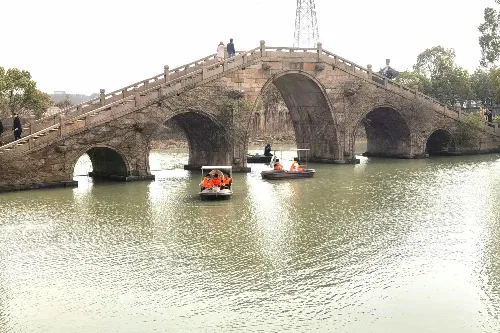
Xingshi Bridge
Xingshi Bridge is a three-arch stone bridge with a magnificent momentum. Stone lions of different expressions are carved on the railings, showing exquisite craftsmanship. As one of the core bridges in the ancient bridge group, it connects the ancient ecological area and the ancient cultural area, a must-pass for visitors and an important spot to view the whole ancient bridge group.
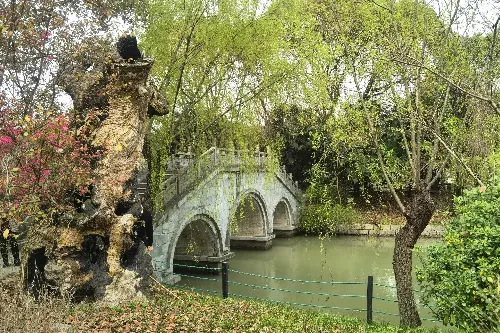
Xiangjing Bridge
Xiangjing Bridge is a single-arch stone bridge, delicate and elegant with smooth lines and simple carvings. Located on a branch of the park’s water system, surrounded by ancient trees and flowers, it is suitable for close-up shots, showing the graceful beauty of small bridges and flowing water in Jiangnan.
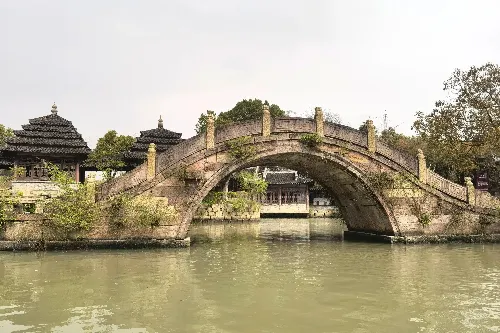
Ancient Tree Group
The ancient tree group spreads all over the ancient ecological area, with more than 600 century-old trees including ginkgo, camphor, crape myrtle and fraxinus. The most famous is the "No.1 Camphor Tree in Shanghai", 18 meters high with a diameter of over 2.2 meters. There are also several thousand-year-old ginkgoes, golden in autumn, forming a beautiful ecological picture with ancient bridges and pavilions.
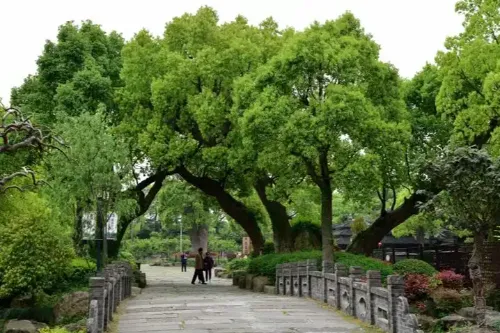
Simulation Hall of Maqiao Ancient Cultural Relics
Located in the ancient cultural area, the hall truly restores the life, production and living environment of Maqiao ancestors 3,900 years ago through scene restoration and artifact replicas, intuitively showing the ancient civilization of the Taihu Lake Basin, an important window to understand ancient Shanghai history.
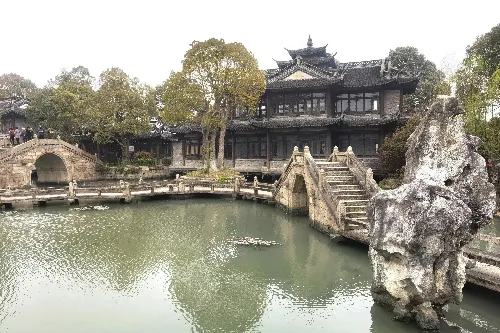
Huangpu River History and Culture Exhibition Hall
The hall systematically sorts out the formation and governance history of the Huangpu River over 2,000 years, displaying memorials, inscriptions, poems and essays of Fan Zhongyan, Hai Rui, Lin Zexu and other water-control celebrities, as well as replicas of historical relics, allowing visitors to deeply understand the development and culture of the mother river.
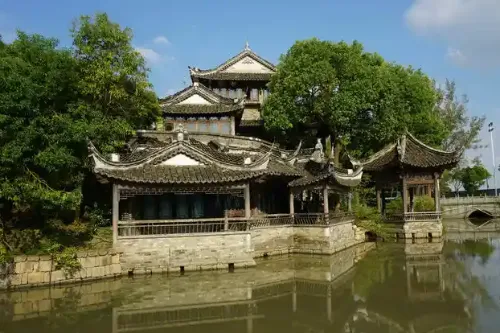
Dong Qichang Art Academy
Named after the famous Ming Dynasty calligrapher and painter Dong Qichang, the academy is in traditional Jiangnan garden style. It displays replicas of Dong Qichang’s works, his life story and the cultural context of the Songjiang School, combining cultural exhibition and artistic appreciation, an important place to experience Jiangnan literati culture.
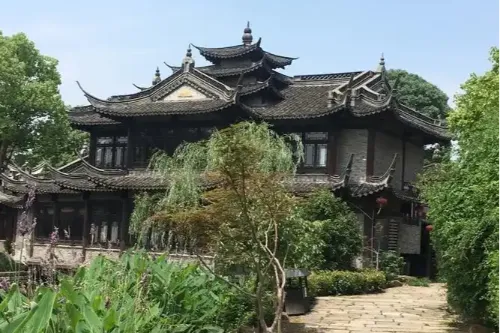
Guizhou Garden Diaojiao Building
The Diaojiao Building is a century-old wooden house completely relocated from Guizhou mountains, a typical ethnic minority architecture in Yunnan, Guizhou and Sichuan, with upturned eaves and exquisite wooden structure. Built by water, it contrasts sharply with Jiangnan water town scenery, a unique architectural landscape and popular Hanfu photography spot.
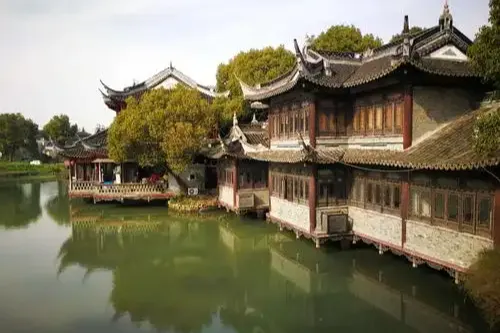
Ancient Opera Stage
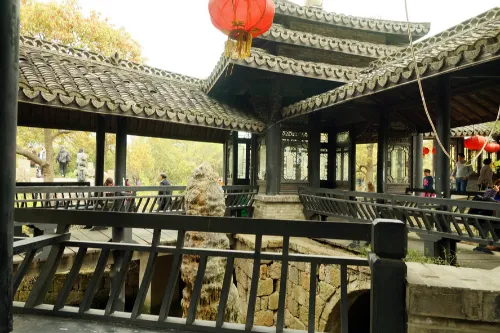
The ancient opera stage is in late Qing Dynasty style, built by water and connected with a covered bridge, forming a unique pattern of land and water scenery. Traditional operas such as Kunqu and Yue Opera are regularly performed here, allowing visitors to experience traditional folk culture.
River-Viewing Plank Road
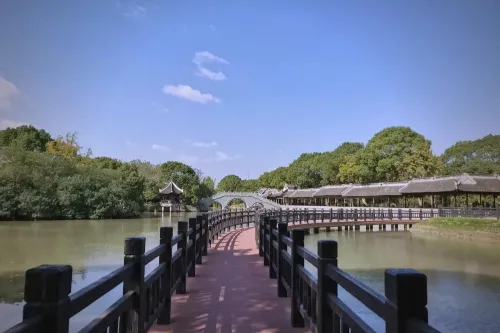
The River-Viewing Plank Road is built along the Huangpu River, hundreds of meters long, the best area to enjoy the river scenery and water source ecology. There are leisure areas beside the plank road for walking and resting, feeling the waves and quiet ecology of the river.
Tour Routes
Tour routes in Hanxiang Water Expo Park are divided into half-day and one-day tours, covering core spots and in-depth experience. Half-day tour (about 2–3 hours): Enter from the park entrance, first visit the landmark Hanxiang Bridge, then walk to Xingshi Bridge and Xiangjing Bridge along the river. Enter the ancient cultural area to visit the Simulation Hall of Maqiao Ancient Cultural Relics, Huangpu River History and Culture Exhibition Hall and Dong Qichang Art Academy. Walk to the ancient tree group, and finally go to the River-Viewing Plank Road before exiting. One-day tour (about 4–5 hours): On the basis of the half-day tour, add Guizhou Garden Diaojiao Building and Ancient Opera Stage, watch opera performances, experience kayaking between ancient bridges, visit the rural sightseeing park, and enjoy camping, tea and barbecue in designated areas.
Travel Tips
- The best visiting seasons are spring (March–May) and autumn (September–November), with blooming flowers in spring and golden ginkgoes in autumn. Prepare sun protection and mosquito repellent in summer; choose sunny days in winter.
- Wear comfortable flat shoes or sneakers, as there are many stone paths and steep steps on ancient bridges.
- Hanfu and simple elegant clothes match the ancient style perfectly for great photos.
- Visit on weekdays from 9:00–11:00 or 15:00–17:00 to avoid crowds and enjoy soft light for photography.
- There are few restaurants in the park; bring snacks and water or eat at nearby farmhouses.
- Reserve kayaking and Hanfu rental in advance to avoid unavailability on site.
Notes
- The park is a Huangpu River water source protection area. Fishing, playing in water and littering are prohibited to protect the ecology.
- Some ancient bridges have steep and slippery steps; walk carefully, no running or pushing. The elderly and children must be accompanied.
- Protect ancient trees, bridges and buildings; no climbing, carving or damaging cultural relics.
- Pets, camping and barbecuing in non-designated areas are prohibited.
- Mobile signal may be weak in some areas; download offline maps in advance.
- Follow staff instructions in bad weather such as heavy rain and strong winds to stay safe.
Transportation
- Public transport: Take Metro Line 5 to Minhang Development Zone Station, Exit 2, transfer to Bus Maqiao 1 to the terminal and walk 5 minutes; or transfer to Bus Mindong Line to Jiangchuan West Road Ecological Park Station.
- Self-driving: Navigate to "Shanghai Hanxiang Water Expo Park". The park has a parking lot; use the spare one opposite during peak weekends.
- Taxi/rideshare: Take a taxi from Xinzhuang Metro Station, cost-effective for groups.
Opening Hours
Day session: 8:00–17:00, last entry at 16:00. Night sessions may be available during holidays or special events: 17:00–22:00, last entry at 21:00. Subject to official notice.
Tickets
Ticket: 36 yuan per person. Follow the official WeChat service account "韩湘水博园" for the latest updates.
Online Booking
Click here to jump to the Trip.com ticketing platform for ticket purchase.