
Foshan Zumiao Museum is located at No.21 Zumiao Road, Chancheng District, Foshan City, Guangdong Province. It is a national first-class museum, a national 4A-level tourist attraction, as well as a Major Historical and Cultural Site Protected at the National Level, a Guangdong Provincial Patriotism Education Base and a Guangdong Chinese Culture Inheritance Base. Covering a total area of 30,200 square meters, the ancient building complex of the Ancestral Temple has a construction area of about 3,600 square meters. Facing south from north, the ancient complex is symmetrically arranged along the north-south central axis. It is one of the three great treasures of Lingnan ancient architecture and known as "the Palace of Oriental Folk Art". Centered on the Lingying Shrine ancient building complex of the Ancestral Temple, the scenic area integrates multiple exhibition zones including the Confucian Temple, Wong Fei-hung Memorial Hall, Ip Man Hall and the Historical Culture Exhibition Hall. It systematically displays Taoist culture, traditional Lingnan architectural craftsmanship, Foshan martial arts culture and folk customs. Its architectural decorations are featured by three types of carvings and two types of sculptures, namely brick carving, wood carving, stone carving, pottery sculpture and lime sculpture, forming a well-preserved and mature Lingnan temple complex.
History and Culture
Also known as the North Emperor Temple and Lingying Shrine, the Ancestral Temple was first built during the Yuanfeng reign of the Northern Song Dynasty (1078–1085 AD). It was originally a Taoist temple dedicated to the True Martial Emperor. The temple was destroyed by war in the late Yuan Dynasty and rebuilt in the fifth year of the Hongwu reign of the Ming Dynasty (1372 AD). Since then, it has undergone more than 30 renovations and expansions across the Ming, Qing and Republican periods, gradually taking shape as the complex we see today. Historical records show that it was named the Ancestral Temple because of its long history and its status as the foremost among all shrines in Foshan. In ancient Foshan society, the Ancestral Temple bore the functions of religious authority, clan power and local public affairs, serving as the core public space of ancient Foshan Town.
The ancient building complex retains intact wooden structural remains from the Ming Dynasty. The bracket sets in the main hall are important surviving examples of eight-tier bracket sets of the Song Dynasty. All renovations in successive dynasties followed the original form and preserved traditional Lingnan construction techniques. A large number of pottery sculptures, lime sculptures and brick carvings inside the temple were mostly made by craftsmen from Shiwan Kiln and local Foshan artisans. Their themes include opera stories, auspicious beasts and flowers, forming a physical treasure house of Foshan folk crafts from the Ming and Qing dynasties.
In modern times, Foshan is the birthplace of southern-style martial arts. Famous martial artists such as Wong Fei-hung and Ip Man were native Foshan figures. Drawing on local martial arts heritage, the Ancestral Temple added the Wong Fei-hung Memorial Hall and Ip Man Hall, and regularly hosts lion dance and martial arts performances, integrating ancient architectural culture, folk culture and martial arts culture. In 1958, the Ancestral Temple was officially opened to the public as a museum. The Confucian Temple opened in 1981, the Wong Fei-hung Memorial Hall in 2001, the Ip Man Hall in 2002, and the Historical Culture Exhibition Hall of the Ancestral Temple was completed and opened in 2016, gradually forming the museum layout of today.
Main Attractions
Wanfu Stage
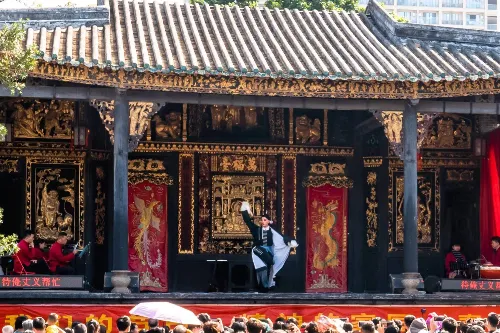
Built in the 15th year of the Shunzhi reign of the Qing Dynasty (1658 AD), Wanfu Stage is the best-preserved and most ornate ancient opera stage in Guangdong, and also one of the early Cantonese opera stages in South China. Facing south to north, the stage directly looks towards Lingying Shrine. In ancient times, operas performed here were ritual shows for the North Emperor, witnessing the development history of Cantonese opera in Foshan. The wooden components of the stage are exquisitely carved with motifs including the Three Star Gods of Fortune, Prosperity and Longevity, the Eight Immortals, subduing dragons and tigers. Cantonese opera shows are held here on weekends, the first and fifteenth day of each lunar month and holidays.
Lingying Memorial Archway
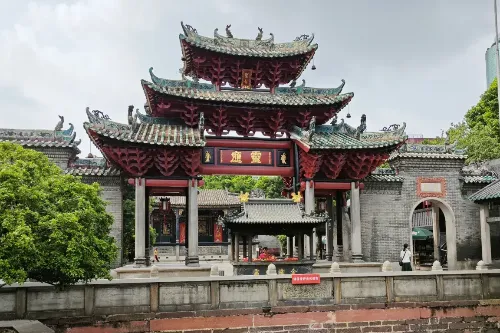
Lingying Memorial Archway was built in the second year of the Jingtai reign of the Ming Dynasty (1451 AD) when Lingying Shrine received an imperial title. It is a three-storey wooden-stone mixed archway with four pillars and three bays. It adopts a combined roof form of gable and hip roof and hip roof, and uses a large number of bracket sets. It has remained stable through many typhoons and stands as the landmark building on the central axis of the Ancestral Temple. The characters "Lingying" are carved on the archway, serving as material evidence of the historical status of the Ancestral Temple.
Jinxiang Pond
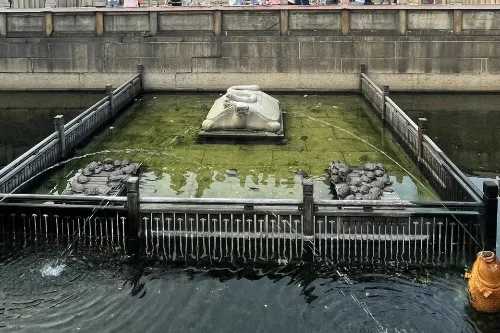
Jinxiang Pond lies to the north of Lingying Memorial Archway. It was excavated in the eighth year of the Zhengde reign of the Ming Dynasty. A stone arch bridge stands in the middle of the pond, with stone railings along the edge. It was originally a feng shui landscape pond supporting the Ancestral Temple and is a popular spot for visitors to view scenery and take photos. The pond water paired with surrounding ancient buildings forms a landscape node on the central axis of the Ancestral Temple.
Lingying Shrine (Main Hall Ancient Complex of the Ancestral Temple)
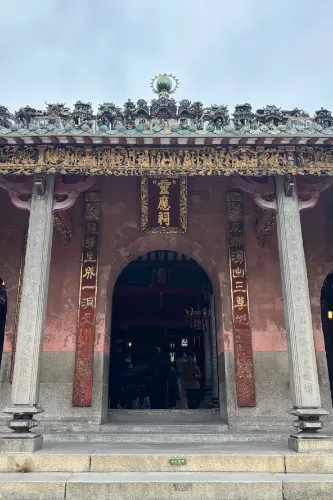
Lingying Shrine is the core main body of the Ancestral Temple. Along the central axis are the Bell and Drum Towers, Three Gates, Wenkui Pavilion, Wu'an Pavilion, Front Hall, Main Hall and Qingzhen Tower. The bronze statue of the North Emperor is enshrined in the Main Hall. The wooden structure inside retains original components from the Ming Dynasty. The roof ridges are covered with Shiwan pottery roof ornaments, and lime sculptures and brick carvings decorate the walls and eaves. It is the concentrated exhibition area for Lingnan three carvings and two sculptures. Qingzhen Tower sits behind the Main Hall as the final building of the complex, offering a bird’s-eye view of the ancient roofs inside the courtyard.
Confucian Temple
Also known as Chongsheng Garden, the Confucian Temple was built in the third year of the Xuantong reign of the Qing Dynasty (1911 AD). It is a Foshan Municipal Protected Cultural Relic. It was a place for Confucian worship and lectures in the late Qing and early Republican periods. Boasting a quiet and elegant architectural style different from the Taoist shrine of Lingying Shrine, the garden is lush with green plants and is a tranquil visiting spot.
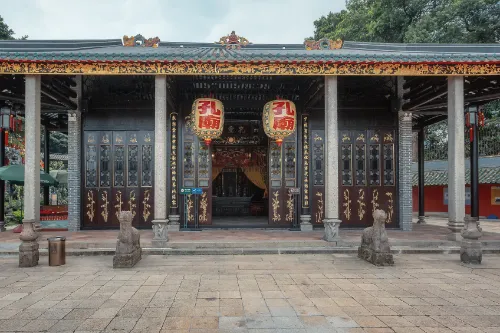
Wong Fei-hung Memorial Hall
The Wong Fei-hung Memorial Hall is a Lingnan-style building imitating the grey brick wok-ear architecture of the Qing Dynasty. It opened to the public in 2001. The hall displays historical materials, old photos and martial arts equipment of Wong Fei-hung, and reconstructs the scene of Po Chi Lam. A lion dance performance ground is set outside the hall, hosting daily lion dance and martial arts shows. It is one of the most popular spots in the scenic area.
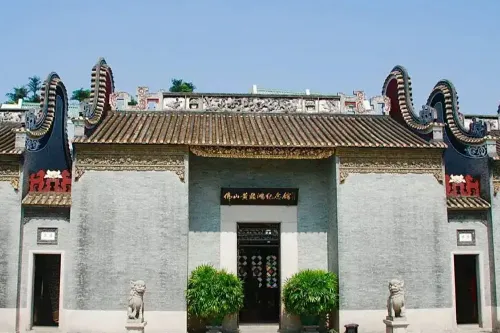
Ip Man Hall
Opened in 2002, Ip Man Hall is dedicated to Ip Man, the grandmaster of Wing Chun. It exhibits Ip Man’s life records, wooden dummy sets and related cultural relics, and introduces the inheritance and development of Wing Chun. It is a special exhibition hall for Wing Chun culture.
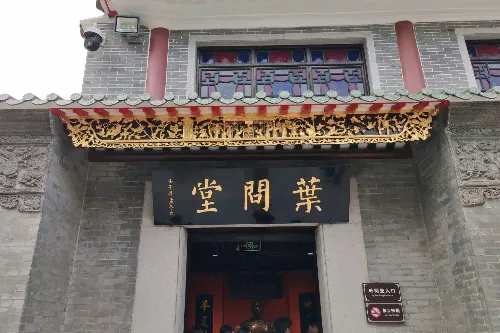
Historical Culture Exhibition Hall of the Ancestral Temple
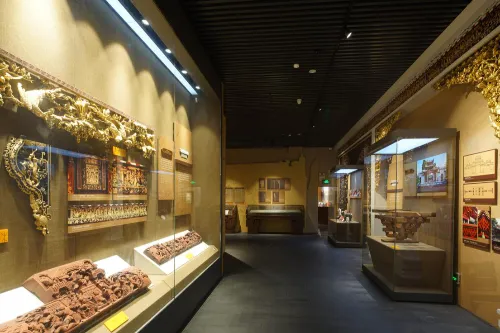
The exhibition hall was completed and opened in 2016. Its permanent exhibition systematically sorts out the development of the Ancestral Temple from the Northern Song Dynasty to the present, the history of ancient Foshan Town, Taoist culture and folk beliefs. Illustrated panels and cultural relics are used for auxiliary explanation, suitable for visitors who want to learn the history of the Ancestral Temple in depth.
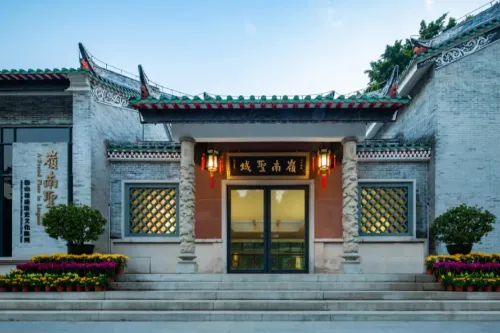
Tour Route
Main Entrance → Wanfu Stage → Lingying Memorial Archway → Jinxiang Pond → Bell and Drum Towers → Three Gates → Front Hall → Main Hall → Qingzhen Tower → Confucian Temple → Ip Man Hall → Wong Fei-hung Memorial Hall → Historical Culture Exhibition Hall → East Exit
Tour Tips
- It is recommended to reserve 2 to 3 hours for sightseeing. If you watch lion dance and Cantonese opera shows, you may extend your stay appropriately.
- Fixed lion dance shows are scheduled at 10:00, 14:15 and 15:30. Shows will be cancelled on rainy days. Arrive early to get a good viewing spot.
- Cantonese opera performances are generally held on Saturday, Sunday, the first and fifteenth day of each lunar month and holidays in the afternoon. Please check the scenic area notice before your trip.
- Pay close attention to the pottery sculptures on roof ridges, lime sculptures under eaves, brick and wood carvings. These are the essence of the Ancestral Temple’s architectural art.
- For an in-depth understanding of history, you may rent audio guide devices or book guided tours at the visitor service center.
- Follow the central axis from south to north to avoid backtracking. After the tour, you can reach Lingnan Tiandi commercial district directly from the East Exit.
- Temperatures are high in summer. It is advised to avoid noon and enter in the morning or late afternoon.
Notes
- The opening hours are 8:30–18:00, and ticket sales and entry stop at 17:30. Please arrange your visiting time properly.
- Smoking, candle lighting and open flame are prohibited inside the scenic area. Candles are not allowed to be brought into the temple.
- Pets, controlled weapons, flammable and explosive items, balloons, bicycles and electric scooters are not permitted inside.
- Flash photography is forbidden in exhibition halls and ancient buildings. Do not touch cultural relics and carved components.
- Commercial shooting, team building and large-scale art creation activities are not allowed without prior permission from the scenic area.
- Tickets are valid only on the day of purchase for one entry. Re-entry requires a new ticket.
- During holidays, visitor flow is heavy. Visitor limits will be implemented at Wong Fei-hung Memorial Hall and the lion dance ground. Please follow instructions from on-site staff.
- Wheelchairs and strollers can be borrowed free of charge at the visitor service center. Self-service luggage lockers are available in the ticket hall.
Transportation
- Metro: Take Guangfo Line to Zumiao Station, exit via Exit C or D, and walk about 3 to 5 minutes to the main entrance.
- Bus: At Zumiao Stop A, take routes 101, 105, 116, 117, 118, 121, 122, 123, 126, 128, 134, 137, G12. At Zumiao Stop B, take routes 106, 109, Chancheng-Sanshui Line B.
- Self-driving: Navigate to Foshan Zumiao Museum. Municipal parking lots are available nearby, yet parking spaces are tight. Public transport is recommended on holidays.
Opening Hours
Foshan Zumiao Museum opens daily from 8:30 to 18:00, with ticket sales and entry closing at 17:30. It opens all year round under normal circumstances. Opening hours will be adjusted on special dates such as Chinese New Year’s Eve. Please refer to the official notice on the day of your visit. All exhibition halls, the lion dance ground and performances at Wanfu Stage follow the unified opening hours of the museum. Shows may be adjusted or cancelled temporarily due to weather conditions.
Tickets
The full adult ticket costs 20 CNY per person, and the half-price ticket is 10 CNY per person.
Search for the official WeChat service account "佛山市祖庙博物馆" to get the latest updates.
Online Booking
Click here to jump to the Trip.com ticketing platform for ticket purchase.