
Chimelong Birds Park is located at No.183 Xingbian Street, Dabian Village, Dashi Subdistrict, Panyu District, Guangzhou City, Guangdong Province. It is affiliated with Guangzhou Chimelong Tourist Resort, a 5A-level scenic area. Meanwhile, it is an original wetland bird-themed park with leading scale in China as well as a national-level forest and grass science popularization base. Covering a total area of about 2,000 mu, the park constructs buildings with low density based on the original natural wetland landforms. Its main architectural components consist of water areas, wetland vegetation, bird watching boardwalks, performance venues, animal exhibition areas and science popularization exhibition halls. The covered area of man-made buildings accounts for less than 10% of the total park area, retaining the original wetland ecological features to the maximum extent. The park gathers more than 300 species and over 10,000 rare birds and wetland animals worldwide. It owns the world's largest artificially reared flamingo population, as well as top-ranked crested ibis breeding populations and pelican inhabiting populations in South China. Its core highlights include open free-range bird watching mode, live ecological bird flight shows, immersive boat wetland exploration and systematic wetland biological science education. Different from traditional cage zoos, it creates a natural visiting scene for visitors to get close to wild birds. The park is divided into seven functional zones: Science Popularization & Education Zone, Central Performance & Interaction Zone, Animal Habitat Exhibition Zone, Leisure Service & Commercial Zone and Ecological Recreation Zone, satisfying multiple functional demands including tourism sightseeing, species conservation and research-based study.
History and Culture
The predecessor of Chimelong Birds Park was Guangzhou Crocodile Park, planned and built by Chimelong Group. It officially opened to the public on May 28, 2004. In the early opening stage, its core business focused on crocodile breeding display and crocodile science sightseeing, making it an early large-scale crocodile-themed sightseeing park in China. Meanwhile, supporting wetland environments were built, with various water birds and amphibians gradually introduced to enrich the park's species system. During the decade after opening, the park continuously optimized the wetland ecological environment and expanded the variety of bird species. A professional system for bird feeding, breeding and rescue was established. The proportion of bird-related businesses rose year by year, and the ecological value of wetlands became increasingly prominent.
On July 1, 2016, Chimelong Group officially renamed Guangzhou Crocodile Park to Chimelong Birds Park and updated the park's brand logo simultaneously. The park shifted its overall operational focus to rare bird conservation exhibition and wetland ecological sightseeing, upgraded into a top-tier integrated domestic park integrating bird protection, scientific breeding and public display, filling the industrial gap in large-scale original wetland bird live performance in China. After the renaming, the park kept upgrading hardware facilities, successively completing a professional bird breeding center and standardized science lecture hall, renovating the venue for the Song of Hundred Birds show and optimizing water cruise routes. The conservation team has carried out scientific research on breeding rare birds, realizing stable reproduction of endangered and rare species such as crested ibises and flamingos. More than 1,500 new birds are hatched each year on average, forming a mature species conservation system.
In terms of cultural value, relying on wetland resources, the park regularly carries out public welfare natural science research activities for primary and secondary schools and social organizations, building a public platform for wetland ecological protection publicity. In addition, it creates exclusive cultural tourism IP through original live bird performances, acting as an important carrier for wetland nature education in the Pearl River Delta. The park also maintains long-term scientific research cooperation with domestic and international ornithological institutions to share technical experience in artificial breeding of rare birds, possessing both cultural and tourism leisure value as well as social significance for biodiversity conservation.
Main Attractions
Song of Hundred Birds Performance Area
The Song of Hundred Birds area is the landmark core landscape and performance venue of the park, built around an open circular natural lake. It is one of the few large-scale venues for collective ecological bird flight displays across the globe. Hundreds of wild birds of dozens of species including flamingos, spoonbills, pelicans and various herons are released at fixed daily sessions. The birds fly low along the lake surrounding the island, restoring the natural flying state of bird migration in the wild. Tiered open-air viewing stands are set up here with unobstructed views, serving as the core spot to watch the spectacular scene of flocks of birds taking flight together. Regular daily shows are arranged at 11:30 and 15:30, with extra sessions available on weekends according to passenger flow.
Flamingo Island
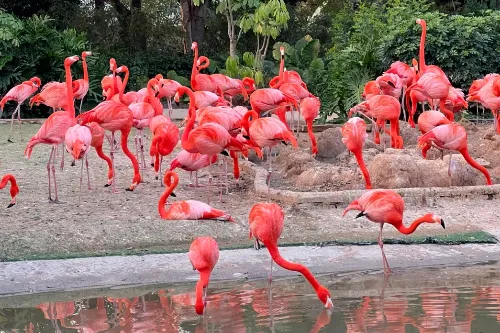
Flamingo Island is situated in the wetland waters at the central part of the park, housing the largest captive flamingo population in China. The whole area constructs original habitats with shallow water and herbaceous plants. Groups of pink flamingos gather to perch and forage, delivering a highly recognizable visual landscape. Pedestrian viewing boardwalks and official feeding spots are arranged in the area, allowing tourists to observe the daily behaviors of flamingos up close. The park regularly holds junior keeper experience courses to popularize knowledge about flamingo breeding and living habits for visitors, making this spot a popular photo check-in site within the park.
Pelican Cove
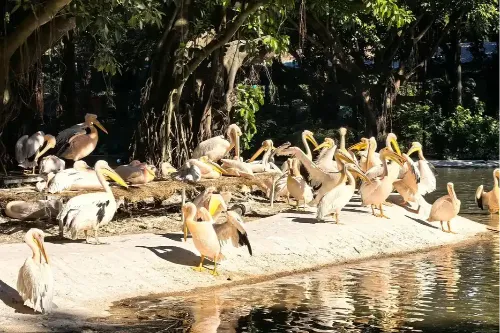
Pelican Cove ranks among the top white pelican display habitats in South China. Surrounding hydrophilic boardwalks are built along branched water systems closely attached to the water surface, enabling tourists to closely observe pelicans swimming, fishing and preening their feathers. Official feeding stations are available here for visitors to purchase special feed to feed pelicans. Cruise routes pass through this area, so visitors can view pelican groups from both water and land perspectives. The spacious water area meets the living demands of pelicans for wide-range swimming activities.
Boat Exploration into the Secret Wetland
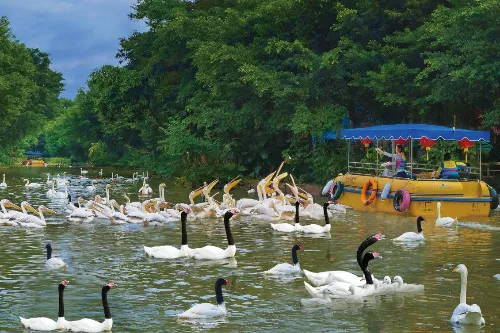
Boat Exploration into the Secret Wetland is an immersive water tour project in the park. Its route runs through multiple secluded wetland waterways covering several independent bird islands. Dense plants grow naturally on both sides of the water channels, where more than 30 species and nearly a thousand free-range water birds inhabit along the route. Professional commentators are assigned on cruise ships to introduce the varieties and habits of birds along the voyage. This boat trip can reach wild bird habitats inaccessible by pedestrian boardwalks, serving as a featured project for in-depth appreciation of the park's wetland scenery. Separate tickets are required to experience this project inside the park.
Hippo Zone
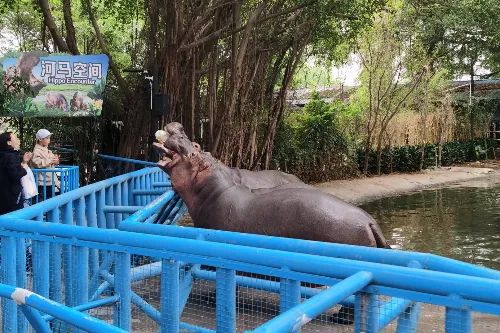
Hippo Zone is the shooting location for the variety show Where Are We Going, Dad?. A large open-air hippo pond is built here with multiple adult hippos raised inside. Safe isolated feeding platforms are set up for tourists to buy pumpkins, carrots and other food to feed hippos and watch their feeding and playing behaviors closely. Keepers give regular lectures on hippo maintenance, and hippo care science displays are open during certain periods, combining ornamental value with animal science popularization functions.
Crane Bay
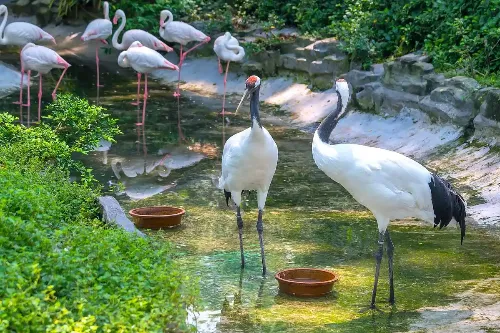
Crane Bay is located on the left side of the park entrance, covering hundreds of mu. Constructed on the alluvial plain wetland native to the Pearl River Delta, it is planted with a large number of local Lingnan wetland plants. Six kinds of rare cranes including red-crowned cranes, black-necked cranes, grey cranes and white-naped cranes inhabit here, together with companion water birds such as black swans, egrets and diving ducks. The wetland environment here is tranquil and original. Cranes are most active at dawn and dusk, making this a quiet viewing area for observing the natural behaviors of cranes.
Scarlet Ibis Plaza
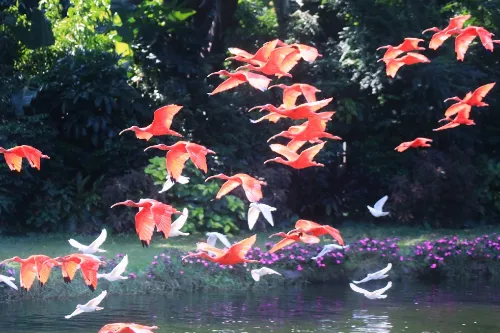
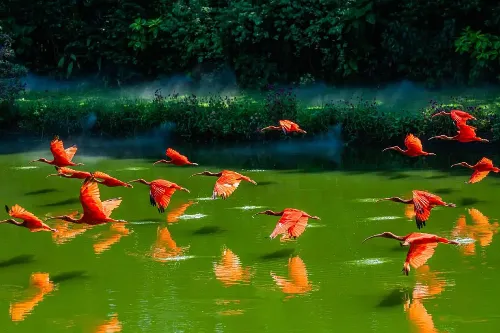
Adjacent to the rainforest area near the park entrance, Scarlet Ibis Plaza is a dedicated habitat for American scarlet ibises. Covered in bright red plumage, scarlet ibises are known as "red dancers". The exhibition area replicates their native living environment with pools and low shrubs, equipped with gentle viewing paths. As the first viewing spot after entering the park, it is ideal for taking photos at the early stage of the visit with designated safe close-view areas available.
Magic Creatures Pavilion
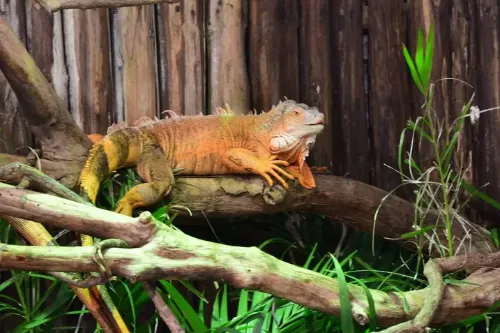
Magic Creatures Pavilion is an indoor constant-temperature exhibition hall displaying various amphibians and reptiles, including golden pythons, various lizards, tree frogs, chameleons and other species. Ecological simulated display tanks are adopted to restore the native living environments of animals. The hall is equipped with graphic science display boards and regular on-site science explanation services. Shielded from outdoor weather conditions, it serves as an indoor scenic spot for summer heat avoidance and learning knowledge about amphibians and reptiles.
Bird Breeding Center
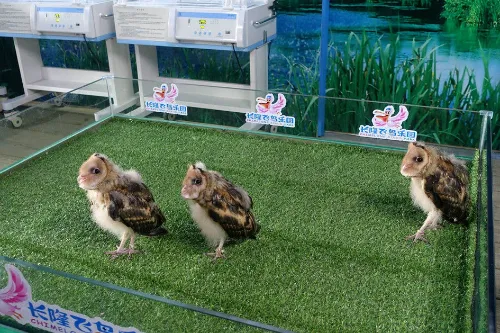
Opened officially to visitors in 2020, the Bird Breeding Center is a scientific research and popularization landscape within the park. Equipped with professional incubation monitoring equipment, it allows tourists to observe the whole process of bird egg hatching and fledgling growth through visual windows. Professional keepers deliver regular science explanations to intuitively demonstrate the complete artificial breeding process of rare birds, possessing high research and educational value for family visitors.
Tour Route
Collect park map & performance schedule at the park entrance → Scarlet Ibis Plaza → Crane Bay → Magic Creatures Pavilion → Song of Hundred Birds Viewing Area (watch performance) → Flamingo Island → Pelican Cove (wetland boat tour) → Hippo Zone → Bird Breeding Center → Animal Interactive Area → Park Exit
Travel Suggestions
- It is recommended to reserve 4 to 6 hours for the whole visit. Arrange your itinerary according to show times and prioritize free fixed shows including Song of Hundred Birds and Wetland Fairies Show
- Arrive at the viewing stand 20 minutes in advance to get good seats for Song of Hundred Birds; the front waterfront seats provide better views and shooting effects
- Only buy animal feed from official booths inside the park; do not bring self-prepared food to feed animals
- Enter the park in the morning during summer to avoid high noon heat. Take a rest and escape the heat in Magic Creatures Pavilion or park restaurants instead of walking outdoors under blazing sun at noon
- Strollers are available for rent for visitors with children. The park has flat terrain with full barrier-free access for strollers
- Light-colored clothes are recommended for visiting. Equip a telephoto camera for better shooting results at Flamingo Island and Scarlet Ibis Plaza
- Choose the wetland boat tour for an in-depth wetland experience. The combined land and water tour enables access to more original wetland areas unreachable on foot
Precautions
- Ticket checking stops at 17:00 every day. Even though the park closes at 18:00, late visitors will not be admitted, so arrange your arrival time reasonably
- The dense wetland plants breed numerous mosquitoes. Prepare mosquito repellent before entry together with sun protection supplies such as sun hats and sunscreen lotion
- Feeding, chasing or disturbing birds and animals without permission is strictly forbidden. Do not climb over protective boardwalks and isolation fences to prevent personal safety accidents
- Standing out of the cabin, leaning body outside and throwing objects into the water are prohibited during the cruise. Follow all safety regulations issued by cruise staff
- Valid certificates including ID cards, senior citizen cards and household registration books must be presented for discounted tickets, which will be verified by staff on site
- Keep a close eye on children near the abundant water areas in the park and stay away from unguarded waters to prevent drowning risks
- Animal show schedules are subject to temporary changes due to weather and animal conditions. Always refer to the latest printed daily timetable collected at the park entrance
- Skateboards, balance scooters, large suitcases and bulky luggage are banned in visiting areas; lockers at the park entrance are available for luggage storage
Transportation
- Subway: Take Guangzhou Metro Line 2 to Huijiang Station Exit C and transfer to the free park shuttle bus departing every about 10 minutes with a 3-10 minute ride to the main gate. Guests staying at Chimelong resort hotels can take the resort-wide free shuttle buses to reach the birds park
- Self-driving: Navigate to the parking lot of Chimelong Birds Park main gate. The parking lot opens from 08:00 to 23:00 with sufficient parking spaces
- Public Bus: Take Bus Fan 187 or Fan 185 to Huijiang Village Committee Stop, then walk a short distance to take the free park shuttle bus into the park
- Taxi & Ride-hailing: Set Chimelong Birds Park main gate as your destination; taxis and online car-hailing vehicles can drop visitors right at the ticket gate area
Opening Hours
The regular daily opening hours of Chimelong Birds Park are from 09:30 to 18:00, with ticket checking terminated at 17:00. Visitors who complete ticket inspection before the deadline can stay inside until closing time. The overall daily opening period stays consistent from April to June, July to August summer vacation, and September to March of the next year. Only the schedules of animal shows and science lectures differ between workdays and weekends. The opening hours of partial zones will be properly extended during statutory holidays according to actual passenger flow. All real-time operational adjustments shall be subject to official notices posted on site. The park has no fixed annual maintenance closure date. It will temporarily adjust opening status or suspend outdoor performances only under severe weather such as extreme heavy rain and typhoons, with relevant notifications released through official channels.
Ticket Information
The standard ticket price is 100 RMB per person. Search the official WeChat public account "欢乐长隆" to acquire the latest park updates.
Online Booking
Click here to jump to the Trip.com ticketing platform for ticket purchase.