
Shanghai Nature Wild Insect Museum, also known as the Oriental Pearl · Reptile & Insect Exploration Center, is located on the 1st Floor Commercial Center of the Oriental Pearl TV Tower, No. 1 Century Avenue, Pudong New Area, Shanghai (formerly No. 1 Fenghe Road, Pudong New Area). Situated in the core business district of Lujiazui, it is adjacent to the Oriental Pearl Tower and the International Conference Center. A joint venture between China and Singapore, it is the first popular science exhibition hall in China focusing on live insects, amphibians and reptiles, and has been awarded the titles of National Popular Science Education Base and Shanghai Popular Science Base. The total area of the venue is 3,000 to 3,500 square meters, divided into upper and lower floors. Through high-tech landscaping, the building highly simulates and restores various natural ecological environments such as waters, deserts, rainforests, islands and swamps. The museum displays more than 300 species and tens of thousands of live animals and specimen exhibits, covering various insects, amphibians, reptiles and small mammals. It is a distinctive themed pavilion integrating tourism, popular science education and parent-child interaction.
History and Culture
Shanghai Nature Wild Insect Museum was officially established on September 23, 2001. Since its founding, it has filled the gap in the field of live insect and reptile science exhibition halls in China. At the beginning of its establishment, the museum introduced advanced foreign breeding technology for live insects, committed to truly showing the instincts and habits of insects, amphibians and reptiles, presenting creatures that have gradually disappeared due to urban development to the public, and guiding people to treat life with respect and love.
The museum was originally located at No. 1 Fenghe Road, Pudong New Area, with 13 distinctive areas including the Ecological Garden, Insect Corridor, Ecological Touching Area, Amphibian & Reptile Cave Area, Tropical Rainforest Area, and Popular Science Classroom. In 2012, a freshwater ornamental shrimp exhibition area was added, and the Insect Corridor was upgraded and renovated to further enhance the parent-child interactive experience. In September 2025, the Insect Museum was relocated to the 1st Floor of the Oriental Pearl TV Tower and renamed the "Oriental Pearl · Reptile & Insect Exploration Center". On the basis of retaining the original precious collections, the animal ecological environment was optimized, more zero-distance interaction and popular science sessions were added, opening a brand-new interactive natural science popularization model. After more than 20 years of development, it has become an important natural science landmark and parent-child research destination in Shanghai.
Main Attractions
Butterfly Ecological Garden
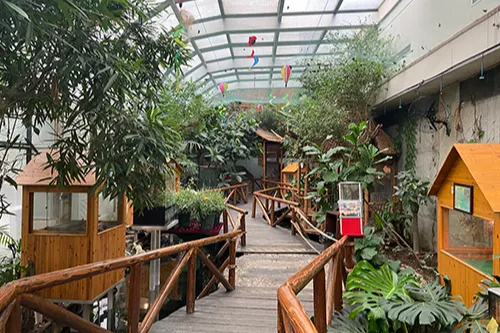
The Butterfly Ecological Garden is one of the most ornamental areas in the museum. It simulates a tropical butterfly habitat with a large number of nectar plants and flowers planted. Dozens of colorful butterflies live here, including rare species such as the blue morpho butterfly. Visitors can watch butterflies dancing among the flowers. A butterfly release ceremony is held at 14:00 every day, and the powder on their wings refracts rainbow-like light in the sun.
Insect Corridor
The Insect Corridor is the main exhibition area for live insects, bringing together hundreds of peculiar insects from all over the world. Visitors can closely observe stick insects, rhinoceros beetles, stag beetles, mantises, spiders, scorpions and other creatures here. The exhibition area restores their native environment through miniature landscapes, showing behaviors such as insect camouflage, predation and perching. Some transparent breeding boxes allow visitors to clearly observe the subtle structures and living habits of insects.
Amphibian & Reptile Cave Area
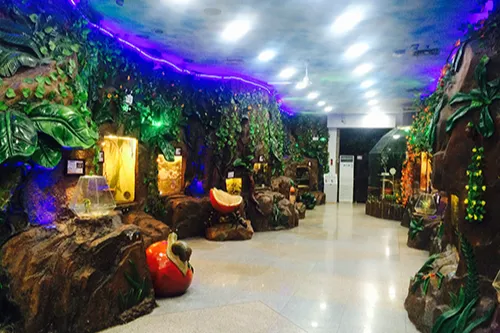
With a cave landscape as the background, this area mainly displays lizards, frogs, salamanders and other amphibians and reptiles. The interior is humid and dim, simulating the ecology of tropical rainforests and underground caves. Visitors can see rare species such as green iguanas, chameleons and poison dart frogs. The landscaping in the area is realistic, with rocks, flowing water and green plants interwoven, as if in a wild secret realm.
Tortoise & Soft-Shelled Turtle Exhibition Area (Variety of Turtles)
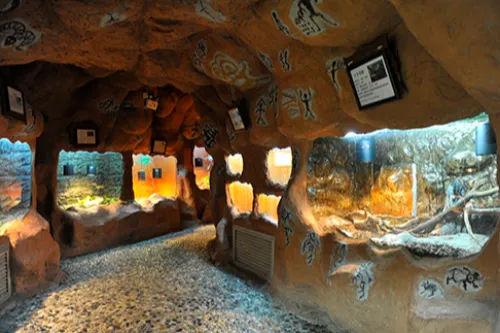
The Tortoise & Soft-Shelled Turtle Exhibition Area brings together a variety of turtles and soft-shelled turtles from around the world, including different ecological types such as land turtles, water turtles and semi-aquatic turtles. There are giant Aldabra giant tortoises as well as small red-eared sliders, snapping turtles and more. The exhibition area is divided into water and land zones, where visitors can watch turtles swimming freely in the water and basking on the shore.
Snake & Python Area
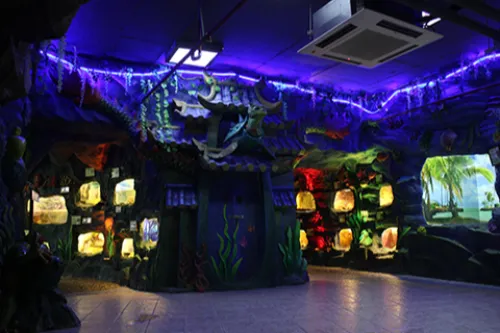
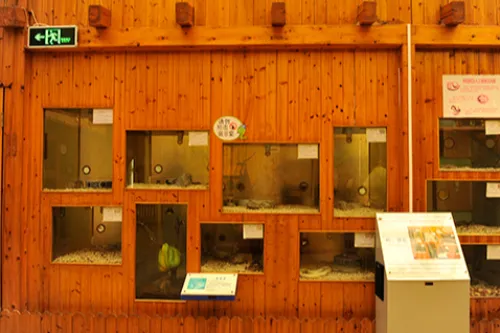
The Snake & Python Area safely displays a variety of non-venomous snakes and pythons, such as corn snakes, king snakes and ball pythons. Each breeding box is equipped with temperature control and landscape systems, simulating temperate and tropical forest environments. The breeding boxes are made of explosion-proof glass, allowing visitors to safely watch the crawling, molting and feeding states of snakes.
Ecological Touching Area
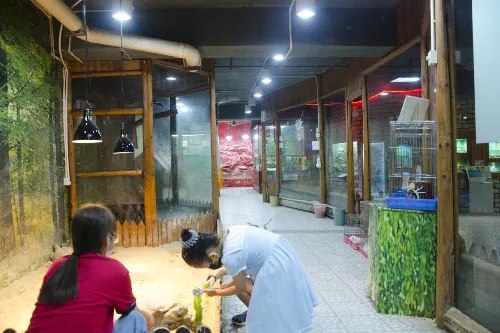
The Ecological Touching Area is the core area for parent-child interaction, housing gentle and touchable small animals. Under the guidance of staff, visitors can touch gentle animals such as alpacas, lop-eared rabbits and chinchillas. During some periods, they can also touch the shed skin of lizards and non-venomous snakes to feel the unique textures of different creatures.
Water Touching Area
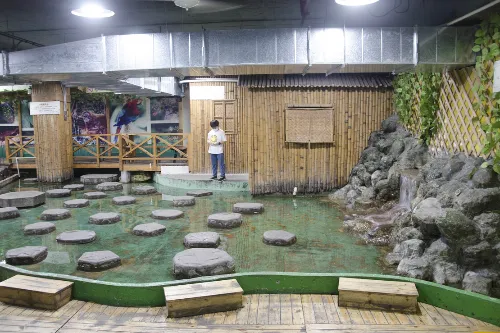
The Water Touching Area is equipped with shallow pools and transparent aquariums, displaying aquatic organisms such as koi, freshwater shrimp and small amphibians. Visitors can experience activities such as catching small fish and feeding koi. In addition, the area displays more than 20 species of environmental indicator fish from different river basins in China to popularize knowledge of river ecological health.
Specimen Creative Room & Popular Science Classroom
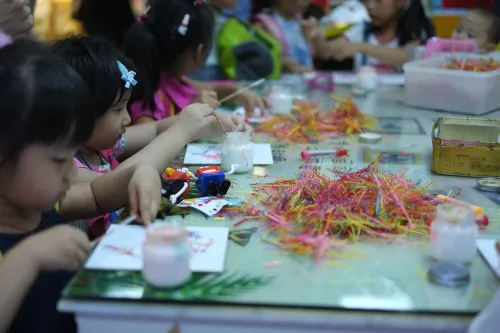
The Specimen Creative Room displays tens of thousands of precious insect specimens, including butterflies, beetles, moths and more, many of which are rare and endangered species. The Popular Science Classroom regularly holds popular science lectures and DIY activities. Visitors can learn insect knowledge here and make butterfly or beetle specimens by hand as souvenirs.
Visiting Route
Shanghai Nature Wild Insect Museum adopts a single-layer continuous visiting route, taking about 2 to 3 hours for the whole trip. After entering from the entrance, visitors first arrive at the Butterfly Ecological Garden to watch butterflies flying and the release ceremony; then enter the Insect Corridor along the passage to view various live insects one by one; then proceed to the Amphibian & Reptile Cave Area to explore the world of lizards and frogs; after that, visit the Tortoise & Soft-Shelled Turtle Exhibition Area and the Snake & Python Area in turn to learn about reptiles; then reach the Water Touching Area to experience aquatic creature interaction; then enter the Tropical Rainforest Area to feel the immersive rainforest atmosphere; after passing through the rainforest, arrive at the Ecological Touching Area and Cute Pet Paradise to participate in animal interaction and watch performances; finally visit the Specimen Creative Room and Popular Science Classroom to end the whole tour.
Visiting Tips
- The recommended visiting duration is 2 to 3 hours; reserve enough time to participate in interactive and popular science activities.
- It is better to visit in the morning on weekdays when there are fewer visitors for a better experience.
- Spring and autumn are the best seasons to visit. The temperature inside the museum is high in summer (above 28°C in some areas), so it is recommended to wear light and breathable clothes.
- There are small animal theater performances at 11:00 and 14:30 on weekends and holidays; plan your time in advance to watch.
- Before participating in touching interactions, follow the guidance of staff and only touch designated gentle animals.
- You can participate in specimen making DIY in the Popular Science Classroom, which is suitable for parent-child experience.
- There are rest areas and shops in the museum where you can take a break and buy insect-themed cultural and creative products.
- It is recommended to visit together with surrounding attractions such as the Oriental Pearl and Shanghai Ocean Aquarium.
Notes
- Flash photography is strictly prohibited in the museum, as strong light will damage the visual systems of insects and reptiles.
- Tapping or knocking on glass breeding boxes is forbidden to avoid disturbing the animals.
- Without the permission of staff, touching or feeding animals in non-interactive areas is strictly prohibited.
- Children must be accompanied by adults at all times and shall not move alone without supervision.
- Some exhibition areas (such as the tropical rainforest) have high humidity and strong odors; sensitive people can bring their own masks.
- Pets, food and colored drinks are not allowed in the museum.
- Wash your hands in designated areas after touching animals to maintain hygiene.
- Observe the closing time; admission stops 30 minutes before closing.
Transportation
- Metro: Take Metro Line 2 or Line 14 to Lujiazui Station, exit from Exit 2, and walk for about 5 to 10 minutes to the 1st Floor of the Oriental Pearl TV Tower.
- Bus: Take Bus No. 81, 82, 85, 798, 870, 985, 774 or 939 to Lujiazui Ring Road Fenghe Road Station, then walk for about 5 minutes.
- Sightseeing Tunnel: Take the Bund Sightseeing Tunnel from the Bund in Puxi to Pudong, then walk north for about 300 meters from the exit.
- Self-driving: Navigate to the Oriental Pearl Parking Lot, located at the intersection of Fenghe Road and Binjiang Avenue.
Opening Hours
Opening hours are from 9:00 to 17:00 from Monday to Thursday, with last admission at 16:30; from 9:00 to 17:30 on Fridays, weekends and national legal holidays, with last admission at 17:00.
Tickets
Ticket price is 88 yuan per person. You can search for the official service account "上海大自然野生昆虫馆" on WeChat to get the latest updates or purchase tickets online.
Online Booking
Click here to jump to the Trip.com ticketing platform for ticket purchase.