
Shanghai Ocean Aquarium is located at No. 1388 Lujiazui Ring Road, Pudong New Area, Shanghai. It is a national 4A-level tourist attraction, one of the world's largest artificial seawater aquariums, and also a landmark marine-themed cultural and tourism spot in Shanghai. With the core features of "displaying the mysteries of the water world and spreading marine culture", the aquarium focuses on the display of aquatic organisms from the Arctic, Antarctic and all the world's oceans as well as popular science on their protection. It is renowned for its unique tunnel-type viewing design, abundant rare aquatic organism populations and immersive marine experience scenes. The total construction area of the venue is about 20,500 square meters, among which the exhibition area covers 12,000 square meters. There are 9 major themed exhibition areas and 28 large-scale themed biological exhibition zones in total, with a total water capacity of over 4,500 tons. It raises and displays more than 450 species of aquatic organisms, with the number of individuals exceeding 12,000, covering freshwater fish, marine fish, invertebrates, amphibians, reptiles, polar animals and other categories. It is a comprehensive marine aquarium integrating viewing, popular science and education.
History and Culture
Shanghai Ocean Aquarium officially opened to the public in February 2002. It was co-invested and built by Singapore's Straco Group and China Poly Group. Its original intention of construction was to fill the gap of large-scale professional marine aquariums in Shanghai and promote the popularization of awareness of marine ecological protection. It took nearly 4 years from the planning to the completion of the venue. The design team integrated advanced international aquarium construction concepts with local Chinese marine cultural elements. It reached the international leading level at that time in terms of exhibition space layout and biological breeding technology, and became an important benchmark project for cultural and tourism supporting facilities in Shanghai Lujiazui Financial and Trade Zone in the early 21st century.
Since its opening, Shanghai Ocean Aquarium has always focused on marine culture communication. It has continuously carried out a series of activities such as "Marine Popular Science Entering Campus" and "Symposium on the Protection of Endangered Aquatic Organisms", and has received more than 30 million domestic and foreign tourists in total. The aquarium has also participated in many national aquatic organism protection programs, such as the artificial breeding and popular science display of rare species like Chinese sturgeon and Chinese alligator. It has become a key base for marine cultural popular science education in the Yangtze River Delta region. The cultural core of "protecting the marine ecology and respecting natural life" that it carries has also become an important part of Shanghai's urban cultural and tourism culture.
Main Attractions
China Zone
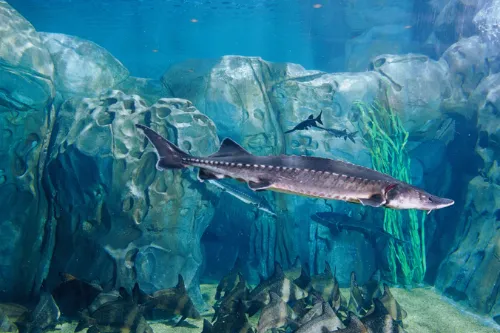
Shanghai Ocean Aquarium is the only aquarium in the world that has an independent China Zone to display aquatic organisms unique to China. Most of the organisms on display here are national protected animals, including Chinese sturgeon, Chinese sucker fish, Chinese alligator and giant salamander.
South America Zone
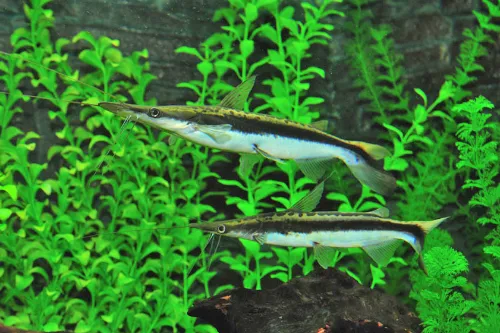
The South America Zone covers an area of about 1,000 square meters, which restores the ecological environment of the Amazon River Basin in South America. Nearly 100 species of tropical plants are planted in the zone, creating a natural atmosphere of high temperature and high humidity. More than 30 species of fish unique to the Amazon River Basin are displayed here, such as arapaima, piranha and electric eel. Among them, the arapaima exhibition tank is over 8 meters long, which is the largest freshwater fish exhibition tank in the venue. Visitors can observe the living habits of these rare tropical aquatic organisms at close range.
Australia Zone
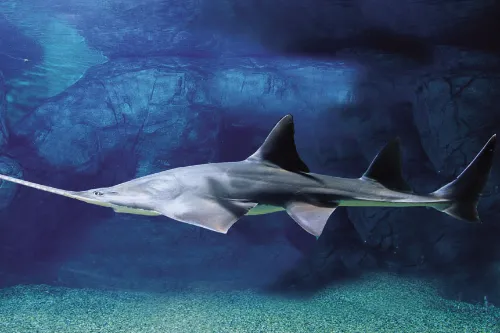
The Australia Zone covers an area of about 600 square meters with a water capacity of about 500 tons. It displays nearly 100 species of coral reef organisms, including live corals, clownfish, angelfish and starfish. The zone adopts a fully transparent acrylic curtain wall design to simulate the light and water flow environment of shallow sea areas. Among them, the live coral breeding area is one of the few areas in China that can realize the display of artificial coral breeding, allowing visitors to intuitively feel the diversity of the coral reef ecosystem.
Africa Zone
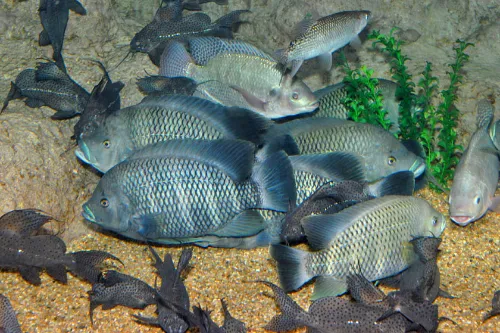
It not only has rivers such as the Nile River and the Congo River, but also lakes in the East African Rift Valley. Many species of fish are hidden there, and the most eye-catching ones are the cichlids in Lake Victoria, Lake Tanganyika and Lake Malawi. These lakes were formed about 500,000 to 2 million years ago. At that time, a few fish entering the lakes from rivers adapted to their new environments respectively. After countless differentiations, they evolved into today's large and prosperous society.
Southeast Asia Zone
The Southeast Asian tropical rainforest is one of the oldest tropical rainforests in the world, providing abundant food and ideal habitats for the creatures living here. Various large Southeast Asian fish live and thrive here, showing a thriving scene.
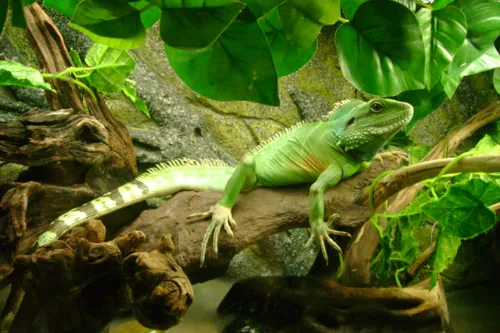
Cold Water Zone
The only exhibition tank in the Cold Water Zone - the harbor seal tank, has a semi-arc acrylic tank structure, which is another unique design of our aquarium. Here you can have the closest "contact" with the lovely harbor seals.
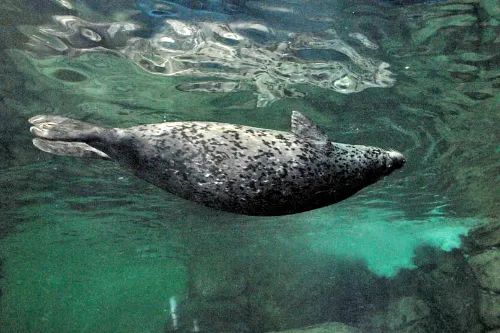
Coastal Zone
The horseshoe crab, known as the "living fossil", the coral reef slope fish that can change sex, and the weedy seadragon, known as the "treasure of the aquarium", will make you linger on with no thought of leaving with their various forms!
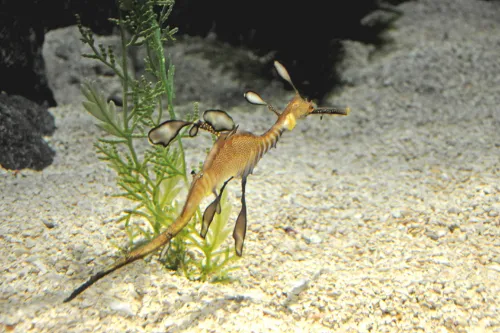
Antarctic Penguin House
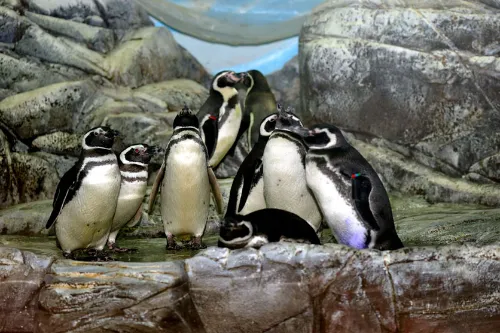
The Antarctic Penguin House is located on the third floor of the venue, covering an area of about 500 square meters, which is divided into a penguin activity area and a viewing area. It raises and displays nearly 20 Antarctic penguins, including king penguins and gentoo penguins. The venue adopts a constant temperature and humidity control system, maintaining the temperature of the penguin activity area between -5°C and 0°C. It is equipped with a ground simulating the Antarctic ice surface and an artificial snowmaking device. Visitors can observe the daily activities of penguins through the panoramic glass, making it one of the most popular exhibition areas for parent-child tourists in the venue.
Underwater Tunnel
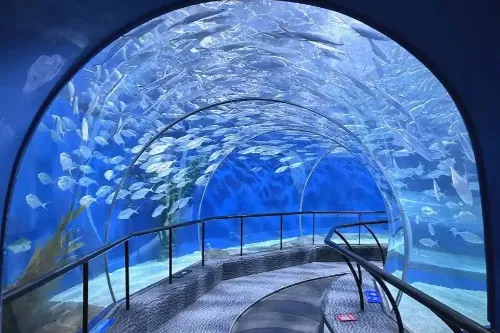
The Underwater Tunnel is the iconic attraction of Shanghai Ocean Aquarium, with a total length of 155 meters, a width of 3 meters and a height of 2.4 meters. It is built with panoramic acrylic glass, and the water capacity in the tunnel reaches 1,800 tons, displaying nearly 100 species of marine organisms such as sharks, rays and sea turtles. The tunnel is equipped with an automatic walkway, allowing visitors to observe the swimming scenes of various marine organisms in 360 degrees during movement. Among them, the shark display area includes 8 species of sharks such as white-tipped reef sharks and leopard sharks, making it one of the exhibition areas with a relatively rich variety of sharks in domestic aquariums.
Visiting Route
The recommended visiting time for Shanghai Ocean Aquarium is 3-4 hours. The recommended visiting route is: entering from the 1st floor entrance of the venue, first visiting the China Zone to understand the local aquatic organism resources; then taking the escalator to the 2nd floor to visit the South America Zone, Africa Zone and Southeast Asia Zone in turn to experience the freshwater ecology of different river basins; then going to the 3rd floor to visit the Australia Zone, Antarctic Penguin House and Coastal Zone to experience the differences between marine and polar ecosystems; finally entering the Underwater Tunnel (located on the 1st floor) through a special passage to have an immersive viewing of marine organisms. After the visit, you can go to the popular science exhibition hall at the exit to learn about marine protection-related knowledge. The total length of this route is about 1.2 kilometers, following the ecological logic of "from freshwater to marine, from temperate to polar", which can fully cover the core exhibition areas of the venue and avoid repeated visits.
Visiting Tips
- Best Visiting Time: It is recommended to enter the venue between 9:00 and 10:00 on weekdays. There are fewer tourists at this time, which allows you to avoid the peak passenger flow on weekends and holidays and improve your viewing experience. The months from April to May and September to October every year are the best seasons for visiting, as the temperature is pleasant and the tourist density in the venue is moderate.
- Visiting Gear: It is advisable to carry portable drinking water (there are few drinking water sales points in the venue) and wear comfortable flat shoes, since you need to walk about 1.2 kilometers throughout the visit. Parent-child tourists can bring strollers, and the venue provides free stroller rental service at the entrance.
- Popular Science Experience: Don't miss the daily popular science lectures in the venue. The lecture times for the Yangtze River Basin Exhibition Area are 10:30 and 14:30, and those for the Underwater Tunnel are 11:30 and 15:30. Each lecture lasts about 15 minutes, enabling you to have an in-depth understanding of aquatic organism knowledge.
- Photography Tips: The middle section of the Underwater Tunnel is the best place to take photos of shark schools. It is recommended to use a wide-angle lens and turn off the flash (to avoid disturbing marine organisms). The viewing window of the Antarctic Penguin House has sufficient light, which is suitable for taking photos of penguins' daily activities.
- Supporting Experience: After the visit, you can go to the Marine Popular Science Store on the 1st floor of the venue to buy marine-themed cultural and creative products. Meanwhile, you can participate in the public welfare activity of "Marine Organism Adoption" in the venue to support the cause of aquatic organism protection.
Notes
- Feeding any aquatic organisms and tapping the glass curtain walls are prohibited in the venue to avoid disturbing the animals. Pets, flammable and explosive substances and food (except drinking water) are not allowed to be taken into the venue.
- Running, chasing and making loud noises are forbidden in the Underwater Tunnel. Staying and leaning on the moving walkway are not permitted. Children must be accompanied by adults throughout the visit to prevent accidents.
- Areas such as the Antarctic Penguin House and the Shark Exhibition Area in the venue have relatively low temperatures (the temperature around the Penguin House is about 10°C). It is suggested that the elderly, children and people with weak constitutions take thin coats with them.
- Tickets are non-refundable and non-exchangeable once sold. If you need to reschedule your visit, you must apply through official channels 24 hours in advance. If you need to leave the venue temporarily after entering, you should go to the exit to apply for a re-entry certificate (valid only on the same day).
- The venue is equipped with a mother-baby room (located on the 2nd floor), barrier-free access and temporary rest areas. Tourists with special needs can consult the on-site staff. Those who feel unwell suddenly can go to the medical service point on the 1st floor for help.
- According to tourists' feedback, some exhibition areas in the venue have dim light. Please pay attention to your step safety when taking photos. During the peak periods on weekends and holidays, the Underwater Tunnel is prone to congestion, so it is recommended to visit during off-peak hours.
Transportation
- Subway: Take Shanghai Metro Line 2 to Lujiazui Station (Exit 1), then walk about 500 meters (8 minutes) to reach the venue entrance. You can also take Metro Line 14 to Lujiazui Station (Exit 3), and then walk about 600 meters (10 minutes) to get there.
- Bus: Take bus routes such as Route 82, Route 85, Route 799, Route 961 and Route 985 to Lujiazui Ring Road Fenghe Road Station. After getting off the bus, walk about 200 meters (3 minutes) to the venue. You can also take the Lujiazui Financial City Loop Line to the Aquarium Station, which takes you directly to the venue entrance.
- Self-driving: There are Lujiazui Ring Road Ground Parking Lot and Zhengda Plaza Underground Parking Lot around the venue. The venue has no exclusive free parking spaces, so green travel is recommended.
- Ferry: Take the Dongjin Line Ferry (from Dongchang Road Ferry Terminal to Jinling East Road Ferry Terminal) to Dongchang Road Ferry Terminal. Then you can either walk about 1.2 kilometers (15 minutes) to the venue or transfer to Bus Route 82 to Lujiazui Ring Road Fenghe Road Station.
Opening Hours
The venue is open all year round. The regular opening hours are from 9:00 to 18:00, and the last admission time is 17:30. On legal holidays (New Year's Day, Spring Festival, Qingming Festival, Labor Day, Dragon Boat Festival, Mid - Autumn Festival and National Day), the opening hours are adjusted to 9:00-19:00, with the last admission time being 18:30. During the Spring Festival (from New Year's Eve to the sixth day of the first lunar month), the venue is open as usual. On New Year's Eve, the opening hours are 9:00-17:00, and the last admission time is 16:30.
Tickets
The ticket price is 160 yuan per person. You can search for the official WeChat account "上海海洋水族馆" to get the latest news or buy tickets online.
Online Booking
Click here to jump to the Trip.com ticketing platform for ticket purchase.