
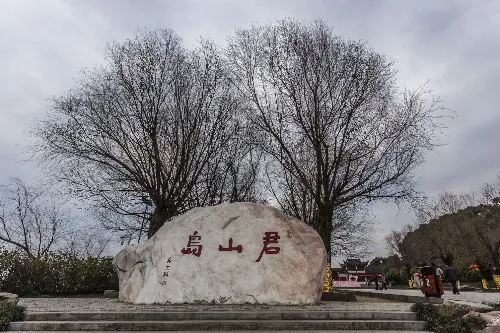
Dongting Lake is located in the northern part of Hunan Province, Dongting Lake spans across cities and counties such as Yueyang, Miluo, Xiangyin, Wangcheng, Yiyang, Yuanjiang, Hanshou, Changde, Jinshi, Anxiang, and Nanxian. It lies on the southern bank of the Jingjiang section in the middle reaches of the Yangtze River. As China's second-largest freshwater lake, it was historically known as Yunmeng, Jiujiang, and Chonghu. The name "Dongting Lake" originated in the Spring and Autumn and Warring States periods, derived from Dongting Mountain (now Junshan Island) in the lake.
Dongting Lake receives water from four inlets of the Yangtze River in the north—Songzi, Taiping, Ouchi, and Tiaoxian. In the south and west, it is fed by four major rivers of Hunan (Xiang, Zi, Yuan, Li) and small tributaries like the Miluo River. Finally, water flows into the Yangtze River via Chenglingji in Yueyang City.
In the late 1990s, calculations by water conservancy departments showed that the lake's area was 2,579.2 square kilometers (or 2,740 square kilometers according to another source), generally recognized as China's second-largest freshwater lake. If combined with the 1,300-plus square kilometers of floodway areas (or 18,780 square kilometers by another count) of the "Four Inlets of the Yangtze River" and the four Hunan rivers, the total area reaches 3,879.2 square kilometers (or 4,040 square kilometers). The lake basin has a circumference of 803.2 kilometers and a total storage capacity of 22 billion cubic meters, including 17.8 billion cubic meters in the natural lake and 4.2 billion cubic meters in the river channels.
As a crucial regulation and storage lake in the Yangtze River basin, Dongting Lake has strong flood storage capacity. It has defused numerous floods in the Yangtze River, ensuring the safe flood prevention of the Jianghan Plain and the Wuhan Metropolitan Area.
History and Culture
Dongting Lake was a strategic location in history and a cradle of traditional Chinese culture. The lake area is home to numerous scenic spots, with historical sites represented by Yueyang Tower being important tourism and cultural resources. It is also a birthplace of traditional Chinese agriculture, known as a "land of fish and rice." It serves as the most important commodity grain and oil base, aquatic product base, and breeding base in Hunan Province and even the whole country.
Representative figures of Huxiang Culture, such as Zhou Dunyi and Zeng Guofan, played a positive role in promoting the advancement of Chinese culture with the times. In terms of art, it is represented by Hunan Opera, Hunan Embroidery, and Huagu Opera. In the culture of poetry, the most famous work is "Memorial to Yueyang Tower" by Fan Zhongyan.
"Dongting Fishing Songs" have been widely spread since the Warring States period. With smooth and gentle melodies and a strong local flavor, they were listed as one of the national intangible cultural heritage items in 2014. Dongting Lake is one of the birthplaces of human rice farming, and its wetland development model has long been a typical example of traditional agriculture.
Major Scenic Spots
Yueyang Tower Scenic Area
Located in Yueyang City, Yueyang Tower, together with Yellow Crane Tower and Tengwang Pavilion, is known as one of the "Three Great Towers South of the Yangtze River." It is the birthplace of Fan Zhongyan's "Memorial to Yueyang Tower." Here, visitors can climb the tower to enjoy the scenery, overlooking the magnificent panoramic view of Dongting Lake as described in the phrase "embracing distant mountains and swallowing the Yangtze River."
In the early morning, you can watch the sunrise over the lake; in the evening, you can admire the "sunset glow over Dongting." The scenic area also houses an exhibition of miniature models of Yueyang Tower from different dynasties, allowing visitors to learn about the history of its architectural evolution.
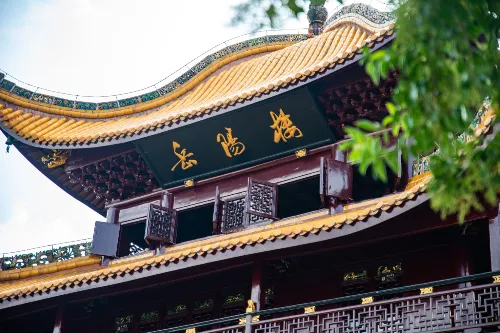
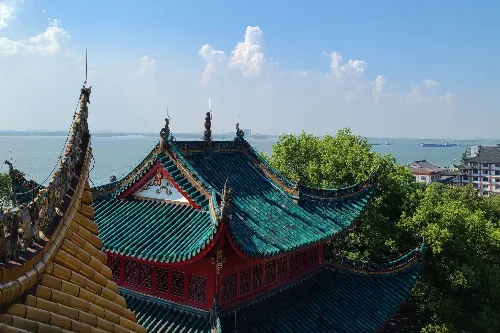
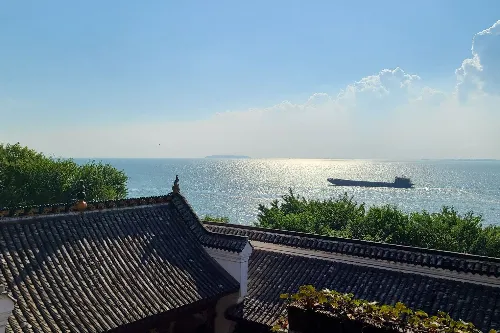
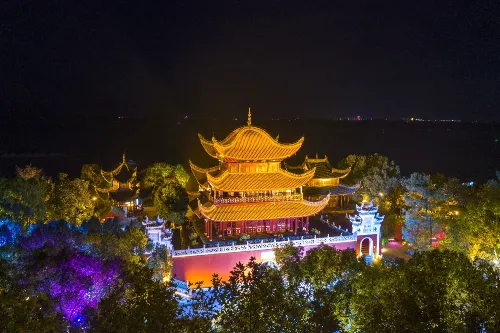
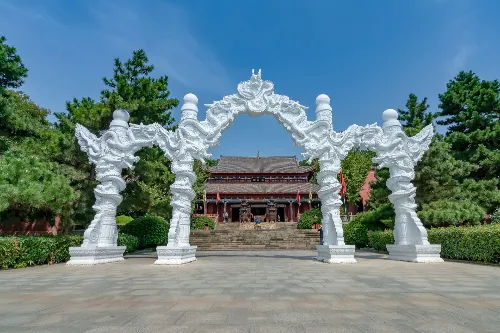
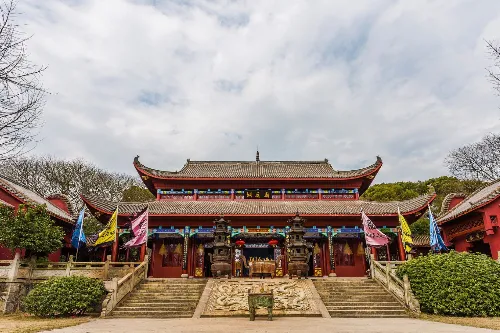
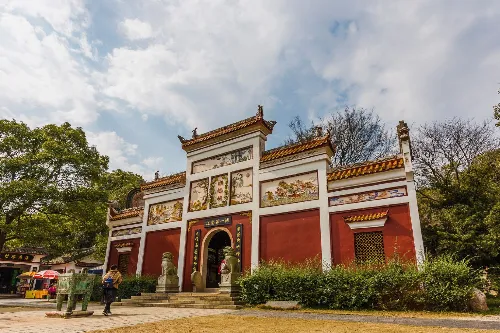
Junshan Island
Situated in Yueyang City, Junshan Island is said to be the place where the Xiang Concubines (Ehuang and Nüying) died for love. The island is covered with mottled bamboo (also known as "tear bamboo"), earning it the reputation of an "island of love myths."
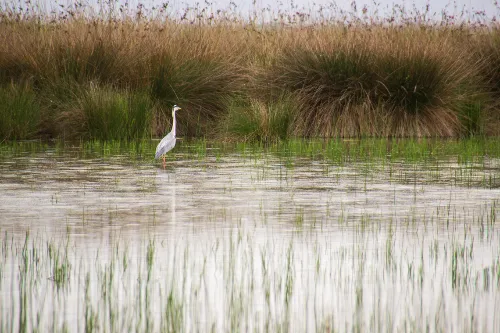
Here, wetlands, tea gardens, and reed marshes interweave, and egrets inhabit the area, making it an ecological secret haven.
East Dongting Lake National Nature Reserve
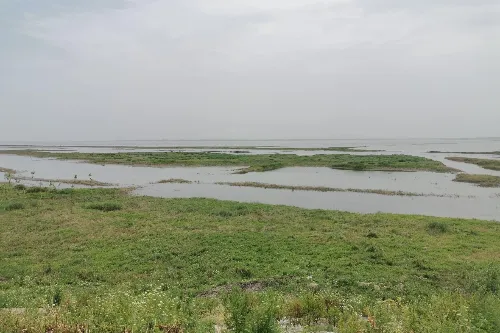
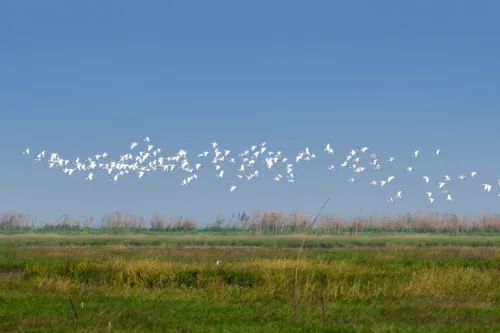
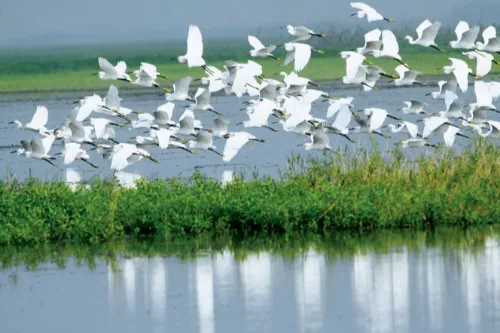
Located in the eastern part of Dongting Lake, the East Dongting Lake National Nature Reserve covers a total area of 1,570 square kilometers. In 1992, it became one of the first six international important wetlands in China to join the Ramsar Convention on Wetlands.
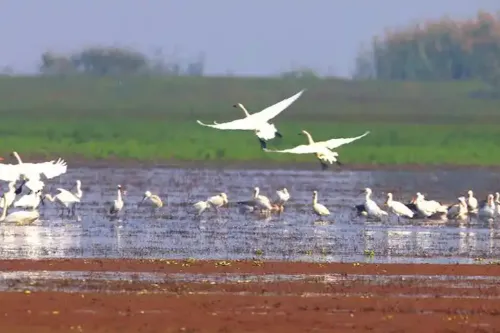
It is a crucial migration route for global migratory birds. From October to March of the following year, 10 million migratory birds of 217 species overwinter here, including rare birds such as white cranes and hooded cranes. It is also the habitat of China's largest wild population of Pere David's deer. Approximately 132 finless porpoises and 50 Pere David's deer live in the lake area.
South Dongting Lake Wetland
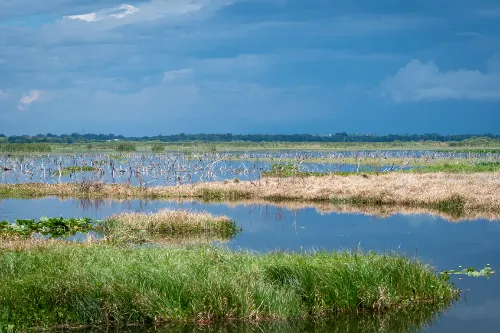
Located in Yiyang City, the South Dongting Lake Wetland presents a landscape of a water town. It is crisscrossed by lake branches, dotted with reed mazes, and scattered with fishing villages.
Here, visitors can experience traditional folk customs such as fishing culture and dragon boat culture. The winding lakeshore complements Sun Mountain and Flower Mountain, and it also serves as a "green lung" for the city.
Travel Route
Start from downtown Yueyang and first head to the Yueyang Tower Scenic Area. Spend 2-3 hours there to experience the charm of the famous tower and enjoy the panoramic view of Dongting Lake. Then proceed to Junshan Island and spend about half a day exploring the love legends and ecological landscapes on the island.
If time permits, visit the East Dongting Lake National Nature Reserve to watch migratory birds and the wetland ecosystem, which is recommended to be arranged for a full day. If you still want to experience the water town folk customs, you can go to the South Dongting Lake Wetland in Yiyang City and spend a day there. The entire itinerary is recommended to be arranged for 3-5 days.
Travel Tips
- Spring and autumn (March-May, September-November) have pleasant climates, suitable for bird watching, lotus appreciation, and boating. You can arrange more outdoor activities during these seasons.
- Winter (November-February of the following year) is the migratory bird season. Ecological photography enthusiasts can bring professional photography equipment for shooting.
- Before traveling, learn about the opening hours and ticket policies of each scenic spot to make a good itinerary plan.
- When tasting local food, choose restaurants with good reputations to ensure both taste and food safety.
Notes
- When visiting nature reserves, abide by the reserve regulations: do not feed animals casually or damage vegetation.
- When taking a boat tour on Dongting Lake, be sure to wear a life jacket and follow the crew's instructions.
- Smoking is prohibited in some scenic areas; please abide by the relevant regulations.
- The temperature around Dongting Lake is relatively high in summer; take precautions against sun exposure and heatstroke.
- When driving to the scenic spots, pay attention to traffic conditions, especially as traffic jams may occur during holidays.
Transportation
- By Air: First arrive at Changsha Huanghua International Airport, then transfer to an intercity bus or high-speed rail to cities around Dongting Lake such as Yueyang, Yiyang, and Changde. It takes about 2 hours by intercity bus or 1 hour by high-speed rail from Changsha Huanghua International Airport to downtown Yueyang.
- By Train/High-Speed Rail: Cities like Yueyang, Yiyang, and Changde all have railway stations and high-speed rail stations. You can choose the appropriate train according to your departure location. For example, it takes about 6-7 hours by high-speed rail from Beijing to Yueyang.
- By Self-Driving: If you choose to drive, you can reach the cities around Dongting Lake via Beijing-Hong Kong-Macao Expressway, Hangzhou-Ruili Expressway, etc. Taking the self-driving trip from Wuhan to Yueyang as an example, the whole journey takes about 1.5-2 hours.
- Urban Transportation: After arriving in the surrounding cities, you can take buses, taxis, or rent cars to the scenic spots. For example, in downtown Yueyang, you can take a bus to the Yueyang Tower Scenic Area; to reach the East Dongting Lake National Nature Reserve, you may need to rent a car or take a special line bus organized by local travel agencies.
Opening Hours
Most natural areas are open 24 hours a day throughout the year. The best time for activities such as bird watching in the East Dongting Lake National Nature Reserve is from October to March of the following year.
Tickets
No tickets are required for the lake itself, but tickets are needed for surrounding scenic spots such as the Yueyang Tower Scenic Area and Junshan Island.