
Chongqing Jianchuan Maritime Frontier Museum is located on Huangyang Road, Xiejiawan Street, Jiulongpo District, Chongqing. As a thematic museum built based on the Chongqing Jianchuan Museum Cluster, it is affiliated to the Chongqing Jianchuan Museum system and an important part of Chongqing Jianchuan Museum, a national 4A-level tourist attraction. With "maritime frontier" as its core theme, the museum focuses on China's maritime frontier history, coastal defense construction, marine culture and navy development, and is one of the few museums themed on maritime frontier culture in southwest China. The museum building is reconstructed on the site of a wartime ordnance factory, retaining the architectural style of the industrial heritage. It covers a total construction area of about 8,000 square meters, with the exhibition area accounting for about 5,000 square meters. The overall architecture integrates the characteristics of industrial heritage with the exhibition functions of modern museums. The museum houses a large number of cultural relics, historical materials and physical exhibits related to the maritime frontier, totaling more than 2,000 pieces (sets), including precious collections such as modern coastal defense equipment, naval armaments, historical documents and warship models, comprehensively showing the historical changes of China's maritime frontier and the development process of coastal defense construction.
History and Culture
The location of Chongqing Jianchuan Maritime Frontier Museum has profound industrial and historical heritage. The Xiejiawan area in Jiulongpo District where it stands was once an important factory area of the 20th Ordnance Factory under the Ordnance Department of the National Government during the War of Resistance Against Japanese Aggression. This ordnance factory provided a large number of weapons and equipment to the front line during the war and is an important site of China's modern industry and national defense industry. The preparation and construction of the museum rely on this industrial heritage, integrating the red industrial memory with the maritime frontier culture and endowing the old site with new cultural vitality.
From the historical dimension of maritime frontier culture, the museum focuses on the development context of China's maritime frontier since the Ming and Qing dynasties, especially the rise and fall of modern coastal defense and the rise of the modern navy. The historical materials and cultural relics exhibited in the museum clearly present the construction of the coastal defense system in the Ming and Qing dynasties, the crisis and resistance of China's maritime frontier after the Opium War, the development course of the navy in the Republic of China period, as well as the construction process of the People's Navy from scratch, from weak to strong after the founding of the People's Republic of China. It includes relevant physical objects and materials from key historical nodes such as the Sino-Japanese War of 1894-1895, coastal defense operations during the War of Resistance Against Japanese Aggression, and various major missions of the People's Navy, becoming an important window to show the history of China's maritime frontier and coastal defense culture.
In addition, the museum also focuses on exploring the national spirit in maritime frontier culture. By showing the efforts and sacrifices made by people with lofty ideals in all dynasties to defend maritime frontier sovereignty, it highlights the firm belief of the Chinese nation in safeguarding territorial integrity and protecting maritime rights and interests. At the same time, it also integrates the contemporary connotation of the maritime power strategy, allowing audiences to enhance their marine awareness and family and country feelings while understanding history.
Main Attractions
The People's Navy Marches Forward — Folk Memory Exhibition
It is an important part of Chongqing Jianchuan Maritime Frontier Museum. With an exhibition area of about 1,300 square meters, it displays more than 1,500 cultural relics and over 800 pictures. Through rich cultural relics, pictures, historical materials and vivid scenes, it truly shows the glorious course of the Chinese People's Navy. Assisted by modern exhibition means such as sound, light, electricity and multimedia, it vividly depicts the People's Navy advancing through waves with the pace of New China, developing from scratch, from small to large, from weak to strong, from coastal areas to offshore waters, from shallow waters to the open ocean, and marching towards the deep blue.
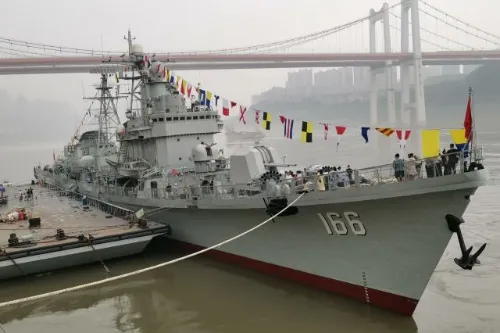
Warship 166 Exhibition and the Glorious Course Exhibition of Warship 166
Using various forms such as words, pictures and multimedia, it reviews the history of Warship 166 from its construction to its honorable decommissioning. Supplemented by a large number of physical objects such as daily necessities of sailors and special equipment on the ship, it enables audiences to revisit the glorious years of Warship 166 and feel the spiritual outlook of the officers and soldiers on board.
Tour Route
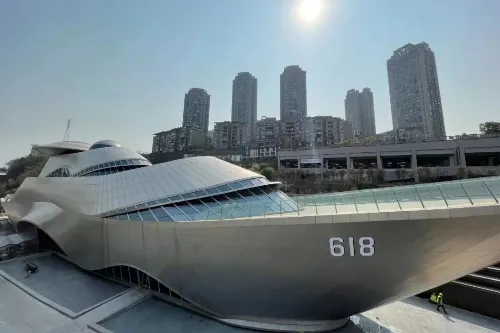
Visit the exhibition of Maritime Frontier Museum (the museum is shaped like a warship with hull number 618) to learn about the development history of the Chinese Navy → Visit the Warship 166 Exhibition to understand the history from its construction to decommissioning.
Travel Tips
- The recommended visiting time is about 3 hours. If you plan to visit the entire Chongqing Jianchuan Museum Cluster (including Maritime Frontier Museum, Ordnance Museum and other branch museums), it is advisable to set aside a full day.
- Spring and autumn (March-May and September-November) have pleasant climates, which are the best seasons for visiting. If you go in summer, you need to take heatstroke prevention measures; if you go in winter, please keep warm.
- The museum has professional commentators, and you can book the commentary service in advance to have a deeper understanding of the historical background and cultural connotation of the exhibits.
- Some interactive projects in the Maritime Frontier Culture Experience Zone need on-site reservation. It is recommended to book the experience projects first after arriving at the museum, and then visit according to the route to avoid missing the experience time.
- The museum has a catering area that provides simple meals and drinks at moderate prices. You can also bring your own drinking water and snacks to replenish energy during the visit.
- You can prepare a notebook and a camera. Photography is allowed in most areas of the museum (except for exhibits marked with no photography), which is convenient for recording exhibit information and keeping souvenirs.
Notes
- The cultural relics and exhibits in the museum are all precious historical relics. Touching, climbing and knocking are prohibited. Using flash to take photos of exhibits marked with no photography is strictly forbidden.
- When participating in projects in the interactive experience zone, please follow the guidance of the staff, take good care of the experience equipment and avoid damage.
- Smoking, spitting and littering are prohibited in the museum to keep the environment clean.
- Please keep quiet during the visit, especially in the history exhibition area and equipment exhibition area, to avoid loud talking that affects other audiences.
- There are a large number of tourists in the museum during holidays. It is recommended to visit during off-peak hours, such as 9:00-10:00 a.m. or 14:00-15:00 p.m. on working days.
- The museum is equipped with barrier-free access and mother-and-baby rooms to facilitate the visit of special groups. Tourists with children should take good care of them and prevent children from running and frolicking in the museum.
Transportation
- Bus: You can take Chongqing Bus No.207, No.223, No.233, No.412, No.413 or No.471, get off at Xiejiawan Station or Huangyang Road Station, and walk about 500 meters to reach the museum entrance.
- Metro: Take Chongqing Rail Transit Line 2, get off at Xiejiawan Station, exit from Exit A, and walk about 800 meters to the museum. If you take the Loop Line, transfer to Line 2 at Xiejiawan Station and then follow the above route.
- Self-driving: Self-driving tourists can navigate to "Chongqing Jianchuan Maritime Frontier Museum". There are special parking lots around the museum.
Opening Hours
Open from 9:00 to 17:00 every Tuesday to Sunday, and entry stops at 16:30. Closed every Monday (except legal holidays). During legal holidays, the opening hours are adjusted to 9:00 to 17:30, with entry stopping at 17:00. For holidays such as the Spring Festival, National Day and Labor Day, the museum may appropriately extend the opening hours according to the number of tourists, and the specific arrangement shall be subject to the announcement in the museum.
Tickets
The ticket price is 45 yuan per person.
Online Booking
Click here to jump to the Trip.com ticketing platform for ticket purchase.