
Sanfang Qixiang Scenic Area is located in Gulou District, Fuzhou City, Fujian Province, on the east and west sides of South Back Street in the downtown area of Fuzhou. It is a national 5A-level tourist attraction, covering an area of 40.2 hectares. The scenic area consists of ten east-west trending alleys, forming a "chessboard-shaped" block vein system. Among them, the three alleys on the west side of South Back Street are called "Three Fangs", and the seven alleys on the east side are called "Seven Alleys". It is a large and relatively well-preserved ancient residential block existing in southeast China, and enjoys the reputation of a "living fossil" of the ancient lane system and a "museum of Ming and Qing architecture". Most of the courtyards in the lanes are symmetrically distributed along the central axis, with surrounding walls outside the courtyards. Inside the courtyards, multi-entry courtyards are arranged along the longitudinal axis, presenting a symmetrical layout along the central axis, which is highly characteristic of Fuzhou's architectural style.
History and Culture
The history of Sanfang Qixiang can be traced back to the Jin Dynasty, was improved during the Tang and Five Dynasties period, and reached its heyday in the Ming and Qing dynasties. For a long time, this place has been a residential area for senior officials, nobles, scholars and celebrities in Fuzhou. From the late Qing Dynasty to the Republic of China period, many figures who exerted an important influence on China's modern and contemporary development, such as Lin Zexu, Bing Xin and Lin Juemin, once lived here. Due to wars and other factors, Sanfang Qixiang once suffered damage. After the founding of the People's Republic of China, many protection and renovation activities have been carried out. In 2005, the Fuzhou Municipal Government launched protection work on it again, preserving a large number of ancient buildings and famous ancient trees. In 2006, Sanfang Qixiang was selected as a Major Historical and Cultural Site Protected at the National Level; in 2009, it was awarded the honorary title of "China's Top Ten Historical and Cultural Streets"; in 2015, it was rated as a national 5A-level scenic area and won the UNESCO Asia-Pacific Heritage Award for Cultural Heritage Conservation.
Main Attractions
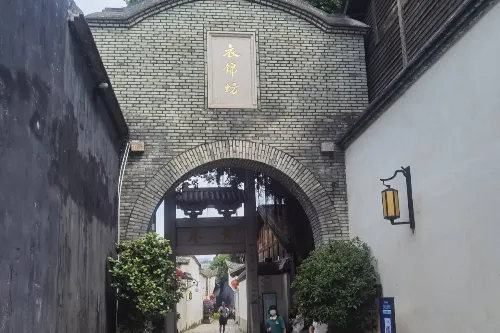
Yijin Fang
Located on the west side of South Back Street, it is at the northernmost end of the Three Fangs and is also known as the first of the Three Fangs. Opposite to Huang Xiang, it runs east-west, starting from South Back Street in the east and crossing Tonghu Road to Yiqian Bridge in the west, with a total length of 395 meters and a width of 4 to 5.5 meters. In ancient times, it was named Tongchao Xiang. During the Xuanhe period of the Song Dynasty, it was called Dijin Fang. In the Southern Song Dynasty, it was renamed Yijin Fang because Wang Yixiang, the Judicial Commissioner of Jiangdong, lived here. The fang preserves many ancient buildings such as the Zheng Family Courtyard (Water Pavilion Stage), the Ouyang Family Courtyard and its flower hall, and the former residence of Zheng Pengcheng. There are also rare tree species with a history of over 100 years, including fringetrees, cycads and southern magnolias.
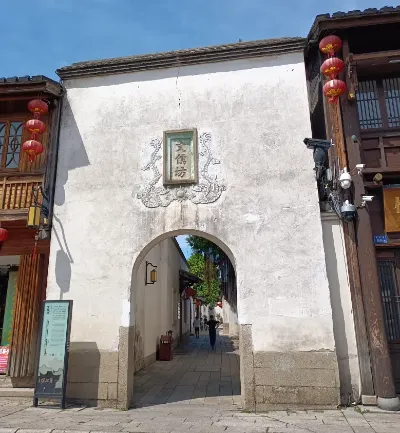
Wenru Fang
Located south of Yijin Fang and north of Guanglu Fang, it is in the middle of the Three Fangs, opposite to Anmin Xiang. This place was once a residential area for numerous literati and refined scholars, and many celebrities lived here in history. The fang retains many ancient buildings of historical and cultural value.
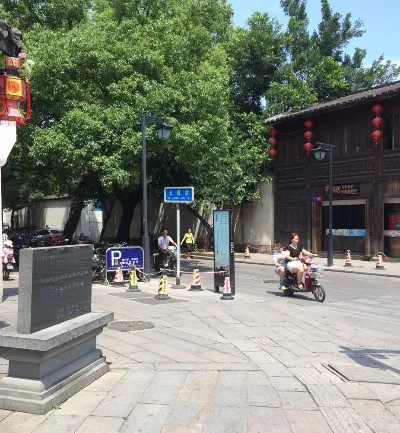
Guanglu Fang
It is specifically located on the southern side of the Three Fangs. This place has a profound historical and cultural heritage, with ancient buildings such as the Liu Family Courtyard. The Liu Family Courtyard covers an area of about 4,000 square meters and is now the central exhibition hall of the Community Museum.
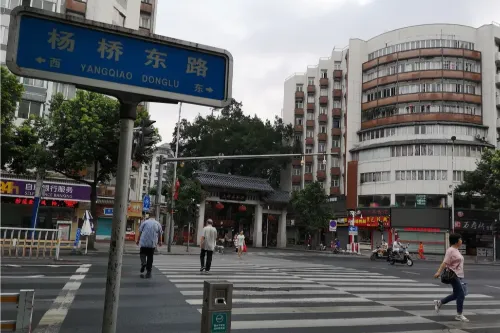
Yangqiao Xiang
As one of the Seven Alleys, it is located in the northern part. The former residence of Lin Juemin and Bing Xin at No. 17 Yangqiao Road is a Major Historical and Cultural Site Protected at the National Level. This former residence was originally a residential compound for the seven branches of Lin Juemin's ancestors (including Lin Changmin). At present, it has two exhibition areas: "Exhibition of the Martyrdom of Lin Juemin" and "Bing Xin and Her Hometown Fuzhou".
Langguan Xiang
It is among the Seven Alleys. The former residence of Yan Fu at No. 20 covers an area of about 600 square meters and is a Major Historical and Cultural Site Protected at the National Level. The courtyard is divided into two parts: the main block and the flower hall. The main block is a typical ancient residential building in Fuzhou, while the flower hall is a building combining Chinese and Western styles in the late Qing Dynasty and early Republic of China. The former residence was built during the Tongzhi period of the Qing Dynasty, with a history of more than 140 years.
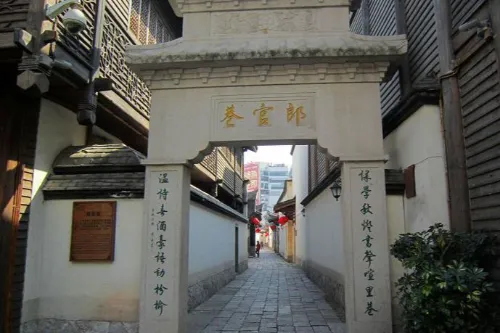
Ta Xiang
It is one of the Seven Alleys. Ta Xiang has many stories and legends in history, and its architectural style also reflects the local characteristics of Fuzhou. In the late Qing Dynasty, the Fuzhou Reading and Newspaper Office was founded here.
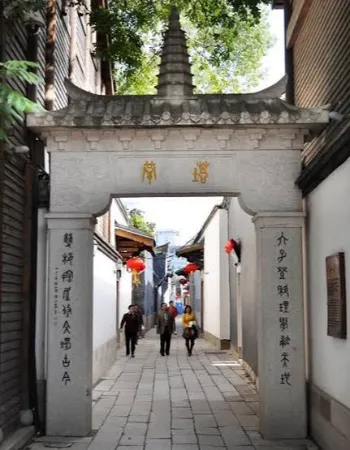
Huang Xiang
The Little Yellow Building at No. 36 covers an area of about 3,600 square meters and is a Major Historical and Cultural Site Protected at the National Level. The exquisitely decorated courtyard houses garden landscapes such as the Linyin Pavilion, the Small Canglang Pavilion and the Xiaobi Corridor. The Fuzhou Taiwan Guild Hall is located at No. 51 Huang Xiang, with a total construction area of 1,611 square meters. Its predecessor was the Fuzhou-Taiwan Joint Examination Hall, initiated and built by Liu Ao, the Circuit Intendant of Taiwan in the late Qing Dynasty, in 1884. It was a place for Taiwanese scholars to stay when they came to Fuzhou to take the Fujian Provincial Examination and go to the capital to take the Metropolitan Examination in the late Qing Dynasty.
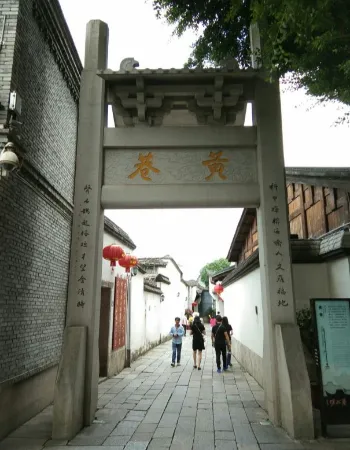
Anmin Xiang
It is opposite to Wenru Fang. In history, the peasant army led by Huang Chao once came here and posted a notice at the entrance of the alley to pacify the people. This place also retains many ancient buildings with traditional Fuzhou style.
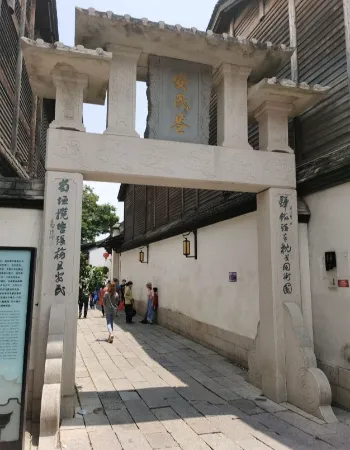
Gong Xiang
Most of the buildings in Gong Xiang have high historical and artistic value. The former residence of Shen Baozhen at No. 26 is one of the oldest and most valuable ancient houses in Sanfang Qixiang in terms of history and culture, and it is also a Major Historical and Cultural Site Protected at the National Level.
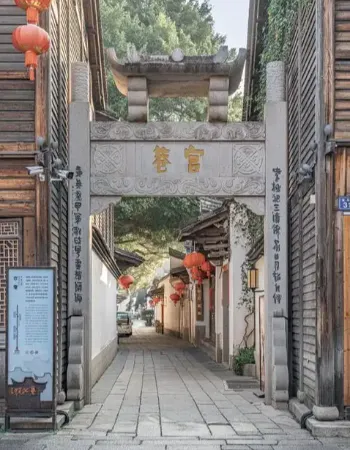
Jibi Xiang
The Xie Family Shrine at No. 60 covers an area of about 1,000 square meters and is a Cultural Relic Protection Unit of Fujian Province. Its back wall is adjacent to Gong Xiang, and it now serves as the Fujian Zhuangyuan Mansion Art Museum. In 2009, Fuzhou City restored its original name "Jibi Xiang" and renovated the damaged ancient buildings on the north side.
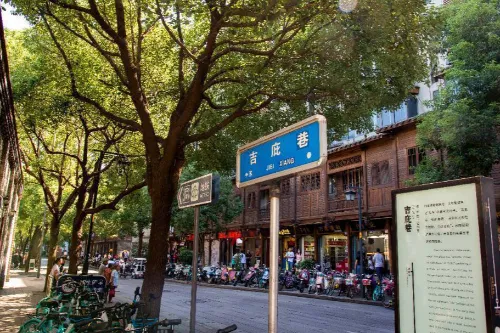
South Back Street
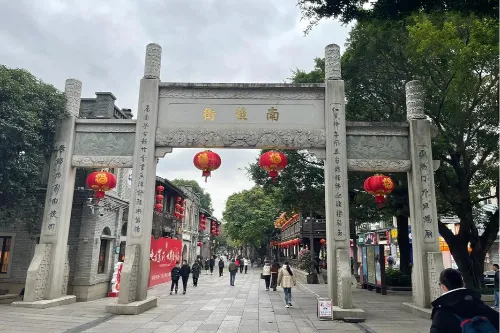
Starting from the intersection of Yangqiao Road in the north and extending to Aomen Bridge via Jibi Road in the south, it is about 1,000 meters long and serves as the central axis of Sanfang Qixiang. The Seven Alleys are on its east side and the Three Fangs are on its west side. From the rise of Sanfang Qixiang to the Republic of China period, it has always been a major commercial street. At that time, the street was bustling with merchants, with all kinds of shops (all walks of life) providing daily necessities such as firewood, rice, oil and salt. There were also book engraving workshops, used book stalls and mounting shops serving literati, as well as lantern fairs during the Lantern Festival and Mid-Autumn Festival.
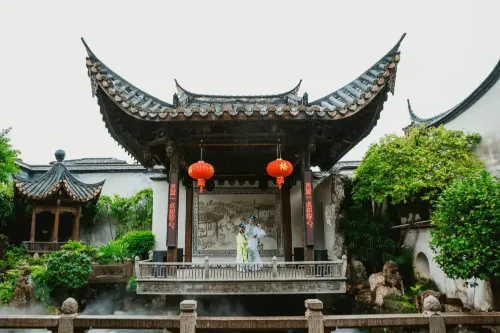
Water Pavilion Stage
Located at No. 4 Yijin Fang, it is a Major Historical and Cultural Site Protected at the National Level. The courtyard was first built during the Wanli period of the Ming Dynasty, with a history of more than 400 years. At present, regular performances such as Min Opera, Chichang (a kind of Fujian folk art), Shifan Music (a traditional instrumental music in Fujian) and musical instrument playing are staged here regularly. The building complex where the stage is located faces south with its back to the north, all adopting the column-and-tie wooden structure, covering a total area of 2,675 square meters. The Water Pavilion Stage in the flower hall is the only existing water pavilion stage in Fuzhou. The pool covers an area of 60 square meters. The stage on the pool faces north with its back to the south, which is a single-story platform with an area of 30 square meters. The stage is surrounded by water on three sides, separated from the opposite pavilion by a courtyard, with excellent sound pickup effect.
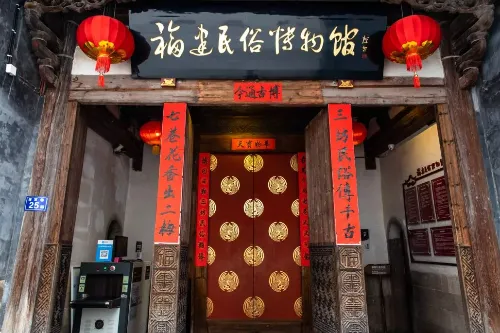
Fujian Museum of Folk Customs
It is converted from the former residence of Ermei. In 2006, the former residence of Ermei was announced as a Major Historical and Cultural Site Protected at the National Level. The museum displays nearly a thousand pieces of Fujian folk custom cultural relics, restoring the living scenes of people in Fuzhou during the Ming and Qing dynasties through scene-based exhibitions.
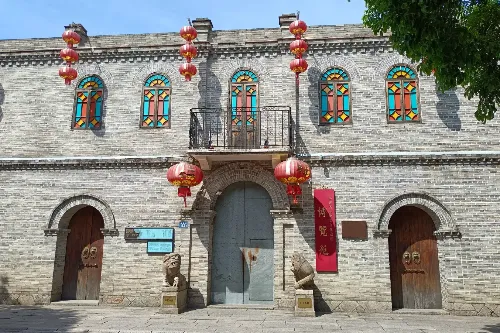
Fujian Intangible Cultural Heritage Expo Garden
Located in the Ye Family Residence, in 2009, the People's Government of Fujian Province designated the Ye Family Residence as a permanent exhibition center for Fujian's intangible cultural heritage. More than a thousand pieces of intangible cultural heritage exhibits are displayed here, and it is now a National Cultural Heritage Protection Unit.
Tour Routes
One-day Tour Route: Enter the scenic area from South Back Street, first visit Yijin Fang to admire ancient buildings such as the Water Pavilion Stage; then go to Wenru Fang to experience the literati atmosphere; then visit the Liu Family Courtyard in Guanglu Fang. After that, go to Langguan Xiang to visit the former residence of Yan Fu, then visit Ta Xiang, Huang Xiang (you can visit the Little Yellow Building and Fuzhou Taiwan Guild Hall), Anmin Xiang, Gong Xiang and Jibi Xiang in sequence. Finally, return to South Back Street to experience the night view and local nightlife in Sanfang Qixiang. Two-day Tour Arrangement (Second Day): Visit Anmin Xiang, Gong Xiang and Jibi Xiang, then go to Yijin Fang, Wenru Fang and Guanglu Fang to deeply understand the history and culture of each lane and fang. You can also visit attractions such as the Fujian Museum of Folk Customs and the Fujian Intangible Cultural Heritage Expo Garden.
Travel Tips
- The recommended travel time is 1-2 days. Spring and autumn have pleasant climates, which are the most suitable seasons for visiting. If you go in summer, you need to take sun protection and anti-mosquito measures; if you go in winter, pay attention to keeping warm.
- The scenic area is mainly visited on foot, so it is recommended to wear comfortable shoes.
- You can hire a scenic area guide or rent an audio guide device to better understand the historical and cultural background of the attractions.
- You can taste local characteristic food, but be sure to choose regular and hygienic shops.
- You can buy some local characteristic cultural and creative products as souvenirs.
Notes
- Respect the historical and cultural relics in the scenic area, do not touch or damage ancient buildings and cultural relics at will.
- Keep quiet and abide by the regulations of the place when visiting former residences of celebrities and other places.
- There are many tourists in the scenic area, especially during peak tourist seasons such as holidays, so please take good care of your personal belongings.
- Take good care of the environment of the scenic area and do not litter.
- Abide by the on-site order when watching performances and other activities.
Transportation
- Bus: There are many bus routes to reach the vicinity of Sanfang Qixiang. For example, take Bus No. 1, No. 2, No. 8, No. 11, etc., and get off at South Street Station or Sanfang Qixiang Station.
- Metro: You can take Metro Line 1, get off at Dongjiekou Station, exit from Exit B or Exit C, and walk to the scenic area.
- Self-driving: For tourists who drive by themselves, there are parking lots around the scenic area, but parking spaces may be tight during peak tourist seasons. You can navigate to Sanfang Qixiang Scenic Area and find a suitable parking place according to the signs.
Opening Hours
Open 24 hours a day. The opening hours of ticketed attractions are generally from 8:30 to 21:00, but the specific hours may be adjusted according to seasons or special circumstances.
Tickets
Free to open. Some attractions charge separate tickets.
Online Booking
Click here to jump to the Trip.com ticketing platform for ticket purchase.