
Pingtan Island is affiliated with Pingtan County, Fuzhou City, Fujian Province. It is the main island of Pingtan County, the largest island in Fujian Province, and the fifth largest island in China. Located in the southeastern part of Fuzhou City, Fujian Province, on the southeast coast of China, it faces the Taiwan Strait to the east. It is only 68 nautical miles away from Hsinchu, Taiwan, making it the closest place on the Chinese mainland to Taiwan Island. Pingtan Island is a national 4A-level tourist attraction. The total area of the core scenic area is about 412.5 square kilometers, and the total coastline of the entire island is about 408 kilometers. Featuring marine erosion landforms, blue tears natural spectacle, original ecological beaches and coastal windmill landscapes, it includes core scenic areas such as Changjiang'ao, Tannan Bay, Beigang Village and Houyan Island. Rich in wind energy resources, the island has more than one hundred wind turbines distributed along the coast, forming a unique coastal windmill landscape belt. It is a coastal tourist resort integrating coastal sightseeing, ecological leisure, study tour vacation and folk custom experience.
Historical Culture
Pingtan Island has a long history. As early as the Neolithic Age, ancestors lived and multiplied here. During the Pre-Qin period, it was inhabited by the Minyue people. In the Qin and Han dynasties, it belonged to Zhongjun Prefecture. Official administrative establishment began in the Tang Dynasty. During the Song and Yuan dynasties, it became an important node for fishery and maritime trade on the southeast coast. Due to coastal defense needs in the Ming and Qing dynasties, it turned into a key coastal defense fortress on the southeast coast, leaving a large number of coastal defense sites and military cultural relics.
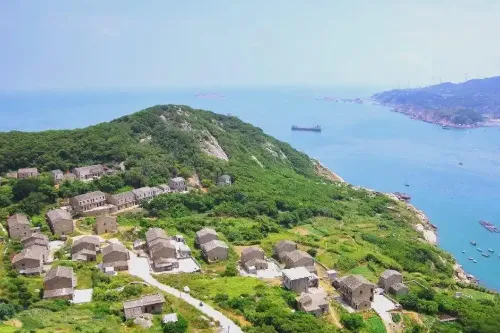
Pingtan Island features a unique integration of Minyue marine culture and coastal defense culture, and is one of the core representatives of eastern Fujian marine culture. Locally, fishery and shipping have long been traditional pillar industries, forming a simple fishing village culture. The stone houses of Pingtan Island are representative architectural cultural heritage, mainly built with granite, nestled against mountains and facing the sea. Warm in winter and cool in summer, wind-resistant and wave-proof, they constitute the most complete and largest stone house complex preserved along the southeast coast, known as "the Oriental Stone Houses on the Sea".
As a frontier position for cross-strait exchanges, Pingtan Island relies on its geographical proximity to Taiwan to serve as an important window for cross-strait folk exchanges, economic and trade contacts, and cultural integration. Folk customs, diet and language on both sides blend deeply to form a unique cross-strait integrated culture. Meanwhile, traditional folk activities such as Mazu belief, fishing village festivals and sea worship have been well inherited and passed down for thousands of years.
Major Attractions
Houyan Island
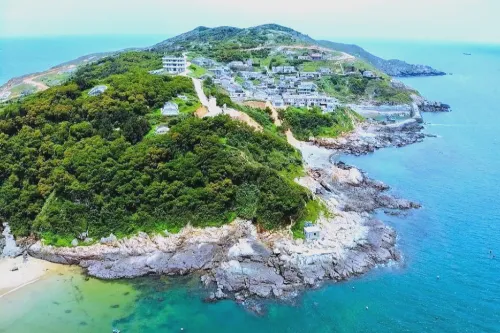
Houyan Island is located in Dong'ao Village, Aoqian Town, Pingtan Island. It is a small island facing Taiwan Island across the sea, covering an area of about 58 mu. It marks the closest landmark from the Chinese mainland to Taiwan Island, 68 nautical miles away from Hsinchu, Taiwan. On the island stands the landmark stele of "The Closest Point from the Chinese Mainland to Taiwan Island", together with coastal reefs, viewing platforms and the Strait Landmark Museum. Highlighted by reef coastline, strait sightseeing and cross-strait commemoration, it is a symbolic check-in spot on Pingtan Island.
Changjiang'ao Windmill Field
Changjiang'ao is situated in the northwest of Pingtan Island and is the largest windmill landscape area on the island. There are about 70 wind turbines distributed along the coast, with a total beach and reef coastline of about 5 kilometers. Combining beaches, windmills, sunsets and sea views, it is the best spot to watch the sea sunset and also one of the high-frequency viewing areas for the blue tears spectacle in Pingtan. The scenic area is open for free with well-preserved ecology.

Tannan Bay
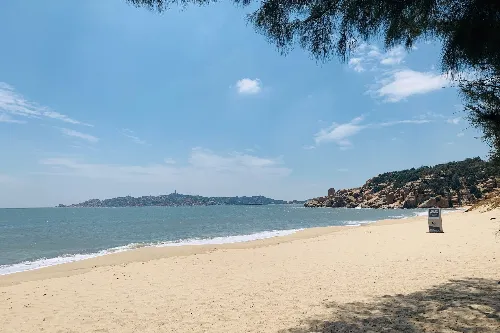
Tannan Bay lies in the southeast of Pingtan Island, reputed as the "Platinum Coast". The beach stretches about 10 kilometers with fine and white sand as well as clear blue seawater. It consists of multiple beaches including Tianmei'ao, Qisha'ao and Yuandang'ao. It is the highest-quality natural seaside bathing beach in Pingtan and a core viewing area for blue tears. Fluorescent sea spectacle often appears at night. With complete supporting facilities, it is ideal for beach leisure, camping and tide fishing.
Beigang Village Stone Houses
Beigang Village is located in the northeast of Pingtan Island and is the core representative village of Pingtan stone houses. The village retains about 200 well-preserved stone houses built against mountains and facing the sea, maintaining the original simple fishing village style. Inside the village there are cultural and creative workshops, fishing homestays and viewing platforms. Serving as a characteristic fishing village integrating folk custom experience, cultural and creative leisure and homestay vacation, it was also a filming location for the variety show Where Are We Going, Dad?.

East Sea Fairyland
East Sea Fairyland is located in Liushui Town in the northeast of Pingtan Island, rated as a national 3A-level tourist attraction. Its core landscape is the natural sea erosion cave Immortal Well, with a diameter of about 50 meters and a depth of about 43 meters, formed by long-term wave erosion. Covering a total area of about 7.5 square kilometers, the scenic area includes Immortal Valley, Immortal Peak, Golden Guanyin and other sea erosion landscapes, featuring peculiar marine erosion landforms and cliff sea views.

Longfengtou Seaside Bathing Beach
Longfengtou Seaside Bathing Beach is in the east of Pingtan Island. It is the earliest developed and most mature seaside bathing beach with complete supporting facilities. The beach is about 500 meters wide and 2.5 kilometers long, capable of accommodating tens of thousands of people for water activities. With gentle terrain and shallow clear seawater, it is suitable for parent-child travel, beach sports and marine entertainment, and serves as the core leisure beach of Pingtan Island.

Maotoukan
Maotoukan is an original ancient village in Su'ao Town, Pingtan Island. It retains a large number of century-old stone houses and enjoys high vegetation coverage. Nestled between mountains and the sea with a quiet and serene environment, it is known as "the Paradise of Pingtan". Covering an area of about 1.2 square kilometers, it features original ancient village scenery, forest sea views and tranquil leisure atmosphere.
Travel Routes
Classic One-day Tour: Longfengtou Seaside Bathing Beach→Beigang Village Stone Houses→East Sea Fairyland→Changjiang'ao Windmill Field
In-depth Two-day Tour: Houyan Island→Tannan Bay→Beigang Village Stone Houses→Changjiang'ao Windmill Field→East Sea Fairyland→Maotoukan
Travel Suggestions
- The best viewing period for Blue Tears is from April to September every year, with high occurrence time from 19:00 to 23:00 at night. Changjiang'ao, Tannan Bay and Beigang Village are the best viewing spots.
- Changjiang'ao Windmill Field is the best place to watch the sea sunset, with the optimal time from 17:00 to 19:00 in the evening.
- The whole island of Pingtan is suitable for cycling. It is recommended to rent electric cars or bicycles for a better experience along coastal roads.
- Tannan Bay and Longfengtou are perfect for parent-child trips. It is suggested to bring tide fishing tools and beach toys to experience tide fishing at low tide.
- It is recommended to stay in homestays around Beigang Village and Tannan Bay to closely enjoy sea views and the characteristic stone houses.
- The best travel season for Pingtan Island is from May to October, with mild climate and splendid sea and ecological scenery.
Notes
- Pingtan Island is windy all year round. It is recommended to bring windproof coats and sun protection supplies.
- Coastal reef areas are slippery. Do not approach cliff edges when visiting East Sea Fairyland and Houyan Island to prevent slipping and falling.
- Do not trample on beach vegetation or damage coastal ecology during the Blue Tears viewing period. Private sea swimming at night is prohibited.
- Flammable and explosive items are forbidden in scenic areas. Unauthorized outdoor open fire and barbecue are banned on beaches and in villages.
- There will be a large number of tourists during holidays, and core attractions such as Changjiang'ao and Tannan Bay are prone to congestion. It is recommended to travel at off-peak hours.
- Marine projects must be experienced in formal designated areas and follow safety regulations. Minors must be accompanied by adults.
- Mobile signal is weak in some remote villages on Pingtan Island. Download offline maps in advance and avoid going to remote areas alone.
Transportation
- External Transportation: Self-driving tourists can reach Pingtan Island directly via the Pingtan Strait Rail-cum-Road Bridge; high-speed rail passengers can get off at Pingtan Railway Station, which connects directly to the core scenic areas.
- Internal Transportation: Pingtan Island operates tourist public buses covering all core attractions; electric cars and bicycles are available for rent; online car-hailing and taxis are accessible between scenic spots for convenient travel.
- Shuttle Transportation: Direct tourist routes run from Pingtan Railway Station to Beigang Village, Tannan Bay and Houyan Island, taking 20 to 40 minutes by ride.
Opening Hours
Pingtan Island is open all year round all day. East Sea Fairyland opens daily from 8:00 to 18:00 with last admission at 17:30. Houyan Island Scenic Area opens daily from 8:00 to 18:00. Other beaches, villages and windmill fields are open 24 hours a day for free visiting.
Ticket Information
Most areas are free of admission, while a small number of scenic spots charge tickets. You can search the official WeChat service account "畅游平潭" for the latest updates.
Online Booking
Click here to jump to the Trip.com ticketing platform for ticket purchase.