
Gushan is located in Jin'an District, Fuzhou City, Fujian Province. It is a national 4A-level tourist scenic area and one of the most famous mountains in Fuzhou. It gets its name from a huge drum-shaped boulder on the peak that makes drum-like sounds during wind and rain. The core area of the scenic spot covers about 49.7 square kilometers. Its main peak Lizeng Peak stands at an altitude of 925 meters, serving as a natural ecological barrier and a perfect place for mountain climbing on the outskirts of Fuzhou. Featuring Buddhist culture, cliff carvings and natural landscapes, Gushan integrates religious, cultural and natural scenery. It is home to the thousand-year-old Yongquan Temple and more than 160 ancient cliff inscriptions. Boasting high forest coverage, towering ancient trees and flowing streams, it is a top choice for local residents to go hiking, pray for blessings, sightsee and conduct cultural study tours.
History and Culture
The human history of Gushan dates back to the Western Jin Dynasty, with a history of over 1,700 years. Temples began to be built here in the Tang Dynasty, gradually making it a renowned Buddhist mountain in Fujian. Yongquan Temple was officially completed in the second year of Kaiping reign of the Later Liang Dynasty in the Five Dynasties. After repeated expansion and renovation from the Song, Yuan, Ming to Qing dynasties, it became one of the five major Buddhist temples in Fujian and enjoys widespread influence in Southeast Asian Buddhist circles.
Gushan has long been a popular gathering place for ancient scholars and literati. Since the Song Dynasty, celebrities including Zhu Xi, Cai Xiang, Li Gang, Lin Zexu and Yan Fu have visited here and left numerous poems and cliff inscriptions. The existing inscriptions adopt seal, clerical, regular, running and cursive scripts. It is the largest and best-preserved cliff carving group in Fujian Province, possessing high artistic calligraphy and historical research value.
In modern times, Gushan has evolved into an important cultural landmark and revolutionary memorial site in Fuzhou. Numerous intellectuals and patriots came here to express their aspirations. The integration of Buddhist culture, carving culture and landscape culture forms an indispensable part of Fuzhou's regional culture.
Main Scenic Spots
Yongquan Temple
Nestled on the hillside of Gushan at an altitude of 455 meters, Yongquan Temple is the core attraction of Gushan. Founded in the second year of Kaiping reign of the Later Liang Dynasty, it is a key national temple and one of the five major Buddhist temples in Fujian. Built against mountains with exquisite layout, it features a unique architectural style known as "the temple is hidden among mountains and invisible from outside". The temple keeps three precious iron cultural relics including ancient iron trees and huge iron pots, as well as a large number of Buddhist cultural relics, scriptures and Buddha statues. With prosperous incense burning, it is an important Buddhist activity center in southeast China.

Cliff Carving Group
Gushan cliff carvings are scattered along mountain paths, Lingyuan Cave and Heshui Rock. There are more than 160 existing inscriptions dating from the Song Dynasty to modern times, including poems, notes and inscriptions of names with diverse calligraphy styles. Among them, the huge Chinese character "Longevity" inscribed by Zhu Xi in the Song Dynasty is the most famous. It is a key cultural relic under protection in Fujian Province and a precious heritage of southern Chinese carving art.
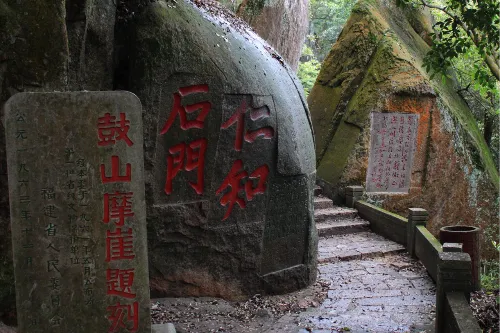
Lizeng Peak
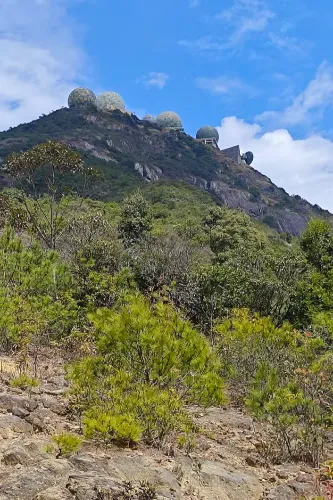
As the main peak of Gushan, Lizeng Peak is 925 meters above sea level and ranks the highest peak in suburban Fuzhou. A viewing platform is built on the summit, where visitors can overlook the panoramic view of Fuzhou city, the scenery of Min River and surrounding mountains. It is the best viewing spot on Gushan. Standing on the peak, visitors can enjoy broad views and varied scenery in different seasons.
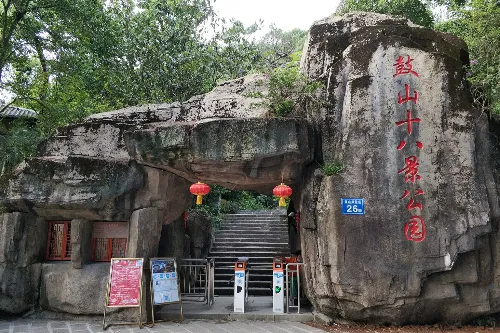
Eighteen Scenic Spots
The Eighteen Scenic Spots are the core natural landscape cluster of the scenic area, covering eighteen distinctive sights such as Heshui Rock, Ape-shaped Stone, Wanggui Stone, Bowl Peak and Jade Bamboo Peak. Famous for strange stones, secluded caves, clear springs and ancient trees, these naturally formed scenic spots represent the essence of natural scenery on Gushan Mountain.
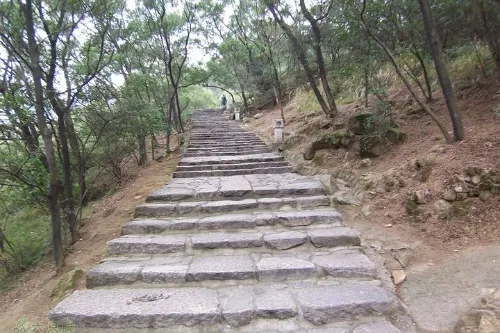
Ancient Hiking Path
The ancient hiking path on Gushan stretches about 7.5 kilometers with 2145 stone steps. Constructed in the Qing Dynasty, it is the best-preserved ancient mountain trail in Fuzhou. Lined with lush trees and equipped with multiple rest pavilions, the path connects Yongquan Temple, cliff carvings and the Eighteen Scenic Spots, serving as the main hiking route for tourists.
Travel Route
Gushan Scenic Area Entrance → Ancient Hiking Path → Cliff Carving Group → Yongquan Temple → Eighteen Scenic Spots → Lizeng Peak → Downhill Return
Travel Suggestions
- A round trip full hiking takes about 4 to 5 hours. Visitors with average physical strength may hike uphill and take the cable car downhill.
- It is recommended to reserve one hour for visiting Yongquan Temple to admire its main buildings, iron relics and cultural exhibits.
- Cliff carvings are mainly concentrated near Lingyuan Cave. Take your time to appreciate the history and calligraphy culture of these inscriptions.
- Spring and autumn are the best visiting seasons with pleasant weather and beautiful mountain views, ideal for hiking and photography.
- Choose sunny days to climb Lizeng Peak for a clear panoramic view of Fuzhou city and Min River scenery.
Notes
- There are numerous steep stone steps along the way. Wear non-slip sports shoes and avoid high heels or leather shoes for mountain climbing.
- Open flames, smoking and wild picnics are strictly forbidden in the scenic area to abide by forest fire prevention regulations.
- Do not deviate from main trails or climb undeveloped areas, dangerous cliffs and rock masses during hiking.
- Keep quiet while visiting Yongquan Temple. Respect religious customs and do not touch Buddha statues and ritual utensils casually.
- Take sun protection and mosquito repellent measures in summer. Watch out for slippery roads on rainy days and avoid summit climbing in thunderstorm weather.
- Mobile phone signal is weak in some mountain areas. It is advised to travel in groups and plan routes in advance.
Transportation
- Public Bus: Take bus No.7, 29, 36, 40, 58, 69, 73, 108, 115, 131, 170, 302 or 303 in downtown Fuzhou and get off at Gushan Scenic Area Stop.
- Self-driving: Navigate to Gushan Scenic Area in Fuzhou. Parking lots are available at the entrance for small vehicles.
- Taxi & Online Car-hailing: Take a taxi directly from downtown to the scenic area entrance, which takes about 20 to 30 minutes.
Opening Hours
The whole scenic area opens all day round. Yongquan Temple is open from 6:00 to 18:00 every day, and the cable car operates from 8:00 to 17:30 daily. Visitors can arrange travel schedules reasonably according to opening hours. Night hiking is not recommended.
Ticket Information
Admission to the core scenic area is free of charge. Tickets are required for entry to the Eighteen Scenic Spots, and extra fees are charged for professional manual tour guides. Tourists can follow the official WeChat service account "福州市鼓山旅游景区" to get the latest travel information.
Online Booking
Click here to jump to the Trip.com ticketing platform for ticket purchase.