
Guangzhou Museum is located inside Yuexiu Park at No. 99 Zhenhai Road, Yuexiu District, Guangzhou City, Guangdong Province. It is a public welfare Class I county-level public institution under the administration of Guangzhou Municipal Bureau of Culture, Radio, Television, Tourism and Sports. Rated as a National First-Class Museum, it is also a patriotic education base at national, provincial and municipal levels. It is the earliest comprehensive local history museum established in South China. The main venue is built on Zhenhai Tower, a Major Historical and Cultural Site Protected at the National Level. The total construction area of Zhenhai Tower itself is 4,386 square meters, while the total construction area of the entire historic Zhenhai Tower block is 7,600 square meters. Constructed along the terrain of Yuexiu Mountain, the five-story building stands 28 meters tall and is commonly known as the Five-Story Building by local residents. The museum complex consists of two core visiting zones: the Zhenhai Tower Exhibition Area and the Zhongyuan Building Exhibition Area, alongside two branch venues: the Memorial Hall for the Sanyuanli People's Anti-British Struggle and the Memorial Hall of the Former Headquarters of the March 29 Uprising. Integrating ancient architecture with urban historical exhibitions, Zhenhai Tower has long been listed among the Eight Scenic Spots of Guangzhou. The building itself bears both the historical value of a Ming dynasty military tower and the symbolic status of a city landmark. The museum collection systematically documents more than 6,000 years of Guangzhou’s urban evolution, holding approximately 135,000 cultural relic sets. Among these collections are 119 Grade-I cultural relics, 477 Grade-II cultural relics and 2,082 Grade-III cultural relics, with a total of 2,693 precious relic sets. It serves as a core cultural institution for researching, exhibiting and disseminating Guangzhou’s local history, maritime trade culture and Lingnan folk customs.
History and Culture
The physical foundation of Guangzhou Museum, Zhenhai Tower, was first constructed in the 13th year of the Hongwu reign of the Ming Dynasty under the supervision of Zhu Liangzu, Marquis of Yongjia, during the expansion of Guangzhou’s northern city wall. Originally built as a watchtower for city defense, it was also called Wanghai Tower in history. The tower underwent multiple renovations throughout the Ming and Qing dynasties. As a landmark high-rise structure in northern Guangzhou, its panoramic view secured its permanent place on the list of the Eight Scenic Spots of Guangzhou for centuries. It witnessed over 600 years of urban development, commercial growth and coastal defense changes in Guangzhou during the Ming and Qing periods.
The modern museum system originated in 1928, when the Guangzhou Municipal Government prepared to establish the Guangzhou Municipal Museum following renovations to Zhenhai Tower. The museum officially opened to the public on February 11, 1929, making it one of the earliest publicly funded museums in modern China. A group of renowned literary and historical scholars including Xie Yingbo and Gu Jiegang participated in its founding, with the missions of enlightening the public and preserving Lingnan cultural heritage, laying a pioneering foundation for cultural and museum development across South China. The institution was renamed Guangzhou Municipal Library and Museum from 1941 to 1945, then Guangzhou Municipal Museum between 1946 and 1949. It was officially titled Guangzhou Museum in 1950, a name that has been used ever since.
After the founding of the People’s Republic of China, Guangzhou Museum has continuously carried out cultural relic collection, archaeological sorting and academic research. It expands its collections through public donations, archaeological excavations, allocation and exchange, and civilian acquisitions. Its collections feature a great variety of distinctive artifacts including bronze wares from the Qin and Han dynasties, export porcelain, rice paper watercolor paintings, Cantonese enamel crafts and modern urban photographs. The museum has compiled and published numerous professional academic works such as Han Tombs in Guangzhou and Maritime Trade Treasures. Over more than 90 years of development, the museum has expanded from a single exhibition hall inside Zhenhai Tower into a multi-site cultural museum cluster. It fulfills multiple functions including cultural relic preservation, exhibition display, social science research and public education, completely preserving physical evidence recording Guangzhou’s historical development from the pre-Qin Baiyue civilization, city establishment in the Qin and Han dynasties, maritime trade prosperity in the Tang and Song dynasties, overseas commerce via the Thirteen Hongs in the Ming and Qing dynasties, to urban transformation in modern and contemporary times.
Major Attractions
Zhenhai Tower
As the main building carrier of Guangzhou Museum, Zhenhai Tower is a five-story wooden-brick structure with red walls and green tiles, standing at a total height of 28 meters. Its ground floor base was built upon the ancient Ming city wall. Ancient iron cannons and stone lion carvings preserved from the Qing Dynasty are displayed in front of the tower. Observation corridors are arranged on each floor, offering a full view of Yuexiu Park and the old town area of Guangzhou from the top. The plaques, bracket systems and tile components on the facade retain the traditional official Lingnan architectural style after Ming and Qing restorations. More than just an exhibition venue for the museum, the tower itself is a precious ancient architectural relic from the Ming Dynasty, with stone inscriptions left by literati of successive dynasties on its outer walls, boasting high value for architectural historical research and cultural appreciation.
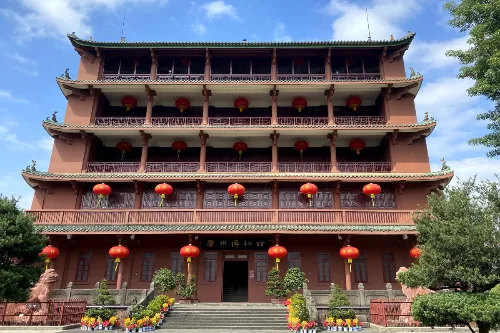
City Symbol · City History Permanent Exhibition Hall
This exhibition is distributed across the first to fifth floors of Zhenhai Tower, with exhibits arranged chronologically by historical timeline. The first floor displays prehistoric Baiyue cultural relics in ancient Lingnan; the second floor showcases artifacts related to Guangzhou’s administrative establishment and ancient maritime departure ports from the Qin-Han period to the Six Dynasties; the third floor exhibits historical materials and handicrafts about port commerce and urban construction from the Sui-Tang to the Song-Yuan dynasties; the fourth floor presents cultural relics reflecting the foreign trade system of the Thirteen Hongs and folk customs in the Ming and Qing dynasties; the fifth floor displays materials about modern revolutionary movements and urban modernization in Guangzhou. Supported by nearly one thousand unearthed cultural relics, old photographs and documents, the exhibition fully depicts the whole course of Guangzhou’s 6,000-year urban origin, administrative changes, commercial rise and fall, and cultural evolution, serving as the core visiting highlight of Guangzhou Museum.
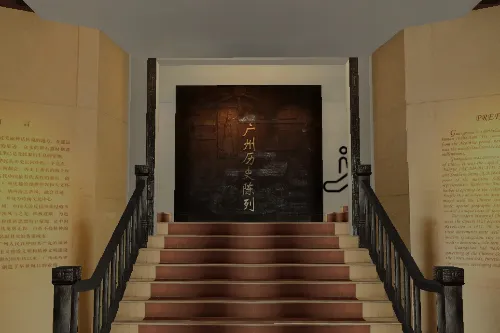
Zhongyuan Building Exhibition Area
Located to the east of Zhenhai Tower, Zhongyuan Building was constructed in memory of Deng Zhongyuan, a martyr of the 1911 Revolution, adopting a Chinese-Western integrated modern architectural decorative style. This exhibition area is open to visitors free of charge, hosting the permanent special exhibition Maritime Trade Treasures — Guangzhou Export Artworks from the 18th to Early 20th Century. The exhibition collects exported armorial porcelain, Cantonese ivory carvings, export oil paintings and silk textiles traded along the Maritime Silk Road. Meanwhile, a Geological History and Life Evolution Exhibition Hall is set up inside, displaying paleontological fossils and mineral specimens to supplement displays related to natural history.
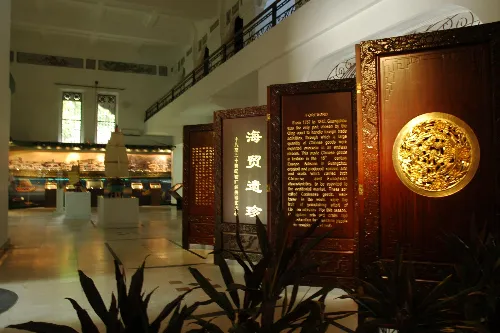
Xijin Pavilion
Situated on the eastern side of the main Zhenhai Tower building, Xijin Pavilion functions as a special temporary exhibition venue of the museum. It regularly holds short-term special cultural relic exhibitions, local cultural themed shows and premium collection exhibitions. It occasionally launches temporary exhibitions focusing on Cantonese craftsmanship, paintings and calligraphy classics, as well as Maritime Silk Road relics, enriching the museum’s exhibition system and making up for the limited display volume of permanent exhibitions.
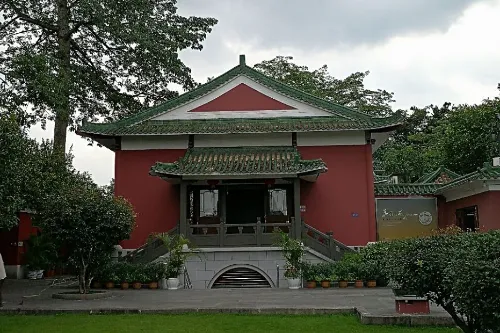
Ancient Ming Dynasty City Wall Ruins
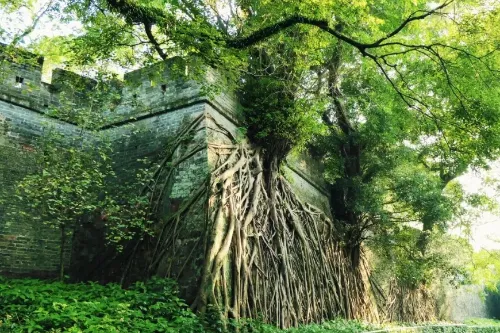
Adjacent to the base of Zhenhai Tower, these ruins are among the few surviving physical sections of Ming city walls in Guangzhou. Built with red sandstone ashlar blocks, this original segment of Guangzhou’s northern city wall from the early Ming Dynasty was constructed concurrently with Zhenhai Tower. It intuitively demonstrates the construction techniques and urban defense layout of Guangzhou city in the Ming Dynasty. Visitors may access and view the ruins free of charge at close range, which serves as a tangible material for studying the urban layout of ancient Guangzhou.
Visiting Route
Main Entrance of Yuexiu Park → Ancient Ming Dynasty City Wall Ruins → Zhenhai Tower Square (view ancient cannons and stone lions) → 1st to 5th Floors of Zhenhai Tower (visit City Symbol · City History Exhibition) → Temporary Exhibition Hall of Xijin Pavilion → Zhongyuan Building (Maritime Trade Treasures Exhibition Hall + Geological Evolution Exhibition Hall) → Park Cultural and Creative Service Area → Exit down the hill from Yuexiu Park
Visiting Suggestions
- It is recommended to reserve 2 to 2.5 hours for the whole visit. The stairs inside Zhenhai Tower are steep and narrow, so allocate sufficient time for sightseeing and avoid rushing through historical exhibits on each floor.
- Choose workdays for your visit if possible. Crowds surge on weekends and holidays, causing congestion in exhibition halls and impairing the viewing experience of cultural relics.
- Follow the floor order from lower to upper levels inside Zhenhai Tower when visiting. Viewing exhibits in chronological order helps you sort out the developmental context of Guangzhou’s urban history more easily.
- Check information on ongoing temporary exhibitions via the official WeChat public account of Guangzhou Museum before your trip to reasonably arrange whether to include Xijin Pavilion in your itinerary.
- Visit Zhenhai Tower for landscape viewing on sunny days for unobstructed views of the central axis scenery of old Guangzhou city.
- Combine your museum tour with a walk along the forest trails in Yuexiu Park. Lush vegetation inside the park offers a pleasant spot for short rest and relaxation after the visit.
Precautions
- The museum closes regularly every Monday and opens normally on national statutory holidays. During summer vacation (July 11 to August 30), opening hours are extended until 18:00, while ticket checking stops at 17:30 for the rest of the year. Visitors should arrange their arrival time properly.
- Tickets for the Zhenhai Tower Exhibition Area must be reserved and purchased with real-name authentication through the official WeChat account. No on-site manual ticket windows are available. Please carry valid identity documents for admission verification.
- Flash photography, selfie sticks and tripods are prohibited inside exhibition halls when shooting cultural relics. Do not touch display cabinets, relics or building walls. Eating, drinking and loud running or shouting are banned within exhibition spaces.
- The staircases inside Zhenhai Tower have steep gradients and narrow passages. The elderly and children must be accompanied and supervised by guardians throughout the visit. High heels are not recommended for touring the entire scenic area.
- Luggage storage lockers are limited in quantity. Minimize your carry-on belongings. Drinking water is only permitted in outdoor rest zones; no food or drink is allowed inside exhibition halls.
- Pets, flammable and explosive materials, and controlled instruments are forbidden inside the park and museum buildings. Visitors must cooperate with staff for security inspection upon entry.
- Children under 6 years old, seniors aged 65 and above, active-duty military personnel, veterans and certified disabled visitors are granted free entry to the Zhenhai Tower Exhibition Area with valid supporting documents, which must be carried during the visit.
- Graffiti and carving on walls and ancient building components inside the museum compound are strictly forbidden. Climbing city walls, tower railings and other architectural facilities is prohibited.
Transportation
- Metro: Take Guangzhou Metro Line 2 and exit at Exit B2 of Yuexiu Park Station. Walk into the main gate of Yuexiu Park and follow directional signs for a 5–8 minute walk to reach Guangzhou Museum. From Exit C of Sun Yat-sen Memorial Hall Station on Line 2, walk 300 meters to access the west gate of Yuexiu Park.
- Buses to the main gate: Take bus routes 24, 87, 103, 104, 108, 109, 110, 182, 284 or 543 and alight at Yuexiu Park Bus Stop, then enter the park through the main gate.
- Buses to the west gate: Take bus routes 33, 203 or 211 to Jiefang North Road Intersection Bus Stop, then walk 200 meters to the west gate of Yuexiu Park.
- Buses to the east gate: Take bus routes 6, 10, 36, 66, 184, 191, 219 or 544 to Xiaobeihuaquan Bus Stop and enter the park via the east gate.
- Self-driving: No public parking spaces are available inside Yuexiu Park, and parking resources are tight in the surrounding old urban district. Public transport is highly recommended over private driving.
Opening Hours
The Zhenhai Tower Exhibition Area and Zhongyuan Building Exhibition Area follow a regular schedule of closure every Monday for maintenance. They are open from 09:00 to 17:30 every Tuesday to Sunday, with ticket sales and admission inspection ceasing at 17:00 daily. An extended opening schedule is implemented from July 11 to August 30 each summer vacation, with opening hours adjusted to 09:00–18:00 and visitor entry cut-off at 17:30. The Memorial Hall for the Sanyuanli People's Anti-British Struggle and the Memorial Hall of the Former Headquarters of the March 29 Uprising follow the same opening schedule as the main museum: closed on Mondays and open from 09:00 to 18:00 Tuesday through Sunday. All venues remain open as usual during statutory holidays such as the Spring Festival and National Day with no Monday closure enforced.
Ticket Information
The ticket price for the Zhenhai Tower Exhibition Area is 10 RMB per person; guided tour services require additional fees. Admission to the Zhongyuan Building Exhibition Area is free of charge. Search the WeChat official account named "广州博物馆" to acquire the latest updates and announcements.
Online Booking
Click here to jump to the Trip.com ticketing platform for ticket purchase.