
Chimelong Wildlife World is located at No. 593 Xiangjiang Avenue, Panyu District, Guangzhou City, Guangdong Province. It is a national 5A-level tourist attraction and one of the core parks of Guangzhou Chimelong Tourist Resort. Covering a total area of about 5,000 mu (equivalent to 0.5 square kilometers), it is a leading original ecological wildlife-themed park in South China. The scenic spot features free-range breeding of large wildlife populations, self-driving sightseeing tours and parent-child animal interactions. Different from traditional caged zoos, it adopts a semi-wild free-range ecological landscape design. The park is equipped with various facilities including an animal science popularization museum, indoor constant-temperature exhibition halls, animal performance venues, a tourist service center, themed catering blocks and parent-child amusement facilities. There are dozens of professional animal breeding buildings such as animal enclosures, conservation centers, isolation and quarantine areas and forage cultivation bases. The total length of walking trails for tourists exceeds 10 kilometers, and the full length of the self-driving sightseeing loop is about 20 kilometers. The park gathers more than 500 species and over 20,000 rare wild animals from around the world. It integrates three major functions: wildlife protection, science education and leisure sightseeing, making it a well-known destination for wildlife study tours and family trips in China.
History and Culture
Xiangjiang Wildlife World officially opened to the public in 1997, the predecessor of Chimelong Wildlife World. It was the first zoo in China to launch self-driving wildlife viewing tours, creating a brand-new operation model for domestic wildlife parks. In the early years after opening, the park focused on breeding and displaying native wild animals of South China, and simultaneously set up a wildlife rescue center to receive and treat injured and abandoned wild animals in the province, filling the gap in the large-scale wildlife rescue system in South China at that time.
In 2007, the park completed a comprehensive upgrading and renovation and was officially renamed Chimelong Wildlife World. It expanded the area of breeding exhibition zones, added featured themed areas including Golden Monkey Kingdom and Panda Paradise, and improved supporting facilities for animal conservation and science study tours. In the same year, it launched a giant panda breeding research project and built a professional giant panda breeding laboratory, becoming an important off-site giant panda breeding base in South China.
Over the years, the park has continuously participated in domestic and international wildlife protection cooperation projects and established a sound rare animal breeding system. It has successfully bred many endangered species such as white tigers, golden tigers, giant pandas, chimpanzees and Asian elephants, with a cumulative number of over 1,000 white tigers bred, forming the world’s largest white tiger population. The park has long carried out free wildlife science popularization courses for primary, secondary and university students, building a systematic natural education system with both cultural tourism value and public welfare value of ecological protection.
Main Attractions
Self-Driving Tour Zone
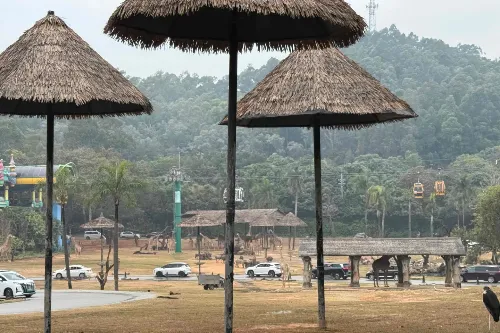
The Self-Driving Tour Zone is the landmark attraction of the park with a 20-kilometer loop divided into five sections: Australian Forest, American Jungle, Central Asian Desert, South Asian Rainforest and African Grassland. The whole area adopts a free-range mode without isolation guardrails. Visitors can drive their private cars or take free park sightseeing trains to travel through the zone. Along the way, they can get close to dozens of wild animals including giraffes, zebras, lions, tigers, wildebeests, ostriches and camels. Animals move freely in the original vegetation on both sides of the road, restoring the wild habitats of wild animals. Multiple temporary viewing parking spots with science popularization signs are set up in each section, and no manual feeding points are available throughout the zone.
Panda Paradise
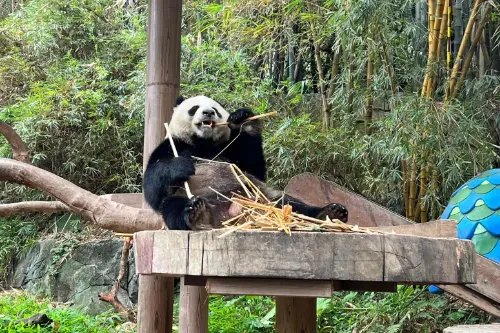
Panda Paradise is the largest exclusive giant panda exhibition hall in South China, with a total indoor and outdoor exhibition area of over 10,000 square meters. The constant-temperature and constant-humidity indoor venues adapt to the living habits of giant pandas. The park keeps multiple giant pandas all year round, supporting a panda interaction science museum, panda cultural and creative store and panda-themed lounge. Regular sessions of giant panda feeding and behavioral observation guided tours are arranged. The hall is staffed by professional panda keepers and equipped with scientific observation equipment. Visitors can watch giant pandas eating, climbing and resting, and learn popular science knowledge about giant panda breeding and habitat protection at the same time.
Golden Monkey Kingdom
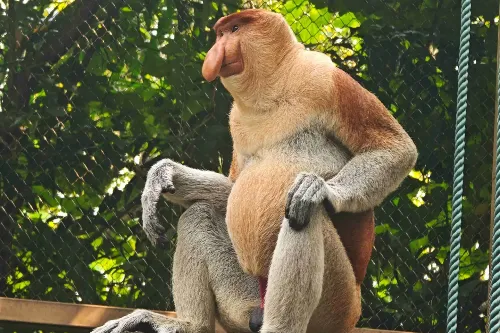
Golden Monkey Kingdom is a fully open primate exhibition area with multi-layer three-dimensional aerial walkways and a large number of native trees planted to simulate wild monkey habitats. The exhibition area houses nearly 100 species of primates including golden snub-nosed monkeys, François' langurs, mandrills, orangutans and gibbons. Aerial viewing passages allow visitors to observe monkey troops from eye level and overhead. Regular daily popular science explanations on primate behaviors are provided, alongside a small primate exhibition hall displaying monkey evolution specimens.
White Tiger Hill
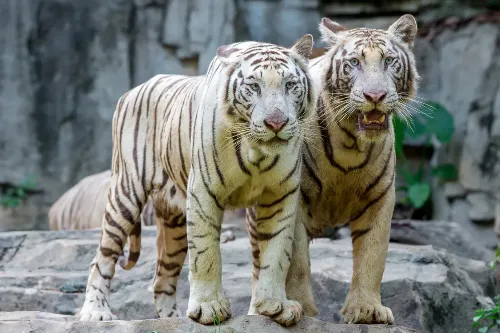
White Tiger Hill is the core exhibition area for white tiger populations worldwide, featuring connected mountain free-range zones divided into independent activity areas for different white tiger groups. The park boasts the world’s largest breeding population of white tigers. A live white tiger diving show is staged daily at fixed times, where white tigers jump from high platforms into pools to hunt. A circular viewing stand is provided for visitors, and science boards introducing white tiger genes and endangered protection status are placed in the exhibition area.
Green Dragon Hill
Green Dragon Hill focuses on reptiles and amphibians. The indoor constant-temperature exhibition hall is split into three sections: Rainforest Reptile Zone, Desert Reptile Zone and Aquatic Amphibian Zone. It raises rare reptiles such as crocodiles, monitor lizards, pythons, tortoises and giant salamanders. The hall adopts transparent ecological landscapes paired with constant-temperature humidifying equipment to restore native habitats, with independent science popularization explanation spots suitable for youth reptile study tours.
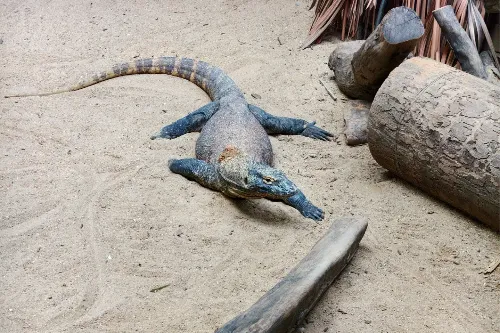
4D Cinema
The park has an exclusive animal-themed 4D cinema screening wildlife science films. Equipped with dynamic seats, wind, water spray, vibration and other special effects devices, it can accommodate hundreds of visitors per session. Each film lasts about fifteen minutes and plays on a loop every hour. Admission to the cinema is included in the general park ticket with no extra charge.

Tour Route
Main Gate Entrance → Sightseeing Train Station (Self-Driving Loop Tour) → Green Dragon Hill → Golden Monkey Kingdom → White Tiger Hill (Watch White Tiger Diving Show) → Panda Paradise → 4D Cinema → Animal Behavior Performance Arena → Parent-child Animal Interaction Zone → Exit
Travel Tips
- It is recommended to arrive at the park before 9 a.m. to avoid the peak passenger flow from 10 a.m. to 3 p.m. Animals are more active in the morning for better viewing experience.
- Prioritize taking the free park sightseeing train to tour the self-driving zone. The train offers wide views and saves time spent on parking and waiting for traffic when driving personally.
- Check the schedules for the white tiger diving show, animal theater performances and 4D cinema screenings in advance via the park official WeChat account to arrange your tour order reasonably and avoid missing scheduled shows.
- Bring sun hats, sunscreen and drinking water. The park has long walking paths with high temperatures in summer; take heatstroke prevention measures.
- Visitors with children may collect paper science guide maps at the park and participate in animal science check-in activities along the way, ideal for parent-child study tours.
- If entering the park by private car, avoid holiday peak hours. Waiting time on the self-driving loop can exceed half an hour during peak periods.
- Pace your visit slowly, reserve at least thirty minutes for each themed exhibition area to fully watch natural animal behaviors.
Notes
- Visitors are prohibited from feeding any wild animals with self-brought food across the entire park. Violators will be dissuaded and penalized in accordance with park management regulations for serious violations.
- Visitors are forbidden to get off vehicles, stretch hands out of windows to touch animals or throw objects at animals in the self-driving zone to ensure safety for both humans and animals.
- Skateboards, balance scooters, bicycles and large camping trolleys are not allowed inside the park; small baby strollers are permitted.
- Flash photography is banned in animal performance venues and indoor exhibition halls, as strong light disturbs animals and disrupts their daily routines.
- Do not chase animals, tap exhibition glass or guardrails, or make loud noises to avoid startling wild animals.
- Special park feed for small animals can only be purchased and fed at designated interaction spots; feeding is prohibited in all other areas.
- Visitors with allergies, heart disease or hypertension shall exercise caution when viewing predator exhibition areas and choose visiting zones according to personal physical conditions.
- Private pets are not allowed in the park; guide dogs with valid certificates may accompany their owners.
Transportation
- Metro: Take Guangzhou Metro Line 3 to Hanxi Changlong Station Exit D/E, then transfer to free park shuttle buses directly to the main gate of Chimelong Wildlife World. Shuttle bus operating hours align with park opening hours.
- Bus: Take buses No. Fan 109, Fan 125 or 304 to the Chimelong Wildlife World bus stop, then walk five minutes to the park entrance.
- Self-driving Navigation: Navigate to Chimelong Wildlife World Parking Lot. The park has a large paid parking lot with hourly parking fees; parking spaces are limited during holidays.
- Resort Shuttle: Free shuttle buses connect Chimelong Paradise, Chimelong Birds Park and Chimelong International Circus within the resort for transfers between venues.
- Intercity Transport: Visitors arriving at Guangzhou South Railway Station can reach the park by taxi in fifteen minutes, or take Metro Line 7 and transfer to Line 3 to Hanxi Changlong Station.
Opening Hours
Regular weekday opening hours: 9:00 a.m. – 6:00 p.m., with last entry at 5:00 p.m. On Saturdays, Sundays and legal holidays, opening hours are adjusted to 8:30 a.m. – 6:30 p.m., with last entry at 5:30 p.m. In case of special extreme weather, park animal maintenance or major event adjustments, the park will announce revised temporary opening and closing hours in advance via its official WeChat account. The opening hours of individual venues and animal shows inside the park are slightly shorter than the overall park hours; visitors may check detailed timetables on on-site guide boards.
Ticket Information
Tickets start from 245 RMB per person. Search the official WeChat account "长隆野生动物世界" on WeChat for the latest updates.
Online Booking
Click here to jump to the Trip.com ticketing platform for ticket purchase.