
Yuyuan Garden is located on Yuyuan Old Street in Huangpu District, Shanghai, and is an 4A-level tourist attraction with both the characteristics of a classical Jiangnan garden and a profound historical and cultural heritage. Yuyuan Garden was built during the Jiajing and Longqing periods of the Ming Dynasty (1559-1577) by Pan Yunduan to honor his father Pan En, taking its name from the phrase "to please the elder parents." The entire scenic area covers approximately 20,000 square meters. The garden features a sophisticated layout with over 30 types of buildings, including pavilions, terraces, towers, halls, rockeries, and pools. It blends the delicacy and elegance of Jiangnan gardens with the grandeur of northern gardens, known for its quiet and beautiful scenery and exquisite linglong (meaning exquisite and delicate). It is one of the oldest and most complete classical Jiangnan gardens in Shanghai. The garden not only preserves a large number of architectural components and landscaping techniques from the Ming and Qing dynasties but also houses a collection of exquisite traditional craftsmanship, including woodcarvings, brick carvings, stone carvings, and clay figurines, serving as an important carrier for showcasing Shanghai's local garden culture and Jiangnan landscaping art.
Historical Culture
The history of Yuyuan Garden can be traced back to the 38th year of the Jiajing reign of the Ming Dynasty (1559). Pan Yunduan, then a Provincial Censor of Sichuan, built this garden over eighteen years to support his father Pan En. Initially covering an area of over 70 mu, it was the largest private garden in Shanghai at that time. During the late Ming and early Qing dynasties, Yuyuan Garden suffered severe damage due to wars, and after several changes of ownership, parts of it were rebuilt as temple property of the City God Temple, becoming an important venue for folk activities.
In the 25th year of the Qianlong reign of the Qing Dynasty (1760), Yuyuan Garden underwent extensive repairs, restoring some garden landscapes. During the Daoguang period, Yuyuan Garden was damaged again by wars, with its area greatly reduced. From the late Qing Dynasty to the Republic of China, a prosperous urban commercial district gradually formed around Yuyuan Garden, integrating with the garden itself to become the core area of Shanghai's old town culture.
After the founding of the People's Republic of China, the government carried out multiple repairs and expansions of Yuyuan Garden in 1956, 1961, 1980, etc., restoring its core landscapes and designating it as a cultural relic protection unit of Shanghai. In 1982, Yuyuan Garden was listed as a national key cultural relic protection unit by the State Council. Its cultural heritage, including Jiangnan garden culture, Shanghai-style urban culture, and traditional folk culture, has become an important part of Shanghai's history and culture.
Main Attractions
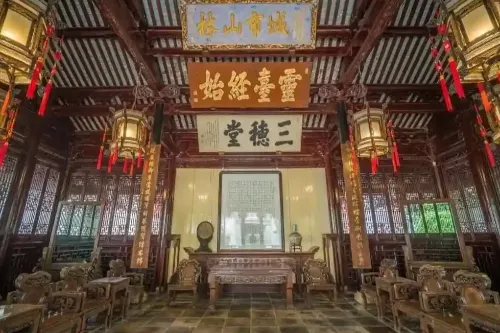
Sansui Hall
Sansui Hall is the main hall at the entrance of Yuyuan Garden and also the largest hall building in the garden. Built in the 25th year of the Qianlong reign of the Qing Dynasty (1760), the hall's name derives from the phrase "Three ears of rice grow on one stalk, a sign of a bumper harvest." The hall faces south, has five bays in width and three bays in depth, and is entirely made of brick and wood. The beams and lintels are carved with exquisite patterns of flowers, birds, fish, insects, and figures. In front of the hall is a spacious platform offering a bird's-eye view of the Heart Lake Pavilion, the Nine-Turn Bridge, and other landscapes. It serves as an important venue for holding various folk activities and cultural exhibitions in the garden.
Jade Linglong
Jade Linglong is the treasure of Yuyuan Garden and one of the Three Great Famous Stones of Jiangnan. Standing approximately 3.3 meters tall, 1.3 meters wide, and weighing about 5 tons, it is said to be a relic from the Song Dynasty's Flower Stone Fleet. The stone is porous throughout, boasting the four characteristics of "wrinkled, leaking, thin, and transparent." If incense is burned beneath it, the smoke will emerge from all its holes; if water is poured over it, the water will drip from the holes, making it a rare stone treasure. Next to Jade Linglong stands the Jade Linglong Pavilion, with simple and elegant furnishings that complement the rare stone, making it one of the most visually appealing landscapes in the garden.

Nine-Turn Bridge
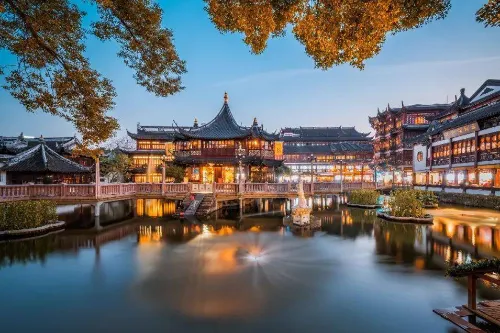
The Nine-Turn Bridge is located south of the Heart Lake Pavilion in Yuyuan Garden, connecting Yuyuan Mall to the pavilion. Approximately 18 meters long and 2 meters wide, it gets its name from its nine turns. The bridge is constructed of granite with a balustrade made of white marble, and the bridge surface is carved with auspicious patterns. Spanning a lotus pond, the bridge is surrounded by aquatic plants such as lotus and water lilies. In summer, when the lotus flowers are in full bloom, the reflections of the bridge, flowers, and water create a charming scene, making it a signature attraction of Yuyuan Garden and a popular spot for tourists to take photos.

Heart Lake Pavilion
The Heart Lake Pavilion was built in the 49th year of the Qianlong reign of the Qing Dynasty (1784). Located in the center of the lotus pond at the end of the Nine-Turn Bridge, it is an octagonal double-story pavilion made of brick and wood. With upturned eaves and glazed tile roofs, the pavilion features inscribed plaques beneath its eaves and tea seats inside, where visitors can relax and taste tea while enjoying the surrounding garden scenery. As one of the core attractions of Yuyuan Garden, the Heart Lake Pavilion is also one of the oldest tea houses in Shanghai, embodying a rich Shanghai-style tea culture.
Dianchun Hall
Dianchun Hall was built in the early years of the Daoguang reign of the Qing Dynasty, with five bays in width and three bays in depth, serving as the main hall in the northeastern part of Yuyuan Garden. In 1853, the Shanghai Small Swords Society used this hall as their headquarters in the north of the city, making it an important historical site in modern Chinese history. The hall now houses exhibits and historical materials related to the Small Swords Society uprising. In front of the hall is a small stage and courtyard, planted with ginkgo, pomegranate, and other trees, creating a serene environment that combines the beauty of the garden with a sense of historical weight.
Yangshan Hall
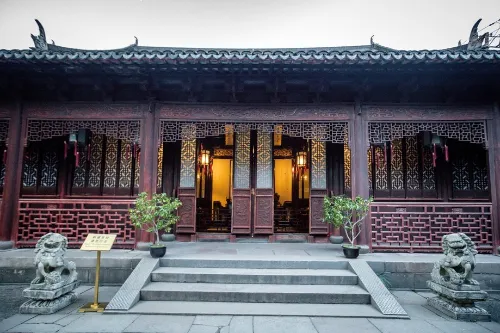
Hanging in the hall is a plaque inscribed with the phrase "Here there are lofty mountains and ridges." The curved railings overlook the pond, allowing visitors to enjoy the mountain views. The entire building features light and elegant upturned eaves. On moonlit nights, with palace lanterns lit, it appears as if one is looking at the "Heavenly Palace."

Ju Yu Lou
Built as a winding building, it takes its name from the Tang Dynasty poem "Pearl curtains roll up at dusk with western mountain rain." It is said that when visiting the building during rain, the mist and smoke create a hazy view of the mountains, making it seem as if one is in a mountain valley, a unique scenic spot in Yuyuan Garden.
Jiushixuan Pavilion
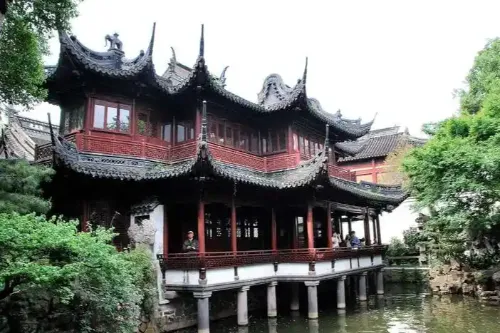
Built by the pond, it is an open and spacious waterside pavilion. Its name derives from the nine lion-shaped rockeries cleverly stacked in front of the pavilion. Visitors often rest here, watching the fish swim in the pond and feeling the cool breeze.
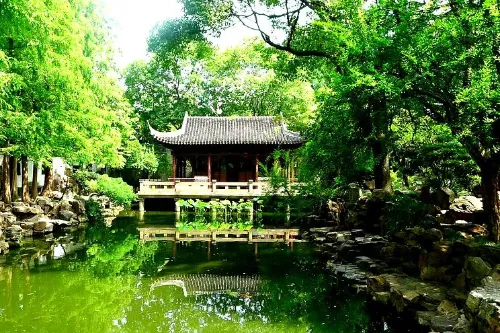
Huijing Tower
Located in the central area of Yuyuan Garden, this tower is surrounded by water on three sides and lush trees all around, offering a pleasant and picturesque view.

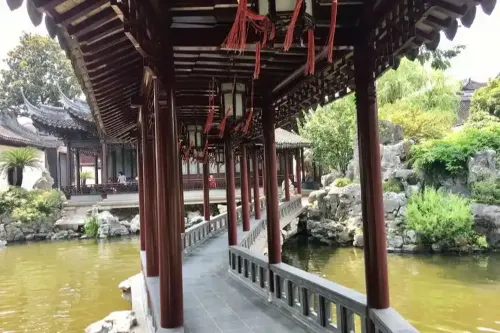
Jiyu Water Corridor
Connecting Huijing Tower to Hanbi Tower, it is named after a stone called "Jiyu Peak" beside the corridor. With a length of over 100 meters, it is the longest water corridor in a classical Jiangnan garden. Winding through the garden, walking along the corridor, one can enjoy the lush ancient trees, red fish swimming in the pond, and the colorful pavilions and terraces, creating a poetic and picturesque scene.
Tour Route
Recommended Classic Tour Route for Yuyuan Garden: Enter through the main entrance (Anren Street entrance), first reach Sansui Hall to admire the open scenery in front of the hall and understand the overall layout of Yuyuan Garden. Then proceed north to Yangshan Hall and Ju Yu Lou to overlook the rockery landscapes. Next, visit the Jade Linglong area to see the treasure of the garden, Jade Linglong, as well as the surrounding Jade Linglong Pavilion and Jiushixuan Pavilion. Then walk through the Jiyu Water Corridor to reach the Nine-Turn Bridge and Heart Lake Pavilion, experiencing the beautiful scenery of "Nine turns reflecting the lotus." Take a break at the Heart Lake Pavilion to taste tea. Continue east to Dianchun Hall to learn about the history of the Small Swords Society uprising. Finally, visit Huijing Tower and other attractions, exiting through Yuyuan Old Street. The entire route is approximately 2-3 kilometers long, with a recommended tour duration of 3-4 hours, allowing you to fully cover the core attractions of Yuyuan Garden with a reasonable layout that avoids backtracking.
Travel Tips
- Best Travel Time: March to May (spring, when flowers bloom in the garden) and September to November (autumn, with pleasant weather); visit between 8:30 and 10:00 AM daily when there are fewer tourists, making it easier to take photos and explore.
- Tour Duration: It is recommended to allow 3-4 hours; for a deeper experience of garden culture and tea tasting, 5-6 hours can be reserved.
- Tour Guide Service: Yuyuan Garden offers official guided tours (100 RMB per tour, accommodating up to 20 people) or electronic tour guides (20 RMB per device, 100 RMB deposit). It is recommended to choose a guided tour to gain a deeper understanding of the garden's history and architectural features.
- Folk Experience: During the Spring Festival (first to fifteenth day of the first lunar month), Yuyuan Garden hosts a Spring Festival Lantern Festival, one of the most distinctive folk activities in Shanghai. Similar folk activities are held during the Mid-Autumn Festival, Dragon Boat Festival, and other traditional festivals; check the scenic area's announcements in advance to participate.
- Dining Recommendations: Taste Shanghai specialty snacks at the Heart Lake Pavilion Tea House, such as soup dumplings and osmanthus rice cakes. Around Yuyuan Old Street, there are time-honored brands like Nanxiang Mantou Shop and Lübo Lang, where you can experience authentic Shanghai snacks.
Notes
- Smoking, spitting, and littering are prohibited in Yuyuan Garden. Climbing on rockeries, damaging cultural relics, and plants will result in penalties according to the scenic area's regulations.
- During holidays (such as the Spring Festival and National Day), the number of tourists is large. It is recommended to book tickets in advance through official channels to avoid crowds; be cautious of narrow sections of the garden and keep your personal belongings safe.
- There are many ancient buildings and cultural relics in the scenic area. Drone aerial photography is prohibited, as is carving or graffiti on cultural relics.
- Children and the elderly should be accompanied by family members. Areas like the Nine-Turn Bridge and rockeries have slippery surfaces, so watch your step.
- Yuyuan Garden tickets are non-refundable except in cases of scenic area issues; please leave the garden before closing time after entering.
Transportation
- Subway: Take Shanghai Metro Line 10 to Yuyuan Garden Station, exit at Exit 1, and walk approximately 500 meters to reach the main entrance of Yuyuan Garden. Alternatively, take Metro Line 9 to Xiaonanmen Station and walk about 800 meters.
- Bus: Take Bus Routes 11, 26, 64, 715, 920, 926, etc., to Yuyuan Garden Station and walk to the destination.
- Self-Driving: There are few parking lots around Yuyuan Garden. It is recommended to park in the underground parking lot of Yuyuan Mall (Address: No. 100 Yuyuan Road, Huangpu District), but parking spaces are limited during holidays; public transportation is preferred.
Opening Hours
Daily opening hours are from 8:30 to 17:00 (entry stops at 16:30). During the Spring Festival (first to fifteenth day of the first lunar month), the opening hours are adjusted to 8:00 to 20:00 (entry stops at 19:30). During national holidays such as National Day and Mid-Autumn Festival, the opening hours are from 8:00 to 18:00 (entry stops at 17:30). The scenic area is open year-round with no closure days (except for special maintenance, which will be announced in advance through official channels).
Tickets
Tickets are 30 yuan per person. You can search for the WeChat official account "上海豫园" to get the latest updates or purchase tickets online.
Online Booking
Click here to jump to the Trip.com ticketing platform for ticket purchase.