
South China National Botanical Garden, Chinese Academy of Sciences is located in Tianhe District, Guangzhou City, Guangdong Province. As an important part of the national botanical garden system, it was upgraded from South China Botanical Garden of the Chinese Academy of Sciences. Covering a total area of 333 hectares, it is a comprehensive botanical garden integrating botanical scientific research, ex situ species conservation, popular science education and ecological leisure tourism, and also a national AAAA-level tourist attraction. Relying on the climatic conditions of the south subtropical monsoon, the park focuses on collecting and conserving tropical and subtropical plant resources. It currently conserves more than 17,000 plant species and has built multiple special gardens and scientific research facilities. Combining scientific research and tourism functions, the park is equipped with supporting buildings including the Exhibition Greenhouse, Herbarium and Science Popularization Information Center. It serves as a core base for plant biodiversity conservation and a well-known eco-tourism destination in South China.
History and Culture
The predecessor of South China National Botanical Garden can be traced back to the Institute of Agriculture and Forestry Botany, National Sun Yat-sen University founded in 1929 by Academician Chen Huanyong. It is one of the earliest botanical research institutions established in modern China. Since its foundation, the institute has continuously carried out plant surveys, specimen collection and taxonomic research in South China and Southeast Asia, accumulated abundant plant specimen resources and laid the foundation for botanical research in South China.
In 1954, the institute came under the administration of the Chinese Academy of Sciences and was named South China Institute of Botany, Chinese Academy of Sciences. Later, ex situ plant conservation zones and various specialized gardens were gradually constructed. In 2003, it was officially renamed South China Botanical Garden, Chinese Academy of Sciences. In July 2022, South China National Botanical Garden was established based on South China Botanical Garden and incorporated into the national layout of national botanical gardens.
During its nearly one-hundred-year development, numerous botanical researchers have emerged here. A great number of scientific achievements have been accomplished, including publishing new plant species, protecting rare and endangered plants and exploring resource plants. Meanwhile, it has continuously carried out botanical science popularization for the public, forming a tradition integrating scientific conservation with popular science and cultural tourism. It undertakes the historical mission of conserving plant resources and studying biodiversity in South China.
Major Attractions
Exhibition Greenhouse (Plant World)
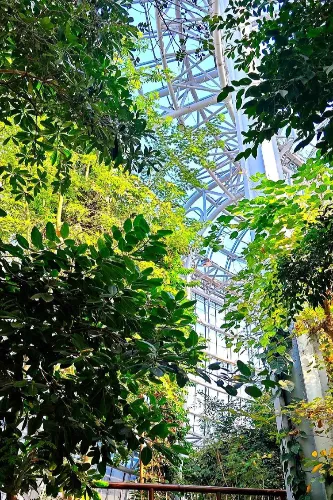
The Exhibition Greenhouse is the landmark building of the park. It consists of multiple exhibition halls including Tropical Plant Hall, Polar Plant Hall, Desert Plant Hall and Rainforest Plant Hall. Different temperature and humidity environments are regulated indoors to conserve characteristic plants from tropical zones, subtropical zones, arid regions and high-altitude areas. It collects numerous rare ornamental plants and is a core visiting spot for tourists, ideal for learning about typical plants from different climate zones.
Dragon Cave Beautiful Woods
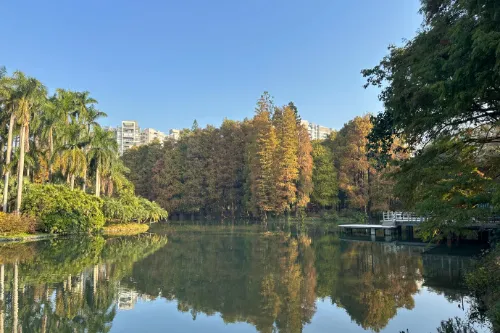
Dragon Cave Beautiful Woods is a classic landscape of South China National Botanical Garden, composed of Palm Garden and Relict Plant Garden. Palm trees, metasequoia and taxodium distichum grow along the water. The reflection of trees on the water creates stunning scenery. It is listed among the Eight Scenic Spots of Guangzhou. A popular area for photography and leisure sightseeing, it displays palm plants and ancient relict plant groups.
Medicinal Botanical Garden
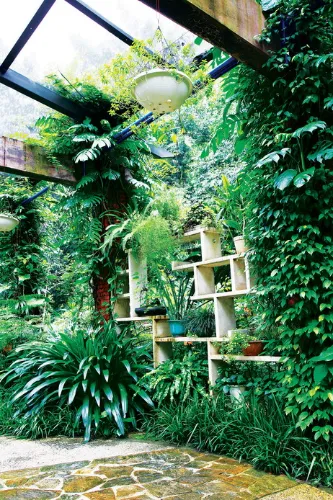
The Medicinal Botanical Garden collects native medicinal plants of South China arranged by medicinal efficacy. Popular science signs inside introduce the morphology and medicinal value of various medicinal plants. It functions both for science popularization and species preservation, serving as a specialized garden for learning about traditional Lingnan medicinal plant resources.
Magnolia Garden
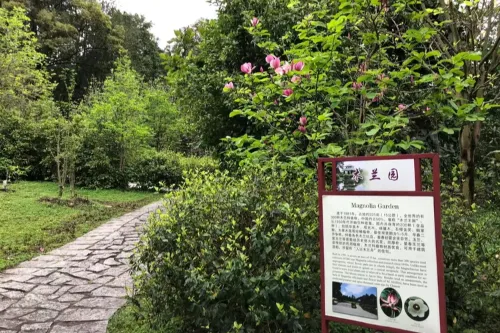
The Magnolia Garden is one of the large-scale conservation zones for Magnoliaceae plants in China. It collects and preserves many rare magnolia trees. Flowers bloom exuberantly every spring with rich fragrance. The garden undertakes germplasm resource preservation and breeding research of Magnoliaceae plants.
Pineapple Garden
The Pineapple Garden focuses on conserving Bromeliaceae plants. It collects a large number of ornamental pineapples and relatives of edible pineapples to demonstrate the diversity of Bromeliaceae, suitable for viewing distinctive tropical herbaceous plants.
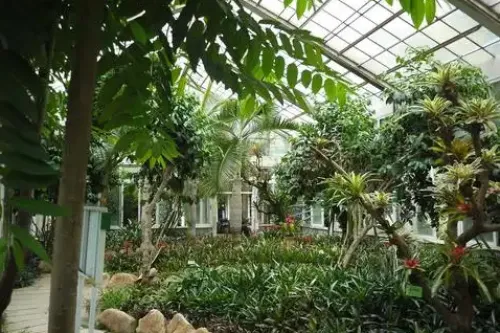
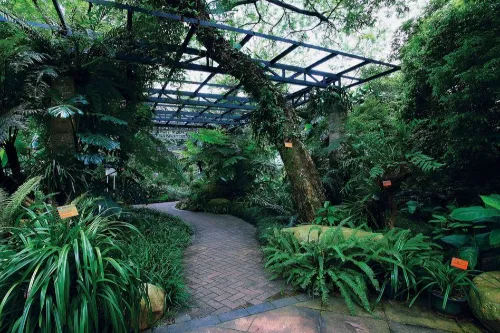
Fern and Shade Plant Garden
The garden simulates damp understory habitats to conserve various ferns, Araceae and other shade-loving plants. It creates miniature rainforest landscapes under woods and demonstrates the evolution and survival characteristics of shade plants.
Tour Route
Main Entrance Plaza → Exhibition Greenhouse → Dragon Cave Beautiful Woods → Magnolia Garden → Medicinal Botanical Garden → Fern and Shade Plant Garden → Pineapple Garden → West Gate Exit
Tour Tips
- A visiting duration of 4 to 6 hours is recommended. The park covers a large area; arrange walking breaks properly.
- Mosquitoes are prevalent in spring and summer. Prepare mosquito repellent and sunscreen in advance.
- Visit Dragon Cave Beautiful Woods in the morning with soft light if you want to take waterscape photos.
- Bring drinking water, as supply points are sparsely distributed inside the park.
- You may book science popularization guided tours to gain in-depth botanical knowledge if interested.
- Check the official blossom forecast released by the park before traveling during flowering seasons.
Precautions
- Picking flowers, fruits and branches or digging plants inside the park is prohibited. Violators will be dealt with in accordance with relevant regulations.
- Do not feed or disturb wild animals arbitrarily; releasing alien species is forbidden.
- Open flames and fire sources are banned; smoking is prohibited throughout the park.
- Do not enter closed experimental conservation zones for plants during sightseeing, and do not climb fences.
- Some forest trails become slippery on rainy days; watch your step.
- Drones are not allowed to take off without permission from park management.
- Protect public facilities, do not litter, and abide by park sightseeing regulations.
Transportation
- Public Transport: Take Metro Line 6 to Botanical Garden Station, then walk to the main entrance. Multiple bus routes stop at the bus stations near the main entrance.
- Self-driving Navigation: Search for "South China National Botanical Garden (Main Entrance)". Parking lots are available on site but parking spaces are limited. Public transport is recommended on holidays.
- Taxis and online car-hailing vehicles can drop off and pick up passengers directly at the main entrance drop-off area.
Opening Hours
The park gate opens from 7:30 to 17:30 every day. The Exhibition Greenhouse opens from 9:00 to 17:00 daily, and visitors will not be admitted after 17:00. Opening arrangements during statutory holidays are subject to official park announcements. The park or exhibition halls may temporarily adjust opening status under extreme weather conditions.
Ticket Information
The admission ticket costs 20 RMB per person. You may search the WeChat official account "华南植物园" to obtain the latest updates.
Online Booking
Click here to jump to the Trip.com ticketing platform for ticket purchase.