
Guangzhou Zoo is located at No. 120 Xianlie Middle Road, Yuexiu District, Guangzhou City, Guangdong Province. It is a National 4A-level tourist attraction. Together with Beijing Zoo and Shanghai Zoo, it is known as the three major urban zoos in China. Covering an area of about 42 hectares, the zoo has two entrances: the South Gate and the North Gate. More than 200 species and tens of thousands of plants are planted inside, presenting a distinctive Lingnan garden style. The zoo exhibits around 400 species and over 5,000 wild animals, including dozens of national first-class protected animals such as giant pandas and golden snub-nosed monkeys, as well as multiple national second-class protected animals including red pandas and white-naped cranes. Integrating wild animal exhibition, popular science education, scientific research and leisure sightseeing, Guangzhou Zoo has successively won honors including China’s Top Ten Zoos, National Popular Science Education Base for Wildlife Conservation and Guangdong Youth Science and Education Base. It receives approximately 5 million visitors every year, serving as an important urban zoo and wildlife popular science platform in South China.
History and Culture
The origin of Guangzhou Zoo can be traced back to Yonghan Park established in 1928, situated in present-day North Zhongshan 4th Road. Back then, more than 60 species of animals were exhibited here, making it the earliest public park in Guangzhou with zoo functions. In 1950, Yonghan Park was renamed People’s Park. In May 1955, it was officially named Guangzhou Zoo. Due to limited space with no room for expansion at the original site, the Guangzhou Municipal Government selected Mayinggang as the new location and launched construction in 1956.
On January 1, 1958, Guangzhou Zoo officially opened to the public at the new site. After opening, the zoo continuously upgraded animal exhibition areas and garden facilities, enriched animal species, and carried out long-term research on wildlife breeding, successfully breeding hundreds of wild animal species. In 2008, Guangzhou Zoo was rated as a National AAAA-level tourist attraction. After decades of development, the zoo keeps promoting venue renovation, improvement of animal welfare and construction of popular science systems, and has become an urban landmark carrying the travel memories of generations of Guangzhou citizens.
Main Attractions
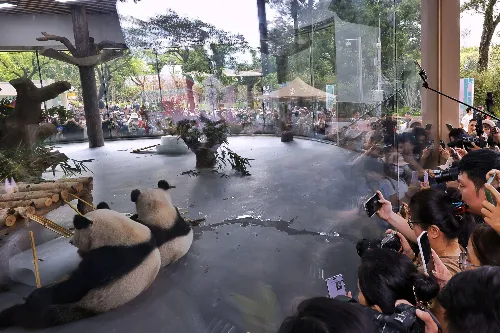
Giant Panda House
Situated in the central area of the zoo and south of the Monkey Hill, the Giant Panda House adopts Lingnan kapok elements in its design, with two indoor exhibition halls and two outdoor activity grounds. The venue simulates the native alpine bamboo habitat of giant pandas, equipped with climbing frames, green plants, ponds and other facilities. Giant pandas Xingyi and Yayi live here. As the most popular core exhibition area of the zoo, it is fitted with wildlife science display boards introducing professional knowledge about giant panda conservation.
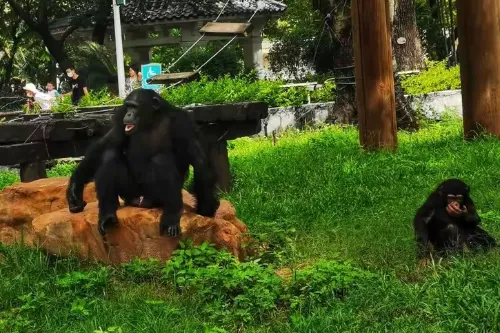
Orangutan House
The Orangutan House is close to the North Gate entrance. It was renovated and opened to visitors in 2006, covering a total area of approximately 3,000 square metres, with an outdoor sports ground of 2,000 square metres. The exhibition area consists of indoor constant-temperature rest quarters, glass viewing halls and outdoor ecological playgrounds. The landscape features rock hills, waterfalls and native vegetation to recreate mountain forest environments. Chimpanzees are raised here, and visitors can observe the daily behaviours of primates from multiple angles at the second-floor viewing platform.
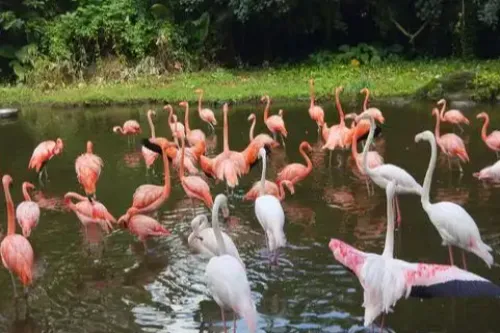
Bird Paradise
Bird Paradise lies in the southern zone of the zoo. It is a comprehensive large bird exhibition area divided into multiple independent aviaries and open bird-watching zones. It raises flamingos, peacocks, ostriches, various parrots, white pelicans and hundreds of other bird species. Some sections adopt open large aviary designs, allowing visitors to watch birds at close range. The pink flamingo enclosure is a popular photography spot.
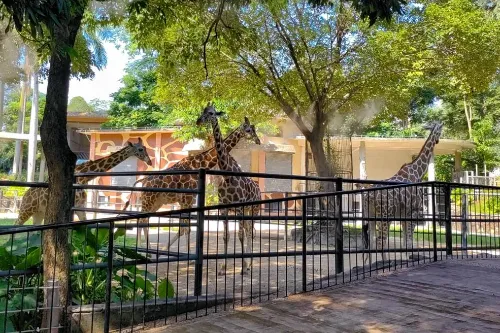
Herbivore Zone
Located in the southeast of the zoo, the Herbivore Zone includes the giraffe enclosure, zebra enclosure, Asian elephant enclosure and kangaroo house. An official feeding platform is set up in the giraffe area, alongside enclosures for rhinoceroses, sika deer, Eld’s deer, antelopes and other herbivores. Rebuilt in 2006, the kangaroo house features wooden walkways and glass railings for visitors to watch kangaroos easily.
Monkey Hill
Monkey Hill stands at the centre of the zoo, adjacent to the Fun Garden and Animal Square. It is a classic primate exhibition area mainly housing rhesus monkeys and stump-tailed macaques. Built against mountain terrain with open space, it provides natural climbing and activity environments for macaques, serving as a key spot for visitors to view group-living primates.
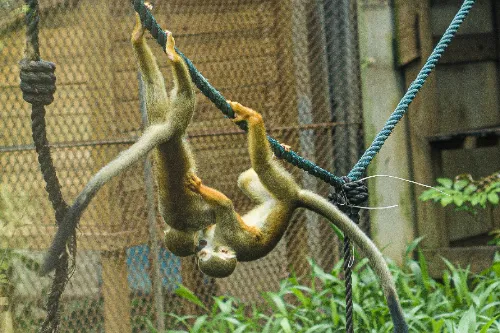
Koi Pond Garden
Koi Pond Garden is an ornamental aquatic animal exhibition area with ponds of different sizes raising koi and various ornamental fish. Surrounded by green plants, it enjoys a quiet environment ideal for leisure viewing and photography.
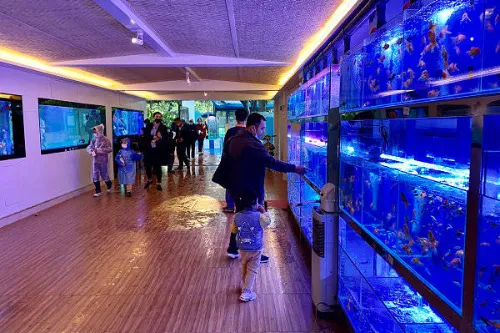
Egret Lake
Egret Lake is a natural lake landscape inside the zoo. Black swans, white swans, mandarin ducks and other waterfowl live on the lake. Paved walkways encircle the lake, where visitors can watch waterbirds swimming. Blending lake scenery and lush vegetation, it is a relaxing sightseeing area within the zoo.
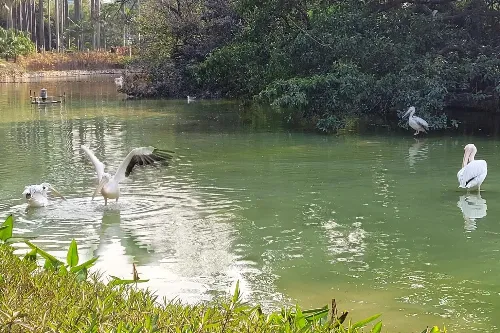
Sightseeing Route
South Gate Entrance→Bird Paradise→Koi Pond Garden→Herbivore Zone (Giraffes, Zebras, Elephants)→Giant Panda House→Monkey Hill→Fun Garden→Egret Lake→Orangutan House→Carnivore Zone→North Gate Exit
Sightseeing Tips
- It is recommended to enter the zoo between 8:00 and 11:00. Most animals are more active in the morning, offering better viewing experience of giant pandas and primates.
- The walking distance for a full tour is long. Wear comfortable sports shoes. Strollers are available for rent inside the zoo, which families with children can plan in advance.
- Large parts of the zoo are open-air. Apply sun protection in summer. The woods have many mosquitoes, so bring mosquito repellent.
- The Giant Panda House gets crowded during holidays. Head straight there first if you want to reduce queuing time.
- Food and beverages inside the zoo are relatively pricey. You may bring drinking water and simple snacks, as outside food is permitted.
- Reserve 3 to 4 hours for a complete tour to avoid rushing and missing exhibition areas.
Notice
- Do not feed animals with food brought from outside. Random feeding harms animal health. Only officially sold feed in the zoo can be used for animal interaction.
- Do not tap viewing glass, take photos with flash or make loud noises during your visit so as not to disturb animals.
- It is strictly forbidden to climb railings or isolation trenches. Keep away from exhibit boundaries to guarantee your safety and the safety of animals.
- Pets, scooters, bicycles and flammable or explosive articles are prohibited inside the zoo.
- Protect plants and public facilities in the zoo. Do not litter and follow the civilized visiting regulations.
- Admission stops at 16:30. Avoid arriving at the last minute and leave enough visiting time.
- The aquarium inside the zoo charges separately and is not included in the general admission ticket. Visitors may choose to visit it as needed.
Transportation
- Metro: For the South Gate, take Metro Line 5 to Zoo Station Exit C for direct access. For the North Gate, take Metro Line 6 to Huanghuagang Station Exit A, then walk for roughly 10 minutes.
- Bus (South Gate): Take Bus 16, 65, 78, 192, 199 and other routes to Zoo South Gate Stop.
- Bus (North Gate): Bus 72, 74, 84, 127, 220 and other routes terminate at Zoo North Gate Bus Terminal.
- Driving: Parking lots are available near the South and North Gates. Parking spaces are tight on holidays; public transport is recommended.
Opening Hours
Guangzhou Zoo opens daily from 08:00 to 18:00. Visitor admission closes at 16:30. It operates all year round without regular closed days. For temporary control notices, please follow the official WeChat official account.
Ticket Information
The admission ticket costs 20 RMB per person. Search the WeChat official account "广州动物园" to get the latest updates and buy tickets online.
Online Booking
Click here to jump to the Trip.com ticketing platform for ticket purchase.