
Baomo Garden is located in Zini Village, Shawan Subdistrict, Panyu District, Guangzhou City, Guangdong Province. It is a National 4A-level tourist attraction. Covering a total area of approximately 100,000 square meters, it is a large antique Lingnan classical garden integrating Lingnan ancient architecture, garden water scenery, painting and calligraphy art, and cultural relic collection. Crisscross water systems run through the garden, with pavilions, terraces and towers built along the water. A great number of traditional Lingnan crafts including brick carving, pottery sculpture, lime sculpture, wood carving and stone carving are adopted for decoration, forming a landscape pattern where scenery unfolds at every step and gardens blend with lakes. The garden serves multiple functions such as leisure sightseeing, art exhibitions and traditional cultural research tours. Centered on collecting fine paintings and calligraphy, ancient relics of all dynasties and recreating the classic style of Lingnan gardens, it ranks among the representative scenic spots of Lingnan garden culture.
History and Culture
Baomo Garden was first built during the Jiaqing reign of the Qing Dynasty. Originally named Baomo Hall, it stood in Zini Village. It was constructed to commemorate Bao Zheng, a renowned official of the Northern Song Dynasty, and promote integrity and uprightness. During the late Qing Dynasty and early Republic of China, the old garden gradually fell into disuse. Most original buildings suffered severe damage and the garden lost its complete layout.
Starting from 1995, the local government launched the reconstruction project of Baomo Garden. The new site was chosen near the original location for planning and construction, restoring the garden layout following the traditional Lingnan garden design philosophy. In 1999, the reconstructed Baomo Garden officially opened to the public and underwent continuous expansion and improvement afterwards. Overseas Chinese collector Mr. Zhao Tailai donated a large quantity of ancient and modern paintings and calligraphy, bronze wares, ceramics, jade articles and other cultural relics to Baomo Garden free of charge, greatly enriching the cultural connotation of the garden and turning it into a site featuring both garden landscapes and cultural relic exhibitions.
Taking the integrity culture of Lord Bao as its spiritual core, the garden combines the folk customs of Guangfu water towns, Lingnan gardening art and the culture of cultural relics returned by overseas Chinese. It regularly hosts painting and calligraphy exhibitions, intangible cultural heritage displays and traditional festival activities to inherit Guangfu traditional culture continuously.
Major Attractions
Baomo Hall
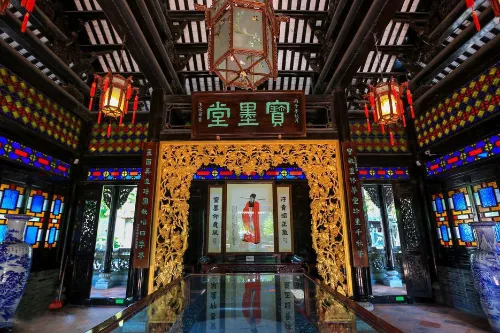
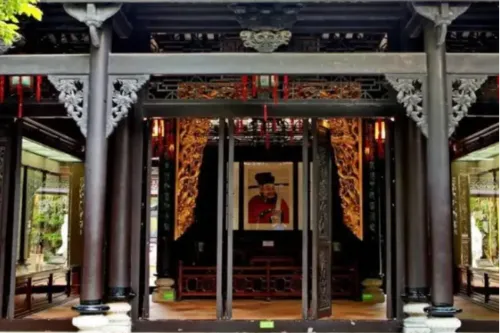
Baomo Hall is the core main building of the whole garden, inheriting its name from the ancient building in the Qing Dynasty to commemorate Bao Zheng. A statue of Lord Bao is placed inside the hall together with relevant graphic and historical materials showing stories about Lord Bao’s incorrupt governance. Built in a typical Lingnan hall architectural style, its beams, frames, doors and windows are decorated with exquisite wood carvings. Facing the lake with broad views, it acts as the core venue for displaying integrity culture in the garden.
Qingping Lake
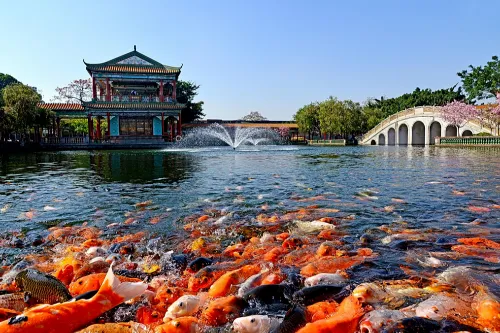
Qingping Lake is the central main lake of the garden with open water surface running through the main area of the garden. Koi fish are raised in the lake for visitors to watch and feed. Long corridors, pavilions and stone bridges scatter along the lakeshore, and Zidong Pleasure Boat moors on the bank. The lake water connects various scenic spots, forming the framework of the waterscape garden of Baomo Garden, and it is also the primary area for waterscape photography inside the garden.
Zidong Pleasure Boat
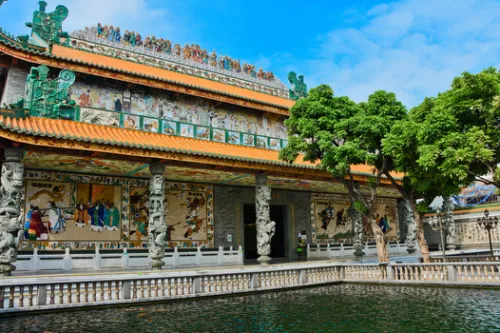
Zidong Pleasure Boat is a large antique decorated boat moored on the bank of Qingping Lake, modelled after the Zidong boats that sailed on the Pearl River in modern times. The boat contains halls for rest and lake viewing. Ornately decorated, it gathers various Lingnan sculptural crafts and serves as one of the landmark sights of Baomo Garden.

Zhao Tailai Art Palace
Zhao Tailai Art Palace specially exhibits various art collections donated by Mr. Zhao Tailai. Galleries on different floors display ancient and modern paintings and calligraphy, ceramics, bronze statues, jade wares and other cultural relics. Boasting a huge number of exhibits, it is an important cultural and museum exhibition hall in the garden where visitors can appreciate craft treasures from different dynasties.
Huo Zongjie Collection Gallery
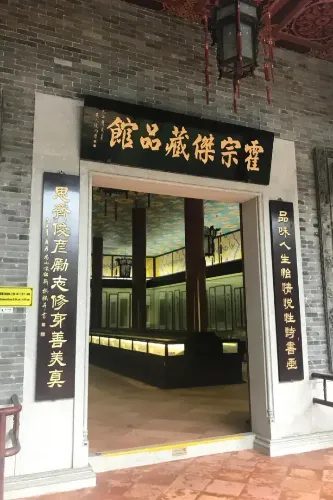
Huo Zongjie Collection Gallery displays paintings, calligraphy and curios donated by Mr. Huo Zongjie. Its collections mainly consist of modern and contemporary paintings and calligraphy works. The elegant exhibition building sets off the surrounding waterscape, offering a space for painting and calligraphy lovers to view and appreciate artworks.
Zhiben Hall
Adjacent to Baomo Hall, Zhiben Hall is an auxiliary hall building. Its name derives from the idea of self-cultivation and laying a solid foundation. Paintings and calligraphy works are displayed inside, and small-scale painting and calligraphy exchange activities are often held here. Corridors of the building lead to the lakeside, suitable for walking and resting.
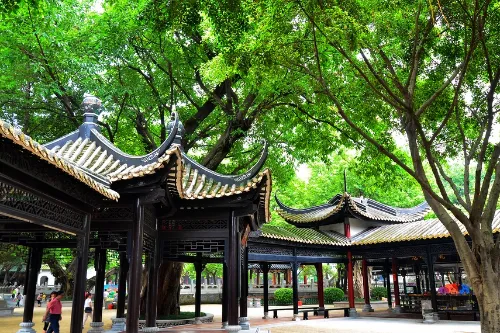
Lijing Bay
Lijing Bay lies in the southern part of the garden with lychee trees planted along the winding waterfront. Small bridges and flowing water spread all over the area, creating a tranquil atmosphere. This zone mainly features miniature waterscapes, shrubs and leisure pavilions and corridors. With relatively fewer visitors, it is ideal for quiet strolling.
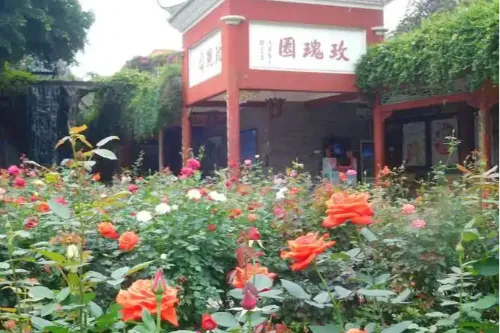
Rose Garden
The Rose Garden grows various types of Chinese roses and roses with blossoms blooming all year round. Combined with ornamental rocks and waterscapes, it forms a flower viewing zone and is a popular spot for photos inside the garden.
Suggested Tour Route
Garden Main Gate → Baomo Hall → Zhiben Hall → Qingping Lake → Zidong Pleasure Boat → Zhao Tailai Art Palace → Huo Zongjie Collection Gallery → Lijing Bay → Rose Garden → Exit
Travel Tips
- A suggested visiting duration is 3 to 4 hours, allowing enough time for visiting exhibition halls and wandering around the garden.
- Spring and autumn have pleasant weather suitable for all-day sightseeing; in summer, visitors are advised to enter the garden in the morning or evening to avoid midday heat.
- Photography lovers can prioritize Qingping Lake, Zidong Pleasure Boat and Rose Garden; waterside areas are excellent for taking photos.
- Do not touch exhibits when visiting art galleries and follow on-site instructions.
- Fish food can be purchased inside the garden to feed koi fish, which is a great experience for family trips with children.
- The garden welcomes large crowds during holidays; visiting on weekdays will bring a better experience.
Notice
- Swimming and fishing are forbidden within the garden. Do not climb lakeside guardrails and stay safe near waters.
- Please protect ancient buildings, sculptures and plants in the garden. Carving on walls and picking flowers are prohibited.
- Flash photography is banned in some exhibition areas; please comply with on-site signs.
- Large drones are not allowed to fly inside the garden without prior registration with the scenic area management.
- Pets cannot be brought into the garden.
- There are numerous waters inside the garden. Visitors with children must keep an eye on kids to prevent accidents near water.
- Open flames and flammable, explosive items are prohibited inside the garden.
Transportation
- Public Transport: Take Metro Line 3 to Shiqiao Station, then transfer to Bus Route Fan 67 or Fan 12 to Baomo Garden Bus Terminal.
- Self-driving: Navigate directly to "Baomo Garden". The scenic area provides parking lots for self-driving tourists.
- Tourist Shuttle: During holidays, some travel agencies operate tourist shuttle buses between downtown Guangzhou and Baomo Garden. Please check schedules in advance.
Opening Hours
Baomo Garden opens from 8:30 to 17:30 daily, and ticket checking stops at 17:00. It generally maintains normal opening hours on statutory holidays. Any temporary adjustments will be announced via official channels of the scenic area. Visitors may check the latest notifications before departure.
Ticket Information
The admission ticket costs 54 RMB per person. You can search for the WeChat official account "宝墨园南粤苑" to get the latest updates.
Online Booking
Click here to jump to the Trip.com ticketing platform for ticket purchase.