
Zhagana is located in Yiwa Town, Diebu County, Gannan Tibetan Autonomous Prefecture, Gansu Province. It is a national 4A-level tourist attraction, also listed among China’s Top Ten Lesser-Known Peaks and a Gansu Provincial Geopark, featuring an integrated landscape of natural stone citadels and Tibetan villages. The total area of the scenic zone is approximately 20,000 hectares, equivalent to 200 square kilometers, while the core village area covers around 80 mu (53,360 square meters). The average altitude within the zone is 1,160 meters, with its highest peak exceeding 3,900 meters above sea level. The signature landscape is a natural castle landform enclosed by stone mountains. Four massive limestone mountains form an enclosed valley, home to intact primitive Tibetan villages that combine karst gorges, alpine meadows, primeval forests, traditional Tibetan dwellings and Tibetan Buddhist monasteries. More than a hundred traditional plank-roof Tibetan houses remain in the area, tiered along mountain slopes without modern high-rise buildings, fully preserving the settlement layout of the Amdo Tibetans. It boasts both geological research value and sightseeing value for original folk culture.
History and Culture
The human history of Zhagana dates back to the Tubo Period. During the Tang Dynasty, Tubo forces expanded eastward into the Amdo region, and some Tibetan tribes migrated to settle in the Yiwa Valley. Leaning on the natural barrier of surrounding stone mountains, they built residential clusters, forming the earliest Zhagana Tibetan village settlement. In Tibetan, "Zhagana" translates to "stone box", named for its enclosure by mountains resembling a sealed stone chest. Local Tibetans have passed down a combined nomadic and farming lifestyle for generations, maintaining thousand-year-old Amdo Tibetan folk traditions.
In the Qing Dynasty, Zhagana fell under the jurisdiction of the Zhuoni Tusi. The Tusi promoted the Gelug school of Tibetan Buddhism here, constructing monasteries and prayer corridors within the villages and establishing a regional religious center. Four natural village divisions were formed: Yeri, Dari, Daiba and Dongwa, a layout that endures to this day. Each village is naturally divided by mountain ridges and streams, maintaining independent yet interconnected living systems.
In 1925, American explorer Joseph Rock passed through Zhagana and described the place as "God’s Garden of Eden" in his travelogues. His written accounts and photographs spread worldwide, bringing Zhagana to global attention. The area retains complete intangible folk heritage including Tibetan Guozhuang dance, Tibetan opera, incense-burning prayers, arrow-placing rituals and Tibetan calendar festivals. Monasteries hold regular traditional Gelug ceremonies year-round. Local architecture, costumes, cuisine and marriage customs remain largely untouched by over-commercialization, making Zhagana one of Gannan’s best-preserved villages of authentic Tibetan culture.
Main Attractions
Dongwa Village
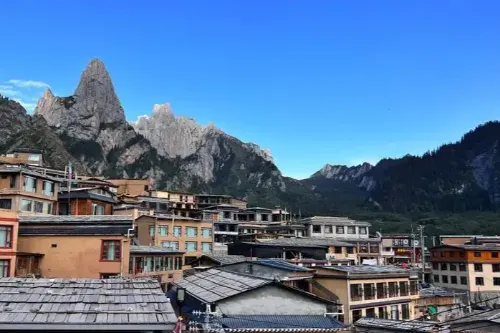
Dongwa Village is the first village at the entrance of Zhagana and serves as the gateway to the scenic area. With gentle terrain, it hosts the largest tourist distribution zone and a cluster of traditional Tibetan plank-roof houses in the park. A grand prayer corridor with hundreds of prayer wheels stands at the village entrance, adjacent to a small white pagoda for blessings. Streams run through the entire village, flanked by farmlands and shrubs. Visitors can view the full rock face of Guanggai Mountain, the main northern peak, making this a prime spot for panoramic mountain views. The village features folk homestays and Tibetan restaurants, catering to both sightseeing and rest needs.
Yeri Village
Nestled halfway up the mountain in the middle of the valley, Yeri Village sits higher than Dongwa Village with unobstructed views, making it the core spot for photographing sunrise and sea of clouds over Zhagana. Scattered Tibetan houses dot the slopes, alongside ancient cypress trees and small incense-burning altars. Hiking trails behind the village lead straight to alpine meadows lined with terraced highland barley fields. Greenery blankets the hillsides in spring and summer, while forests blaze with autumn hues in fall. The overlook commands a full view of all four encircling stone mountains and the three villages below.
Dari Village
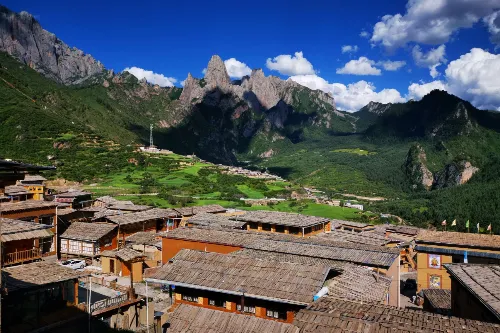
Dari Village lies on high ground on the western side of the valley, right next to Lasang Monastery. It is a medium-sized village with simple folk customs and low commercialization. Many century-old original plank-roof houses survive here, with solid wood roof planks and raw earthen walls. An arrow-placing altar stands at the village edge, a fixed venue for local Tibetan rituals worshipping sacred mountains. Hiking trails from the village lead directly to the entrance of One-Line-Sky Gorge, making Dari a key transit village for mountain trekking.
Daiba Village
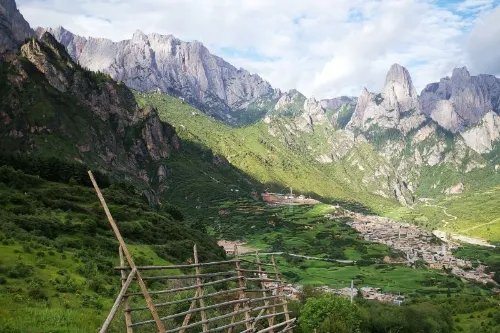
Located at the innermost end of the valley, Daiba Village is surrounded by primeval forests and sits farthest from the scenic entrance, boasting the highest level of untouched original ecology. Extensive alpine meadows and stream wetlands spread around the village, where wild animals are frequently spotted. There are no large commercial facilities; the scenery consists purely of unspoiled pastoral mountain landscapes, with only a small number of local herders’ houses. It is ideal for in-depth hiking, camping and authentic folk cultural experiences.
Lasang Monastery
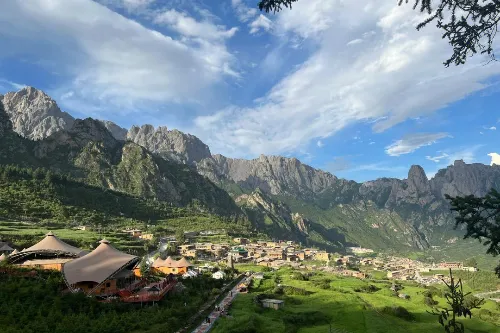
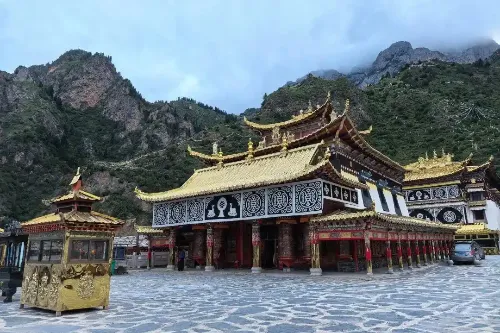
Perched on the hillside of Dari Village, Lasang Monastery is a Gelug Tibetan Buddhist monastery founded in the Qing Dynasty, covering approximately 1,200 square meters. Its compound includes the main scripture hall, living quarters for living Buddhas, monk dormitories, white pagodas and a prayer courtyard. The monastery walls are painted in traditional Tibetan red and white hues, and the compound houses ancient thangka scrolls, bronze Buddha statues and ritual instruments. Monks recite scriptures daily, and large scripture-unfolding ceremonies are held each year on fixed dates of the Tibetan calendar. Lasang Monastery serves as the core religious and cultural site of the Zhagana area.
One-Line-Sky Gorge
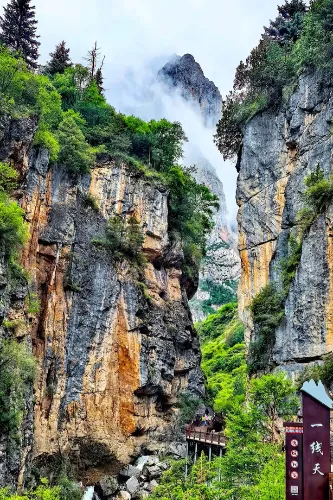
Situated midway along the mountain trekking trail behind Dari Village, One-Line-Sky Gorge was carved by long-term water erosion of limestone mountains. At its narrowest point, the gorge is less than 2 meters wide, with vertical rock walls over 100 meters high on both sides, leaving only a thin strip of sky overhead. A stream flows year-round along the valley floor, lined with waterfalls, small karst caves and wild blossoms. The full hiking route stretches roughly 3 kilometers, a classic easy trekking natural attraction in Zhagana.
Fairy Meadow and Fairy Lake
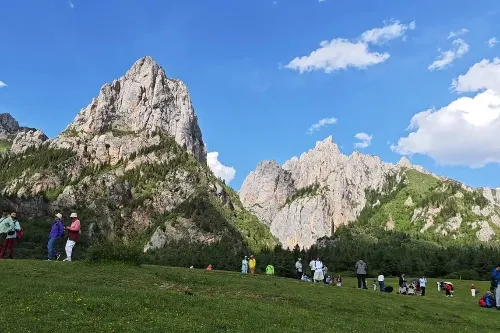
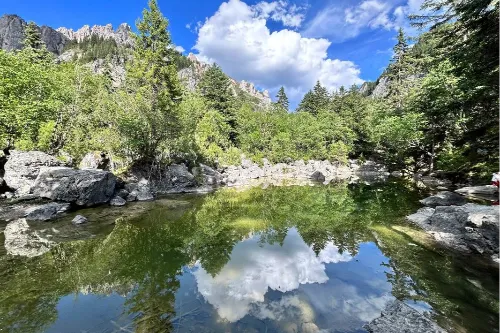
Fairy Meadow is a broad alpine meadow platform atop the mountain. A natural freshwater lake known as Fairy Lake forms in a low hollow at the meadow’s center, its clear waters reflecting stone mountains and sky, surrounded by primeval fir forests. The site sits at nearly 3,000 meters above sea level, carpeted with cosmos flowers in summer. It is a prime highland spot for panoramic Zhagana views, camping, picnics and stargazing. The round trip hike from Yeri Village to the meadow takes about 2.5 hours.
Tour Routes
One-Day Light Sightseeing Route: Scenic Area Gate → Dongwa Village Prayer Corridor → Lasang Monastery → Yeri Village Viewpoint → Fairy Meadow & Fairy Lake → Return by the same path
Two-Day In-depth Trekking Route: Day 1: Scenic Area Gate → Dongwa Village → Dari Village → One-Line-Sky Gorge → Overnight at Daiba Village; Day 2: Daiba Village → Alpine Meadow Circular Trek → Yeri Village Sunrise Viewpoint → Scenic Area Gate
Minimal Half-Day Quick Visit Route: Scenic Area Gate → Yeri Village Panoramic Viewpoint → Lasang Monastery → Dongwa Village Folk Culture Block
Travel Tips
- Yeri Village Viewpoint is the top spot for sunrise and sea of clouds. The best viewing window is 6:00–8:00 every morning, with higher chances of seeing sea of clouds on rainy season mornings.
- The Fairy Meadow trail features gentle slopes suitable for beginner hikers. Allow 3 hours for the round trip to One-Line-Sky Gorge and wear anti-slip hiking shoes.
- Choose homestays in Dari or Daiba Villages for authentic Tibetan experiences; Dongwa Village offers complete amenities for first-time visitors.
- The optimal travel season runs June to September. Alpine meadows bloom June–July, and mountain forests show rich autumn colors in September. Temperatures drop from November to March, ideal for snowscape photography.
- Move slowly in high-altitude zones and avoid running strenuously. Drink warm water regularly and carry glucose to relieve mild altitude sickness.
- Fairy Meadow is recommended for stargazing, free of intense light pollution. The Milky Way is clearest between 10 p.m. and 2 a.m. in summer; bring thick outerwear against cold night temperatures.
Precautions
- The average altitude across the scenic zone exceeds 2,800 meters. Elderly visitors and those with heart/lung diseases or severe hypertension should assess their physical condition before visiting; rapid mountain climbing is not advised.
- Shorts and off-shoulder clothing are prohibited when entering religious sites such as Lasang Monastery. Do not touch Buddha statues, thangka scrolls or ritual instruments without permission, avoid stepping over monastery thresholds and maintain quietness.
- This is a Tibetan-inhabited area. Respect local folk taboos: do not step on arrow altars or incense-burning platforms, and do not take frontal photos of local Tibetan residents or monks without consent.
- Temperature differences between day and night in mountain areas can reach 15°C. Bring windbreakers and lightweight down jackets even in summer, as mornings and evenings stay cold.
- No convenience stores or supply points exist along trekking trails. Bring drinking water, dry rations and sun protection before hiking; ultraviolet radiation is strong in mountain regions.
- Open flames are forbidden across all mountain forests and meadows. No wild cooking or trash burning; ensure cigarette butts are fully extinguished before discarding in bins.
- Mountain trails become slippery in rainy weather, and falling rocks are common in One-Line-Sky Gorge. Stop mountain trekking during heavy rain and resume sightseeing once the weather clears.
- Do not pick wild flowers, disturb wild animals, damage highland barley terraces or local farmers’ crops, or enter private Tibetan houses without invitation.
Transportation
- Self-driving: Drive approximately 28 kilometers along Yiwa Road from Diebu County Town (40-minute drive). A free public parking lot with ample spaces is available at the scenic gate.
- Public Shuttle Buses: Rural shuttles to Zhagana depart Diebu County Bus Station at 7:00 and 12:00 daily; return buses leave Dongwa Village at 16:00.
- Chartered Car: Charter a car for round trips from Diebu County Town to Zhagana, with flexible stops at all viewpoints, suitable for group travel.
- Intercity Long-distance Travel: Take a coach from Hezuo (prefectural capital of Gannan) to Diebu County (3-hour ride), then transfer to shuttles or chartered cars to reach the scenic zone. No direct long-distance buses run to Zhagana.
Opening Hours
Zhagana Scenic Area opens year-round with no seasonal closure period. The scenic gate is accessible from 06:00 to 20:30 daily; after 20:30, external vehicles and tourists may no longer enter the core villages. Visitors staying at village homestays can move freely within the villages. Lasang Monastery opens 07:30–18:00 daily, with partial halls temporarily closed to visitors during religious ceremonies. No strict time limits apply to trekking natural sites including Fairy Meadow and One-Line-Sky Gorge, yet solo night mountain hiking is discouraged due to risks of getting lost and hypothermia. Mountain roads may be temporarily closed after winter snowfall and reopen once cleared.
Ticket Information
Tickets start at 80 RMB per person. Search the official WeChat service account "迭部县扎尕那大景区" for the latest updates.
Online Booking
Click here to jump to the Trip.com ticketing platform for ticket purchase.