
Shanghai Film Museum is located at No. 595 Caoxi North Road, Xuhui District, Shanghai, on the former site of Shanghai Film Studio. It is one of the largest and most well-documented professional film museums in China. The museum is an unrated scenic spot, with a total construction area of 15,000 square meters, including 10,000 square meters of exhibition space. The museum has four floors, featuring four themed exhibition areas, No. 5 Haishang Studio, and one art cinema. Its collection includes more than 26,000 items such as film relics, documents, and props. The core feature of the museum is to fully present the century‑long development of Shanghai cinema, integrating cultural relic displays, interactive experiences, historical restoration, and modern technology. It serves as a treasure trove of Shanghai film art, a Shanghai Patriotic Education Base, and a National Practical Education Base for Primary and Secondary School Students. The main building is a modern structure housing the Shanghai Film Group Corporation, while the auxiliary building retains some historical architectural features, combining modernity with the profound heritage of film culture.
History and Culture
Shanghai is the birthplace of Chinese cinema, with a long and rich film culture. On May 22, 1897, the first historically recorded film screening in China was held at the Astor House Hotel in Hongkou, Shanghai, marking the beginning of film dissemination in China. Subsequently, China’s first film company, first cinema, and first film school were all founded in Shanghai, gradually making it the film cultural center of China and even Asia.
The site at No. 595 Caoxi North Road has been a core creative base for Chinese cinema since the 1930s, nurturing renowned film companies such as United Photoplay Service, Diantong Film, Xinhua Film Company, Kunlun Film Studio, and Wenhua Film Studio, earning it the reputation of the “Hollywood” of Shanghai cinema. On November 16, 1949, Shanghai Film Studio was officially established here, becoming one of China’s three major film bases, producing numerous classics such as The Spring River Flows East, The Goddess, Uproar in Heaven, and Hibiscus Town.
In 2008, along with the reconstruction of the Shanghai Film Group headquarters, the Shanghai Film Museum project was officially launched. After five years of preparation and the collaboration of designers from China, Germany, and South Korea, the museum opened to the public on June 16, 2013, fulfilling the dreams of generations of Shanghai filmmakers. The museum not only systematically reviews a century of glory in Shanghai cinema but also serves as an important landmark for inheriting film culture and showcasing the city’s heritage, continuously telling the story of Chinese cinema from a Shanghai perspective.
Main Attractions
4th Floor: Memory of Light and Shadow
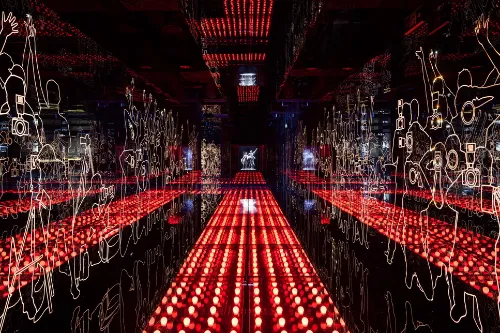
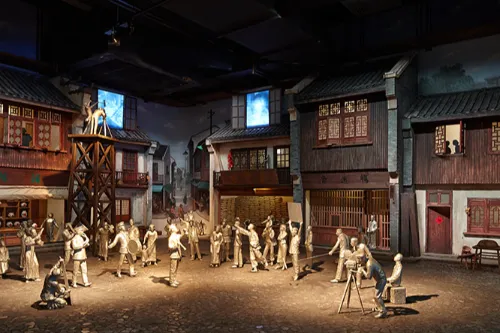
The Memory of Light and Shadow exhibition area on the 4th floor focuses on filmmakers, film scenes, and film screenings, consisting of five sections: Star Boulevard, Shining Stars, Masters’ Style, Nanjing Road Under the Lights, and A Century of Distribution and Projection. The Star Boulevard at the entrance is lined with a red carpet, accompanied by simulated flashlights and surround sound, allowing visitors to experience the glamour of walking the red carpet like a star. The Shining Stars area displays photos and materials of over 400 representative filmmakers, comprehensively showcasing the group portrait of Shanghai cinema artists. The Masters’ Style area features statues and restored working scenes of cinema masters such as Xie Jin, Zhao Dan, and Qin Yi, exhibiting precious relics including manuscripts and letters. Nanjing Road Under the Lights recreates scenes from classic films such as Scouts in Neon Lights, while A Century of Distribution and Projection reviews the history of film distribution and screening in Shanghai through models, posters, and documents.
3rd Floor: Long River of Film History
The Long River of Film History exhibition area on the 3rd floor traces the century‑long development of Shanghai cinema from six perspectives: Origin of Cinema, Dream Factory, Long River of Light and Shadow, Eye‑Opening Experiences, Classic Dubbed Films, and Animation Gallery. The Origin of Cinema section presents early film history from the introduction of film in 1897 to the Republican period, displaying early materials such as The Difficult Couple, China’s first feature film. The Dream Factory and Long River of Light and Shadow sections chronicle the creative development of Shanghai cinema from the Republican era to the People’s Republic of China, showcasing precious items such as prop books from A Dream of Red Mansions and shooting archives from Hibiscus Town. The Classic Dubbed Films section highlights the achievements of Shanghai’s dubbed films, while the Animation Gallery focuses on the Shanghai Animation Film Studio, displaying key collections such as original artwork and storyboards from Uproar in Heaven and Nezha Conquers the Dragon King.
2nd Floor: Film Workshop
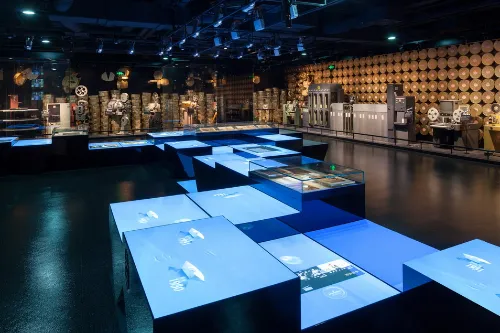
The Film Workshop on the 2nd floor is the most interactive area of the museum, revealing the behind‑the‑scenes process of filmmaking. The area includes a real‑life studio, recording studio, animation workshop, post‑production room, makeup and costume studio, and other functional zones. Visitors can experience interactive activities such as dubbing classic film clips, green‑screen special effects shooting, hand‑drawn animation production, and film editing. The area also displays various vintage cameras, editing equipment, and recording devices, fully presenting the evolution of filmmaking technology from traditional to modern, allowing visitors to intuitively understand the technical development of cinema.
1st Floor: Hall of Honor
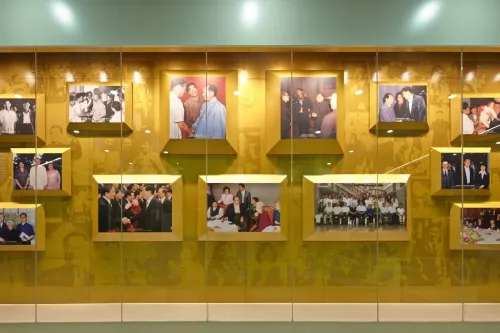
The Hall of Honor on the 1st floor showcases the outstanding achievements of Shanghai cinema from perspectives including A Century of Glory, Moments of Honor, Birth of the National Anthem, Brilliant Trophies, and Firsts in Film History. At the center of the exhibition area is a trophy wall displaying more than 600 domestic and international awards won by Shanghai films, including Golden Rooster, Hundred Flowers, and Huabiao awards. The Moments of Honor section plays classic film clips and red‑carpet moments on a loop. The Birth of the National Anthem section focuses on Sons and Daughters in a Time of Storm and the creation of March of the Volunteers. The Firsts in Film History section uses light strips and graphics to present more than 30 pioneering achievements of Shanghai cinema. A 4D art cinema is also located here, screening classic animated shorts such as Uproar in Heaven at scheduled times.
No. 5 Haishang Studio
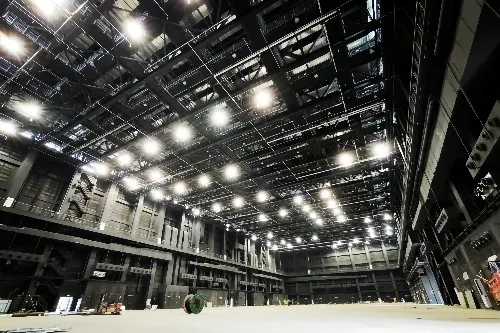
No. 5 Haishang Studio is a historical scene area in the auxiliary building of the museum. Originally Studio 5 of Shanghai Film Studio, it was reconstructed in 2012 in its original form, with a total area of 900 square meters and a height of 16 meters, featuring a column‑free design. This venue was once used to shoot classics such as The Spring River Flows East. Today, it retains the layout of a traditional studio and functions as an exhibition, event, and experience space, regularly hosting premieres, filmmaker forums, and themed exhibitions.
Visiting Route
The official recommended optimal visiting route for Shanghai Film Museum is from top to bottom. Visitors enter through the lobby on the 1st floor, take the elevator next to the service desk directly to the Memory of Light and Shadow on the 4th floor, and explore the Star Boulevard, Shining Stars, Masters’ Style, Nanjing Road Under the Lights, and A Century of Distribution and Projection in sequence. Then walk to the Long River of Film History on the 3rd floor, visiting Origin of Cinema, Dream Factory, Long River of Light and Shadow, Eye‑Opening Experiences, Classic Dubbed Films, and Animation Gallery in order. Next, descend to the Film Workshop on the 2nd floor to experience interactive activities such as dubbing, green‑screen shooting, and animation production. Finally, arrive at the Hall of Honor on the 1st floor to view the trophy wall and honorary exhibits, and optionally watch a 4D film before exiting from the 1st floor. The recommended duration for the entire visit is 2.5 to 3 hours, which can be extended to 4 hours if visitors fully engage in interactive experiences.
Visiting Tips
- It is recommended to visit on weekdays to avoid peak afternoon hours on weekends and public holidays, ensuring fewer crowds and a better experience.
- The Film Workshop on the 2nd floor has many interactive activities; please allow sufficient time and plan ahead for experiences such as dubbing and green‑screen shooting.
- The 4D cinema on the 1st floor screens short films such as Uproar in Heaven, with a runtime of about 20 minutes; you may choose to watch according to your interest.
- A film‑themed café is located on the right side of the 1st‑floor entrance, where you can take a break and enjoy film‑themed drinks.
- The museum has a cultural and creative shop near the exit, offering merchandise related to the Shanghai Animation Film Studio IP and classic films.
- It is recommended to bring a camera, as areas such as the Star Boulevard and Hall of Honor are suitable for photos.
Notes
- The museum is closed on Mondays (except public holidays). Ticket sales and entry stop at 16:00 from Tuesday to Friday, and at 16:30 on Saturdays and Sundays. Please plan your time accordingly.
- Flammable, explosive, controlled items, and pets are prohibited inside the museum.
- Some relics and scenes in the exhibition areas are not to be touched; please follow the instructions of staff in interactive zones.
- Smoking and eating are prohibited inside the museum (except in the café), to maintain a clean environment.
- Flash photography and tripods are not permitted, to avoid disturbing other visitors and damaging cultural relics.
- Children under 1.3 meters and seniors over 70 must be accompanied by an adult.
- Interactive activities require queuing; some have limited capacity. Please follow the instructions of on‑site staff.
Transportation
- Metro: Take Metro Line 1 or Line 4 to Shanghai Indoor Stadium Station, exit from Exit 4, and walk about 450 meters to the museum.
- Bus: Take bus routes 42, 56, 122, 926, or 958 to Caoxi North Road, Yude Road Station, and walk about 200 meters to the destination.
- Self‑driving: The museum has an underground parking lot, with relatively ample spaces on weekends and public holidays.
Opening Hours
Open Tuesday to Sunday, closed Monday (except public holidays). Opening hours are 9:30–16:30 from Tuesday to Friday, with ticket sales and entry ending at 16:00. On Saturdays and Sundays, opening hours are 9:30–17:00, with ticket sales and entry ending at 16:30. Opening hours on public holidays are the same as weekends: 9:30–17:00.
Tickets
Ticket price is 60 RMB per person. You may search the official WeChat account “上海电影博物馆” for the latest updates.
Online Booking
Click here to jump to the Trip.com ticketing platform for ticket purchase.