
Gansu Provincial Museum is located at No.3 Xijin West Road, Qilihe District, Lanzhou City, Gansu Province. It is a national first-class museum and a key national museum, as well as a national demonstration base for patriotic education and a national popular science education base. Construction of the venue began in 1939, with a total construction area of 43,000 square meters and an exhibition hall area of 21,000 square meters. It houses nearly 90,000 cultural relics and natural specimens, including more than 50,000 precious cultural relics and 16 national treasure-level artifacts. As the only comprehensive provincial museum in Gansu, it boasts a complete collection system with distinct regional characteristics, systematically displaying Gansu's prehistoric painted pottery culture, Silk Road culture, Buddhist art culture, Yellow River culture and northwest red culture. It serves as a core window showcasing Gansu's thousand-year historical heritage and Silk Road civilizations. The museum building features a solemn and grand overall design in a modern cultural relic architecture style with well-organized functional zones, including permanent exhibition halls, temporary exhibition halls, cultural relic restoration center, academic lecture hall, public service area and other functional spaces. Its software and hardware facilities meet the top standards for provincial museums nationwide.
History and Culture
The predecessor of Gansu Provincial Museum was the Gansu Science and Education Museum founded in 1939, one of the earliest cultural and popular science institutions in northwest China in modern times. In its early days, it mainly conducted natural science surveys in northwest China, collected folk cultural relics and carried out science popularization publicity, laying an early foundation for the development of cultural undertakings in the northwest. Renamed Northwest People's Science Museum in 1950 under the cultural and education administration of the Northwest Administrative Region, it further expanded its functions of relic collection and historical research, focusing on excavated artifacts, folk wares and natural specimens from Gansu and surrounding northwest regions.
It was officially named Gansu Provincial Museum in 1956, establishing its positioning as a comprehensive provincial museum and launching systematic and professional work on cultural relic collection, exhibition display and academic research. It moved to the current site in 1958, gradually improving its exhibition system and sorting out the historical exhibition context of Longyuan. It focused on excavating and sorting distinctive cultural resources such as Majiayao painted pottery, Han dynasty bamboo slips, Silk Road relics and grotto Buddhist statues. After the reform and opening-up, the museum continuously carried out relic collection, archaeological cooperation and exhibition upgrading, greatly expanding its collection scale and raising its research standards.
In 2008, Gansu Provincial Museum was included in the first batch of free public cultural venues nationwide and fully opened to the public. It was rated a national first-class museum in 2012, ranking among China's outstanding cultural venues. After more than 80 years of accumulation, relying on Gansu's unique historical geographical advantages, the museum preserves complete historical relics spanning prehistoric civilizations, pre-Qin cultures, Qin and Han Silk Road, Wei, Jin and Northern Dynasties, prosperous Sui and Tang dynasties, frontier governance of Song and Yuan dynasties, and modern red revolutions. It acts as a core cultural carrier for interpreting the civilizations of the upper Yellow River and the eastern section of the Silk Road.
Main Exhibition Halls
Silk Road Civilization in Gansu Exhibition Hall
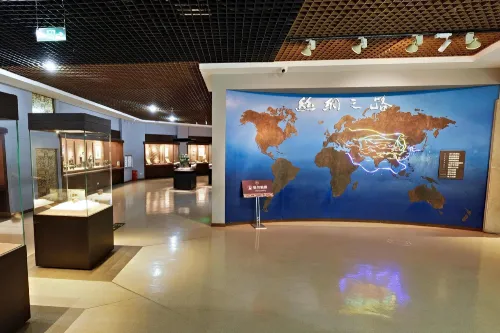
The Silk Road Civilization in Gansu Exhibition Hall is the core permanent exhibition hall of Gansu Provincial Museum. It systematically displays cultural relics unearthed along the Gansu section of the Silk Road from the Han to Yuan dynasties, fully reviewing the development of Silk Road trade, cultural exchange and ethnic integration. Exhibits are mainly trade wares from the Silk Road, artifacts embodying Sino-foreign cultural integration, and frontier military and administrative relics. Representative treasures include the Bronze Galloping Horse, the Courier Portrait Brick, various Silk Road gold and silver wares, glassware and silk fragments. It fully demonstrates Gansu's vital historical status as the golden section of the Silk Road and is the core exhibition area to learn about northwest Silk Road culture.
Gansu Painted Pottery Exhibition Hall
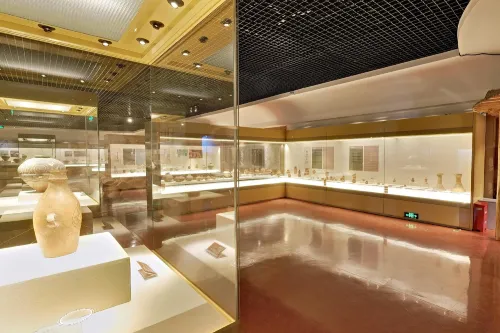
The Gansu Painted Pottery Exhibition Hall is China's largest and most complete special exhibition hall dedicated to painted pottery. It displays prehistoric painted pottery dating back 7,000 to 2,000 years, covering native Gansu prehistoric cultures including Dadiwan, Majiayao, Qijia, Xindian and Shajing cultures. The exhibits feature a complete chronological sequence, diverse vessel shapes and exquisite decorative patterns, clearly presenting the evolution of prehistoric painted pottery in northern China. Numerous rare Majiayao painted pottery pieces exclusive to this museum serve as vital physical evidence for research on China's prehistoric farming civilization, primitive art and ancient people's daily life.
Gansu Buddhist Art Exhibition Hall
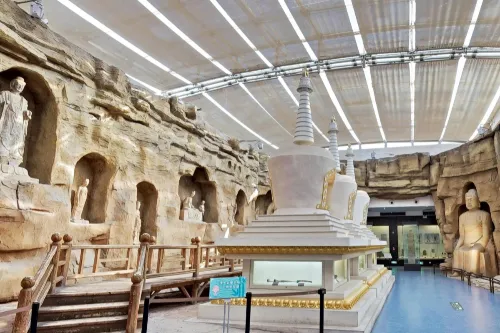
The Gansu Buddhist Art Exhibition Hall focuses on Gansu grottoes and Buddhist cultural relics, showcasing Buddhist statues, mural fragments, scriptures and ritual implements dating from the Sixteen Kingdoms to the Ming and Qing dynasties. Exhibits include excavated and collected artifacts from renowned Gansu grottoes such as Tianshishan, Binglingsi and Maijishan Grottoes. It systematically illustrates the full process of Buddhism spreading from the Western Regions to the Central Plains, taking root and developing in Gansu and completing local evolution, reflecting the unique artistic characteristics of northwest Buddhist art combining Western Regions styles and Central Plains charm.
Paleontological Fossil Exhibition Hall
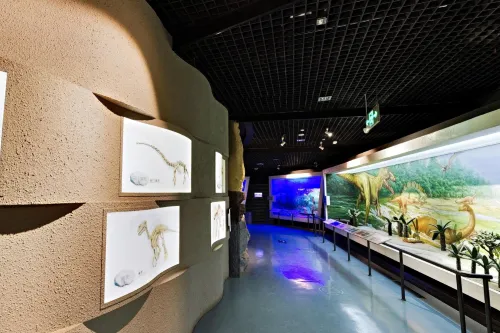
The Paleontological Fossil Exhibition Hall is a distinctive natural exhibition area of the museum, displaying prehistoric paleontological fossil specimens unearthed in Gansu, covering various plant and animal fossils from the Mesozoic and Cenozoic Eras, including iconic specimens such as the Yellow River Ancient Elephant fossil, Mamenchisaurus fossil and Paraceratherium fossil. The exhibition hall reconstructs Gansu's ancient geological landforms and biological evolution process, integrating science popularization and ornamental value, and serves as a core venue for natural science education for teenagers.
Red Gansu Exhibition Hall
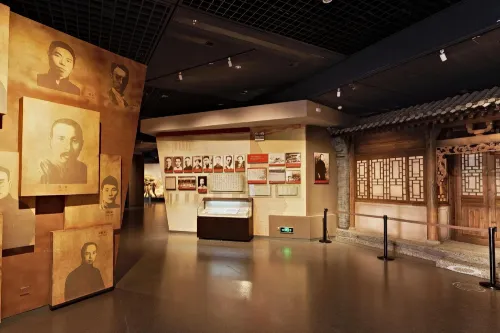
The Red Gansu Exhibition Hall is a permanent red-themed exhibition hall. Through physical objects, pictures and documents, it systematically presents modern revolutionary history of Gansu, focusing on major historical events including the Long March of the Red Army, construction of the Shaanxi-Gansu-Ningxia Border Region and the liberation of northwest China. It displays precious revolutionary relics, historical documents and old photos to inherit Longyuan red culture, acting as an important provincial venue for red patriotic education.
Tour Route
Entrance Security Hall → Paleontological Fossil Exhibition Hall (1F) → Red Gansu Exhibition Hall (1F) → Gansu Painted Pottery Exhibition Hall (2F) → Silk Road Civilization in Gansu Exhibition Hall (2F) → Gansu Buddhist Art Exhibition Hall (3F) → Cultural and Creative Service Area → Exit
Visiting Suggestions
- A 2 to 3-hour visit is recommended to tour all permanent exhibition halls and gain in-depth insight into the historical culture of Longyuan.
- Prioritize the core exhibition halls; the Silk Road Civilization Hall and Painted Pottery Hall are the museum's highlight zones worthy of focused viewing.
- Free audio guide devices are available for rent in the museum. Visitors may also join official free guided tours to enhance their experience and learn the background stories of cultural relics.
- Families with children and student groups are advised to visit the Paleontological Fossil Exhibition Hall first, which offers greater fun and science popularization suitable for parent-child visits.
- Crowds surge during holidays. It is recommended to visit on weekday mornings to avoid peak visitor flows for a more comfortable touring experience.
- After the tour, visitors may head to the cultural and creative zone to purchase distinctive Gansu museum souvenirs as travel mementos.
Rules & Notes
- The museum implements real-name visiting policy. All visitors must make real-name reservations and enter with valid identity documents; unreserved visitors will not be admitted. Touching exhibits, display cabinets and fossil specimens or climbing over isolation railings is prohibited. Flash photography, video recording, selfie sticks and tripods are banned inside exhibition halls to prevent light damage to cultural relics.
- Smoking, loud talking, running, horseplay and spitting are strictly forbidden inside the venue to maintain a quiet viewing environment.
- Flammable, explosive items, controlled weapons, snacks and drinks cannot be brought into the museum. Large luggage must be stored at the baggage counter.
- Minors and elderly visitors must be accompanied by guardians or family members to ensure safety during the visit.
- Some special exhibitions in temporary halls may have separate visitor limits or limited opening hours; visitors must follow on-site regulations.
- Certain exhibition halls may be temporarily closed for maintenance or exhibition setup. The latest information shall prevail according to the museum's on-site notices on the day of visit.
Transportation
- Public Transport: Take Lanzhou Bus No.1, 31, 50, 53, 58, 106, 127, 136 or 158 to Qilihe Bridge Stop or Gansu Provincial Museum Stop, then walk a short distance. Rail Transit: Alight at Qilihe Station of Lanzhou Metro Line 1, walk about 500 meters west to reach the museum.
- Self-driving: Navigate to the main entrance of Gansu Provincial Museum. The on-site public parking lot has limited spaces; public transport is recommended during holidays.
Opening Hours
Gansu Provincial Museum opens from Tuesday to Sunday all year round and closes every Monday for regular maintenance. Opening hours on statutory holidays are subject to official temporary announcements. Daily opening hours: 9:00 a.m. – 5:00 p.m. No entry after 4:00 p.m., evacuation starts at 4:30 p.m., and the museum closes promptly at 5:00 p.m. The museum closes on Chinese New Year's Eve and New Year's Day, and opens normally for the rest of the Spring Festival period. Opening hours may be temporarily adjusted under extreme weather, equipment maintenance or major events; visitors may check official announcements in advance.
Ticket Information
Admission is free of charge. Fees apply for manual guided tours. Search the official WeChat service account "甘肃省博物馆" for latest updates and online reservation services.
Online Booking
Click here to jump to the Trip.com ticketing platform for ticket purchase.