
Baogong Park is located at No. 72 Wuhu Road, Baohe District, Hefei City, Anhui Province. It is a national 4A-level tourist attraction, a national key cultural relic protection unit, and a national clean government education base. Centered on commemorating Bao Zheng, a famous honest official of the Northern Song Dynasty, the scenic spot is a special memorial garden integrating history, culture, garden landscape and clean government education, as well as an iconic cultural tourist attraction of Hefei City. Baogong Park covers a total area of 34.5 hectares, including 15 hectares of water area. It mainly consists of four main buildings: Baogong Ancestral Hall, Baogong Tomb, Qingfeng Pavilion and Fuzhuang Village, together with surrounding garden landscapes. Adopting the classical Jiangnan garden style, the buildings are elegantly arranged along the water. It is the largest and best-documented memorial site to Bao Zheng in China.
History and Culture
The history of Baogong Park is closely linked to Bao Zheng, a renowned minister of the Northern Song Dynasty. Born in 999 (the second year of Xianping reign of the Northern Song Dynasty) and died in 1062 (the seventh year of Jiayou reign), Bao Zheng, courtesy name Xiren, was a native of Luzhou Hefei (present-day Hefei, Anhui). Throughout his official career, he was incorruptible, upright, impartial and strict, earning the honorary title "Lord Bao Qingtian" and becoming a model of honest officials in ancient China. In 1063 (the eighth year of Jiayou reign), Bao Zheng's coffin was transported back to Hefei from Kaifeng, Henan, and buried in Daxingji, eastern suburbs of Hefei — the historical origin of the core culture of Baogong Park.
Baogong Ancestral Hall was first built in 1488 (the first year of Hongzhi reign of the Ming Dynasty) by Song Jian, Prefect of Luzhou, on the bank of Baohe River. Originally named "Baogong Academy", it was renamed "Baogong Ancestral Hall" in 1539 (the eighteenth year of Jiajing reign of the Ming Dynasty). In 1882 (the eighth year of Guangxu reign of the Qing Dynasty), Li Hongzhang donated 2,800 taels of silver for a major renovation, laying the foundation for the existing buildings. The original site of Baogong Tomb was in Daxingji, eastern suburbs of Hefei. Listed as a key cultural relic protection unit of Anhui Province in 1956, it was relocated due to infrastructure construction in 1973, rebuilt on the bank of Baohe River in 1985, and officially opened to the public in 1987.
In 1999, to commemorate the 1000th anniversary of Bao Zheng's birth, Hefei City built Qingfeng Pavilion, forming the complete layout of today's Baogong Park. For thousands of years, Baogong Park has carried forward Bao Zheng's culture of integrity, serving as an important carrier for inheriting fine traditional Chinese clean government culture and promoting the spirit of honest officials. Its profound historical and cultural heritage runs through the urban development of Hefei, making it an important cultural landmark of the city.
Major Attractions
Baogong Ancestral Hall
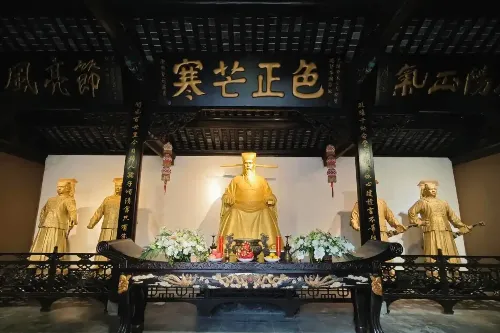
As the core attraction of Baogong Park, Baogong Ancestral Hall is situated on Xianghua Islet in Baohe River, built exclusively in memory of Bao Zheng. Featuring a classical style with white walls and grey tiles, it covers an area of 800 square meters, with main structures including the Main Hall, Lianquan Pavilion and Liufang Pavilion. The Main Hall houses a 2.5-meter-high bronze statue of Bao Zheng, with cultural relics and historical materials about his life displayed on both sides. The ancient Lianquan Well inside the hall is a symbol of integrity; according to legend, corrupt officials would suffer headaches if drinking from it.
Baogong Tomb
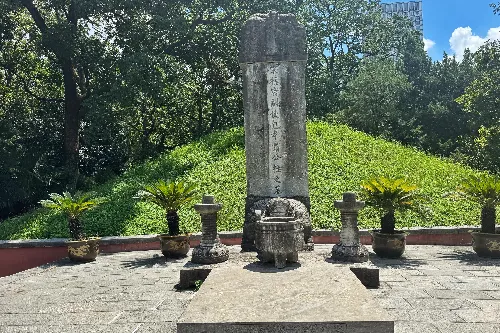
Baogong Tomb is the cemetery of Bao Zheng and his family, covering 1,200 square meters. Composed of the main tomb, attached tombs, sacred path, memorial hall and stone carvings, it was constructed in accordance with the burial regulations for second-rank officials of the Northern Song Dynasty. The main tomb is a round earth mound 3.5 meters high, preserving precious cultural relics such as Bao Zheng's epitaph. The cemetery is solemn and dignified, with stone figures, horses, sheep and other stone sculptures lining the sacred path, fully restoring the style of Northern Song Dynasty cemeteries.
Qingfeng Pavilion
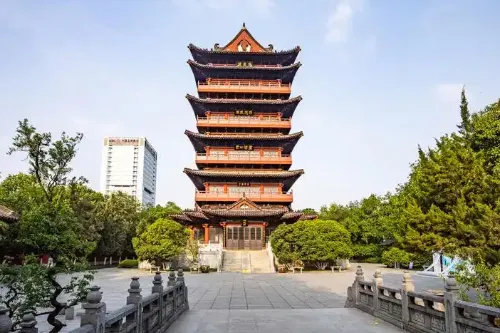
Built to mark the 1000th anniversary of Bao Zheng's birth, Qingfeng Pavilion is the landmark building of Baogong Park. Standing 42 meters tall with five stories, it covers an area of 1,700 square meters and is designed in the style of a Northern Song pagoda. Inside, murals depicting Bao Zheng's clean government stories, historical materials of ancient honest officials, and calligraphy and paintings are on display. Visitors can overlook the entire Baogong Park and urban landscape of Hefei from the top, making it a core venue for promoting the culture of integrity.
Fuzhuang Village
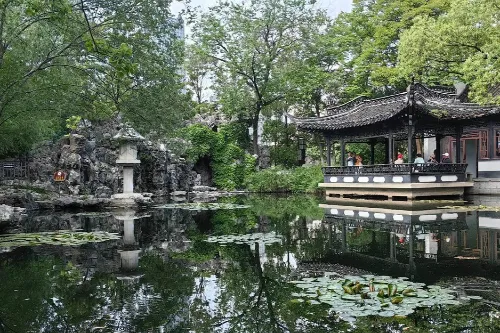
Located in Baohe River and named for appearing to float on water, Fuzhuang Village is a garden building in Jiangnan water town style, covering 3,000 square meters. It consists of teahouses, pavilions, waterside pavilions and rockeries, with lush greenery and a tranquil environment. It showcases the elegance of Jiangnan gardens while displaying cultural relics related to Bao Zheng's family and folk exhibits.
Tour Route
The standard tour route of Baogong Park takes about 2 hours, following the path: Scenic Gate → Baogong Ancestral Hall → Lianquan Pavilion → Liufang Pavilion → Boat across Baohe River → Baogong Tomb → Sacred Path → Memorial Hall → Main Tomb → Qingfeng Pavilion → Fuzhuang Village → Scenic Exit. This route connects the four core attractions without backtracking, allowing visitors to fully explore all historic buildings and landscapes. Combining walking and boating, it offers a comfortable pace and a comprehensive understanding of Bao Zheng's history, culture and garden scenery.
Tips for Visiting
- The recommended visiting duration is 2 to 3 hours, adjustable at your own pace. Focus on Baogong Ancestral Hall and Qingfeng Pavilion for an in-depth understanding of clean government culture.
- Bring your ID card for ticket purchase and entry. Students and seniors may present relevant certificates for preferential policies.
- Spring and autumn are the best seasons to visit, with blooming flowers and pleasant weather for sightseeing and photography.
- Audio guides are available for rent to learn about the historical allusions and cultural connotations of each attraction.
- Taking a boat tour on Baohe River to enjoy the waterside garden scenery is highly recommended; the one-way trip takes about 5 minutes.
Notes
- Flammable, explosive, controlled knives and other dangerous items are prohibited in the scenic area. Pets are not allowed in core attractions.
- Smoking, graffiti and touching cultural relics are forbidden in cultural relic buildings such as Baogong Ancestral Hall and Baogong Tomb.
- With numerous water areas, please do not play near the water or climb guardrails for personal safety.
- Loud noise, chasing and fighting are prohibited to maintain a quiet and solemn visiting environment.
- Feeding fish at will and damaging plants are not allowed; please protect the garden's ecological environment.
- During holidays, queues are required for entry and visits to avoid crowds. Keep your personal belongings safe.
Transportation
- Bus: Take Hefei Bus Routes 6, 11, 119, 154 or 226 to Baogong Park Station, then walk 100 meters to the scenic gate.
- Metro: Take Hefei Metro Line 1 to Baogong Park Station, exit from Gate 3 and walk 300 meters to the scenic area.
- Self-driving: Parking is available at Wuhu Road near the scenic area. Parking spaces are scarce during holidays, so public transport is preferred.
- Taxi/Car-hailing: Directly navigate to the gate of Hefei Baogong Park.
Opening Hours
Summer (May 1 to September 30): 8:00 – 18:00, with last entry at 17:30. Winter (October 1 to April 30 of the following year): 8:00 – 17:30, with last entry at 17:00. Indoor venues such as Qingfeng Pavilion and Baogong Tomb close at the same time as the last entry. The scenic area opens normally during holidays with no special closures.
Admission
Free admission. Guided tours inside the park are chargeable. For the latest updates, search the official WeChat account "合肥包公园".
Online Booking
Click here to jump to the Trip.com ticketing platform for ticket purchase.