
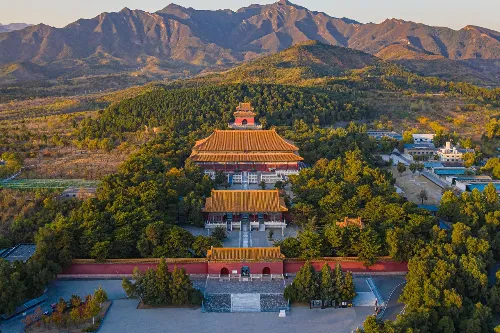
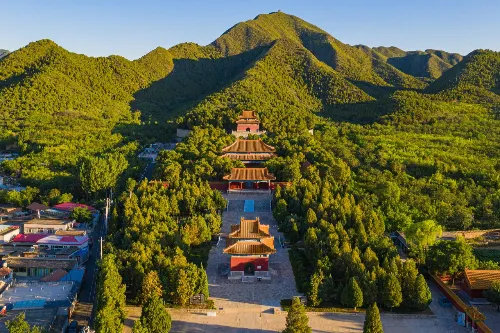
The Ming Tombs Scenic Area is located at the southern foot of Tianshou Mountain in Changping District, Beijing. It is a World Cultural Heritage Site, a Major National Historical and Cultural Site, a National Key Scenic Area, and a National 5A-level Tourist Attraction. The scenic area features distinct characteristics: it is the best-preserved imperial mausoleum complex in the world with the largest number of buried emperors, boasting golden nanmu halls, mysterious underground palaces, giant stone statues, etc. Ancient trees tower in the mausoleum area, which is surrounded by mountains and rivers, making it an excellent geomantic treasure land. Covering an area of more than 120 square kilometers, it houses 13 emperors, 23 empresses, 1 imperial noble concubine, and dozens of buried palace attendants.
History and Culture
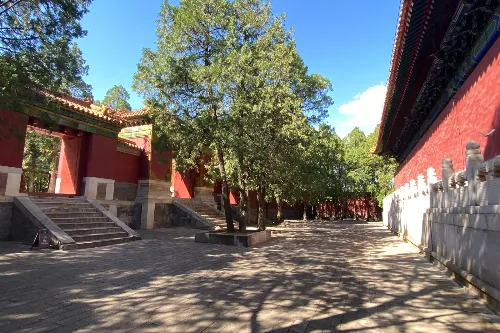
Construction of the Ming Tombs began in the 7th year of the Yongle reign (1409 AD) and ended with the fall of the Ming Dynasty in the 17th year of the Chongzhen reign (1644 AD), spanning more than 200 years. Ming emperors regarded the construction of mausoleums as a major project for governing the country and ensuring national stability, with a rigorous operational process including selecting mausoleum sites, formulating regulations, preparing materials, and carrying out construction. The Tianshou Mountain mausoleum area became a forbidden imperial burial ground, the resting place for the souls of Ming emperors, and a symbol of the Ming Dynasty's state power and feudal imperial authority. Mausoleum architecture followed the ritual system of "treating the dead as one treats the living", modeled after the imperial palace to demonstrate the emperor's supreme status and domineering momentum. At the end of the Ming Dynasty and the beginning of the Qing Dynasty, the Ming Tombs were demolished and severely damaged; they underwent large-scale restoration during the Qianlong reign of the Qing Dynasty, suffered damage again due to wars in modern times, and were successively repaired after the founding of the People's Republic of China.
Major Attractions
Changling Mausoleum
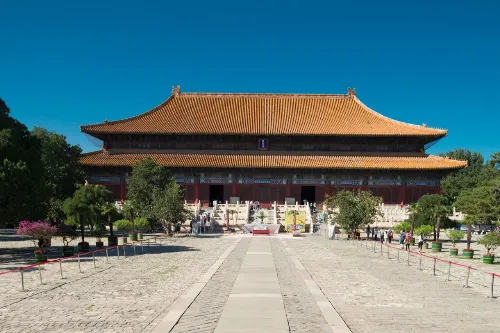
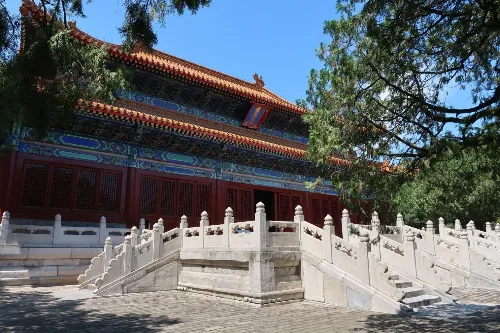
As the first of the Ming Tombs, Changling Mausoleum is the joint burial place of Emperor Chengzu Zhu Di of the Ming Dynasty and Empress Xu. Located at the southern foot of the main peak of Tianshou Mountain in Changping District, Beijing, it was built in the 7th year of the Yongle reign (1409 AD). Its Ling'en Hall has 60 golden nanmu pillars with a diameter of over 1 meter, and the "spider web" caisson ceiling inside the hall is truly stunning when looked up at.
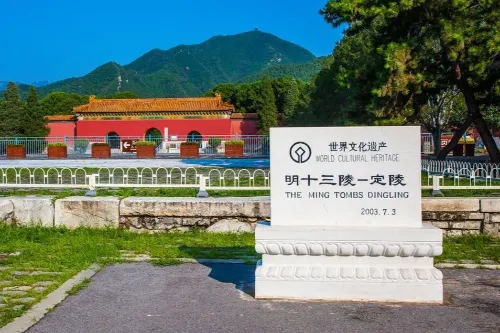
Dingling Mausoleum
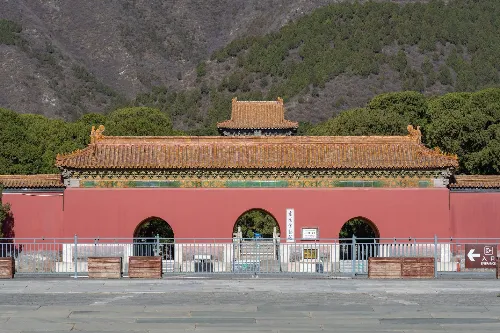
Dingling Mausoleum is the mausoleum of Emperor Shenzong Zhu Yijun of the Ming Dynasty and the only imperial mausoleum excavated in accordance with national plans. Construction started in October of the 12th year of the Wanli reign (1584 AD) and was completed in the 18th year of the Wanli reign (1590 AD), taking six years. Visitors can walk down the spiral staircase to the underground palace 27 meters deep to visit the original site of Emperor Wanli's coffin.

Shen Dao (Sacred Way)
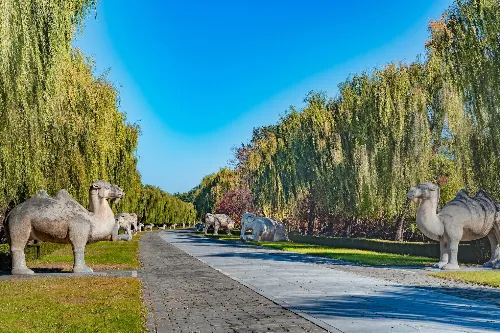
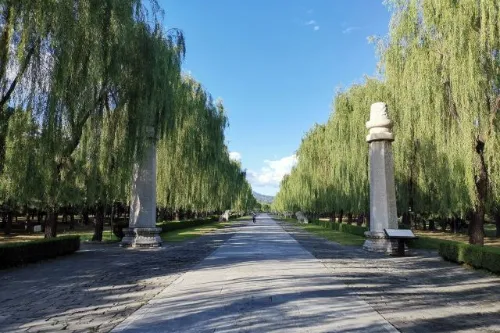
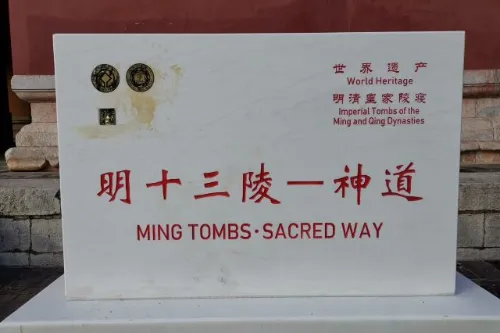
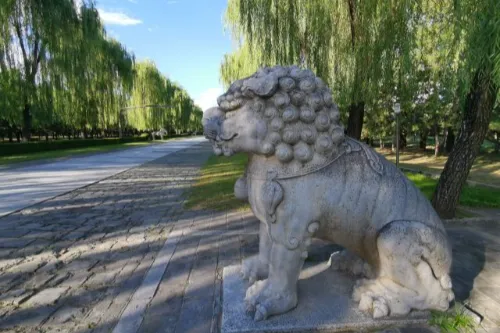
Shen Dao is the main sacred way of the Ming Tombs, also known as the Divine Road, about 1.2 kilometers long. There are 24 pairs of stone animals and stone figures on both sides, with various shapes—from cute elephants to majestic kylins, all vividly lifelike. Shooting under the evening light creates a more vicissitudes atmosphere.
Deling Mausoleum
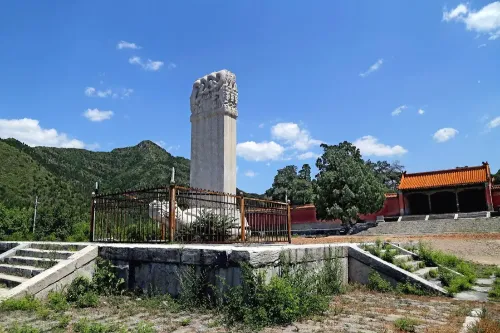
Deling Mausoleum is the joint burial place of Emperor Xizong Zhu Youxiao, the 15th emperor of the Ming Dynasty, and Empress Zhang. It is located at the western foot of Tanyu Ridge in the Tianshou Mountain mausoleum area.

Zhaoling Mausoleum
Zhaoling Mausoleum is of medium scale among the Ming Tombs, serving as the joint burial place of Emperor Muzong Zhu Zaihou, the 12th emperor of the Ming Dynasty, and his three empresses. However, compared with the treasure city models of Tai Mausoleum and Kang Mausoleum, it appears more exquisite and magnificent. Its sacred way branches westward from the north of the Seven-Arch Bridge on Changling Mausoleum's sacred way, about 2 kilometers long. A stele pavilion is built near the mausoleum, and three parallel single-arch stone bridges are constructed behind the pavilion.
Recommended Tour Route
Recommended tour route: Shen Dao (1 hour) → Changling Mausoleum (1.5 hours) → Dingling Mausoleum (2 hours). If traveling with the elderly or children, you can choose to take a sightseeing bus.
Travel Tips
- Choose the right season to visit—the scenery is beautiful when ginkgoes turn yellow at the end of October or when mountain peach blossoms bloom in April.
- Learn about the opening hours and ticket prices of each attraction in advance to plan your trip rationally.
- You can rent an audio guide or follow a tour guide group during the visit to better understand the history and culture of the scenic area.
Notes
- Abide by the scenic area regulations and do not touch cultural relics and ancient buildings.
- Keep quiet in the scenic area and do not make loud noises.
- Protect the environment and do not litter.
- Pay attention to safety during the visit, especially when walking in dimly lit places such as the underground palace.
Transportation
- Self-driving: Take the G6 Beijing-Tibet Expressway to Changping Xiguan Roundabout, then go north into Jingyin Road. After 500 meters, turn right at the traffic light into Changchi Road. Along the way, you will pass the Stone Archway, the main sacred way of the Ming Tombs, and the Seven-Arch Bridge to reach the T-junction—go straight to Changling Mausoleum, turn left to Dingling Mausoleum and Zhaoling Mausoleum.
- Subway: Take Line Changping to Xishankou Station, then transfer to the scenic area loop bus.
- Bus: Take Bus No. 872 from Deshengmen directly to the Ming Tombs; take the 345 Express from Deshengmen West to Xihuan South Road, then transfer to Bus No. 872, 878, or Changping 67.
- Tourist special line: Departure station at Qianmen of the Centralized Transportation Center → Juyongguan Pass (2.5 hours stay) → Bird's Nest & Water Cube (about 1 hour stay) → Return to Qianmen departure station. Departure time from Qianmen is 12:30 daily. Ticket price: 90 yuan per adult, 70 yuan per child/student/elderly (the ticket price includes full fare, Juyongguan Pass ticket, and tour guide service fee).
Opening Hours
Usually 8:30 - 17:00 (the specific opening hours may be adjusted according to seasons or special circumstances).
Tickets
Combined ticket (Dingling + Changling + Zhaoling + Shen Dao): 98 yuan per person.
Shen Dao: 30 yuan per person; Changling Mausoleum: 45 yuan per person; Dingling Mausoleum: 60 yuan per person; Zhaoling Mausoleum: 30 yuan per person.
You can search for the official WeChat public account "北京昌平文旅集团" to get the latest updates or buy tickets online.
Online Booking
Click here to jump to the Trip.com ticketing platform for ticket purchase.