
Gulangyu Scenic Area is located in Siming District, Xiamen City, Fujian Province. It is a small island of about 1.88 square kilometers at the southwest corner of Xiamen Island, facing Xiamen Island across the Lujiang River. As a national 5A-level tourist attraction and a World Cultural Heritage site, Gulangyu is known as the "Garden on the Sea", the "Exhibition of International Architecture", and the "Island of Pianos". The green coverage rate of the entire island exceeds 40%, and there are about 931 various historical buildings existing. Among them, 51 groups of 131 historical and stylistic buildings are listed in the World Cultural Heritage List, and the architectural style integrates multicultural elements such as Minnan, Western, and overseas Chinese styles. The scenic area receives more than 10 million tourists annually, making it a comprehensive tourist destination combining natural scenery, historical culture, and leisure vacation.
History and Culture
The history of Gulangyu can be traced back to the Tang and Song dynasties. It was called "Yuanshazhou" in the Southern Song Dynasty and officially named "Gulangyu" in the Wanli period of the Ming Dynasty. After the Treaty of Nanjing in 1842, Gulangyu became a public concession. Thirteen countries including Britain, the United States, and France set up consulates here, and overseas Chinese tycoons also built villas one after another, forming a unique architectural landscape. The concession ended in 1941, and it gradually became a tourist attraction after 1949.
In the early 20th century, Gulangyu became an important cultural communication center in southern Fujian, where piano culture flourished. By the end of the 20th century, the number of pianos on the entire island exceeded 500, with an average of one piano per three households, hence the reputation of the "Island of Pianos". The island also gave birth to China's earliest Western-style hospitals and missionary schools, such as Salvation Hospital and Anglo-Chinese College, which promoted the social development of modern Xiamen.
In 2017, "Gulangyu: a Historic International Settlement" was inscribed on the World Cultural Heritage List, becoming China's 52nd World Heritage site. Its value lies in demonstrating a unique international settlement model in East Asia from the mid-19th century to the early 20th century, embodying cultural diversity and exchange and integration.
Major Attractions
Riguangyan (Sunlight Rock)
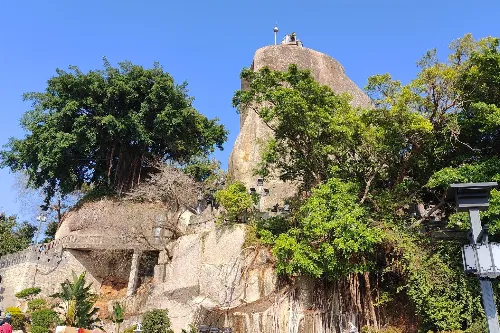
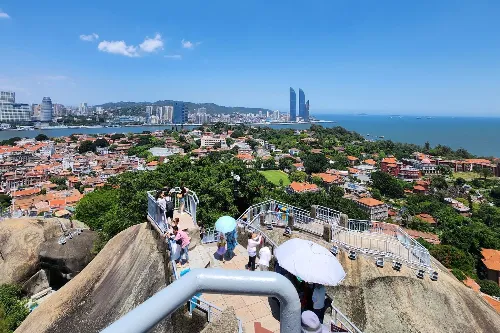
Located in the south-central part of Gulangyu, it is the highest point of the island, with an altitude of 92.7 meters. The platform at the top of the rock covers an area of about 40 square meters, offering a 360-degree panoramic view of Xiamen Island, Gulangyu, and the distant Kinmen Island. Riguangyan is formed by two huge rocks leaning against each other. There are cliff carvings on the rock walls such as "Tianfeng Haitao (Wind and Waves)" and "Gulang Dongtian (Gulang Wonderland)", among which "Gulang Dongtian" was carved in the first year of the Wanli period of the Ming Dynasty, being the earliest inscription on Gulangyu. The scenic area also includes attractions such as Riguangyan Temple and Zheng Chenggong Memorial Hall, where Zheng Chenggong once drilled his navy.
Shuzhuang Garden
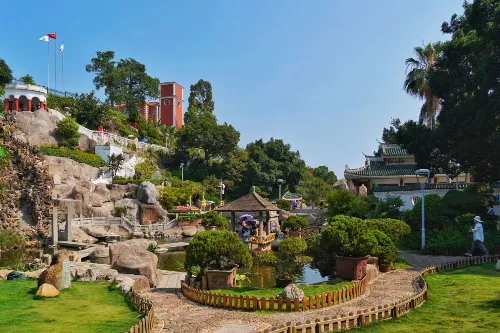
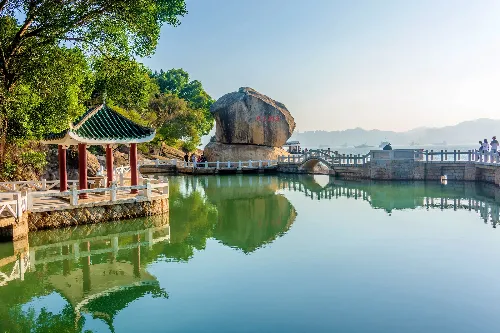
Built in 1913, it was originally the private villa of Lin Erjia, a Taiwanese tycoon, covering an area of about 13,000 square meters. It is divided into two parts: Canghai Garden (Garden Hiding the Sea) and Bushan Garden (Garden Supplementing the Mountain). Canghai Garden focuses on sea views, with the sea hidden in the garden behind the gate, revealing the sea suddenly after entering the garden, showcasing exquisite design; Bushan Garden focuses on mountain landscapes, with attractions such as the Twelve Caves rockery maze and the Small Banqiao Bridge. The garden also houses the Piano Museum, exhibiting more than 30 ancient pianos, including a rare and precious gilded piano.
Haoyue Garden (Bright Moon Garden)
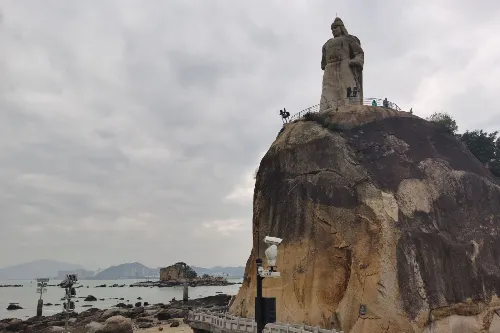
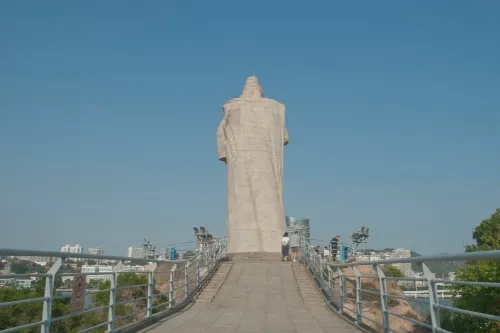
Located on the southeast coast of Gulangyu, covering an area of about 20,000 square meters, it was built to commemorate Zheng Chenggong's expulsion of Dutch colonizers and recovery of Taiwan. The core landscape in the garden is the statue of Zheng Chenggong, which is 15.7 meters high and weighs 1,617 tons, assembled from 625 granite blocks in 23 layers, being the largest statue of a historical figure in China. The statue faces the Taiwan Strait, with a magnificent momentum. The garden also includes attractions such as the Half-Moon City and Zheng Chenggong Historical Relics Exhibition Hall, displaying Zheng Chenggong's life story.
Organ Museum
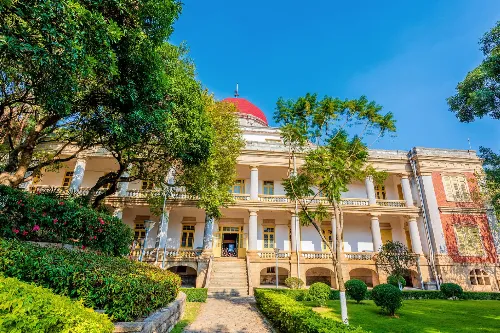
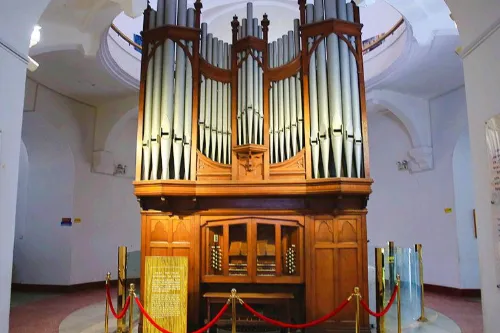
Located in the Bagua Building (Eight Trigrams Building), which was built in 1907 and is one of the landmark buildings of Gulangyu, named for its octagonal roof in the shape of the Eight Trigrams. The museum exhibits more than 500 various organs, including the "Normanbeard" pipe organ up to 6 meters high, which is the only and largest vertical pipe organ in the world in China. Regular organ concerts are held in the museum, allowing visitors to experience the charm of classical music.
Gulangyu History and Culture Exhibition Hall
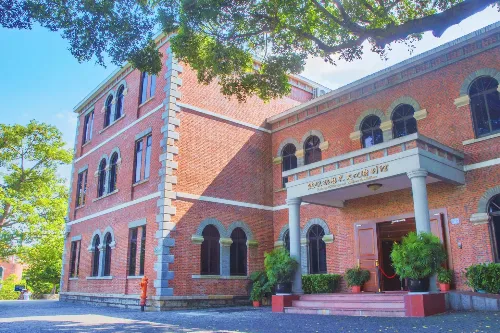
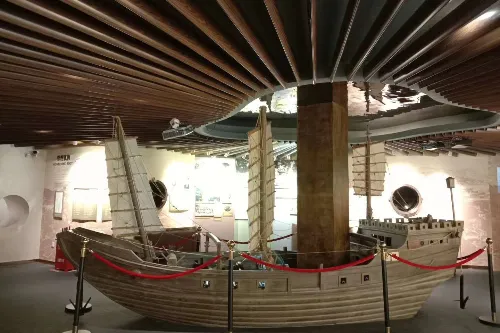
Located next to Yuyuan Garden, with a construction area of about 1,500 square meters, it showcases the historical changes of Gulangyu through cultural relics, pictures, multimedia and other forms. The exhibition is divided into four parts: "Natural and Humanistic Environment of Gulangyu", "Integration of Multiculturalism", "Formation of the Historic International Settlement", and "Protection and Inheritance of Cultural Heritage", among which precious cultural relics such as the 1893 Gulangyu map and seals of various consulates are on display.
Recommended Travel Routes
One-day tour recommended route:
8:00 Take a ferry from Xiamen International Cruise Center to Neicuoao Wharf → 8:30 Visit Riguangyan (1.5 hours) → 10:00 Walk to Shuzhuang Garden (1.5 hours, including the Piano Museum) → 11:30 Lunch at Longtou Road → 13:00 Visit the Organ Museum (1 hour) → 14:00 Visit Haoyue Garden (1 hour) → 15:30 Go to Gulangyu History and Culture Exhibition Hall (1 hour) → 16:30 Leisure at Gangzaihou Beach → 18:00 Take a ferry back from Sanqiutian Wharf
Two-day tour recommended route:
Day 1: Visit Riguangyan and Shuzhuang Garden in the morning, visit the Organ Museum and Carving Art Museum in the afternoon, watch the sunset at Riguangyan in the evening, and stroll around Longtou Road Night Market at night
Day 2: Visit Haoyue Garden and Gulangyu History and Culture Exhibition Hall in the morning, visit Huangrongyuan Hall and Haitiantanggou (separate ticket required) in the afternoon, go to Meihua Beach in the evening, and experience the concert at Gulangyu Concert Hall at night (free, reservation required in advance)
Cultural in-depth tour route (3 days):
On the basis of the two-day tour, add niche attractions such as Gulangyu Piano Garden (including the Hundred Birds Garden) and Guancai Building, participate in the explanation activities of the Piano Museum (10:00/15:00 daily), visit the old villas on the island such as the Bagua Building and Ronggu Villa, and deeply understand the historical stories behind the buildings.
Travel Tips
- Book ferry tickets 3 days in advance, especially during holidays and peak seasons, to avoid affecting the trip due to sold-out tickets. It is recommended to choose early ferries (7:10-8:00) to avoid the peak of tourist groups.
- Gulangyu has a hilly terrain, so it is recommended to wear comfortable sports shoes. The daily walking amount is about 15,000-20,000 steps, and you can carry a lightweight backpack and drinking water.
- The temperature is high in summer (June-August), so you need to take sun protection measures, such as carrying a sun hat and sunscreen; the sea breeze is strong in winter (December-February), so it is recommended to prepare a windproof coat.
- Restaurants on the island are concentrated on Longtou Road and Fujian Road. You may need to queue during the lunch peak (11:30-13:00), so you can dine off-peak or make reservations in advance. It is recommended to try time-honored brands such as "Lin's Fish Balls" and "Malasan Juice".
- If you are interested in architectural culture, you can rent an electronic explainer (20 yuan per unit) or participate in the architectural tour group organized by the scenic area (100 yuan per group, reservation required in advance).
- Gulangyu Concert Hall (located on Huangyan Road) holds free concerts at 19:30 every day, mainly featuring classical music, and you need to enter 30 minutes in advance.
Notes
- Ferry tickets include the return trip and are valid for 20 days. For the return trip, you can take a ferry from Sanqiutian Wharf or Neicuoao Wharf on Gulangyu to Xiamen International Cruise Center or Songyu Wharf.
- Tickets for core attractions are only valid on the day of purchase. It is recommended to plan the visiting order reasonably to avoid repeated ticket purchases.
- Gulangyu is a smoke-free scenic area, and smoking is prohibited on the entire island. Violators will be fined 50-200 yuan.
- There is no lifeguard on duty at Gangzaihou Beach. Pay attention to safety when swimming, do not go too far from the shore, and there may be high tides in the afternoon in summer, so pay attention to water level changes.
- Some old buildings on the island are private residences. Do not enter without permission or disturb the residents' lives, and respect others' privacy when taking photos.
- Longtou Road Commercial Street has a large flow of people, so keep your personal belongings, especially mobile phones and wallets, safe, and avoid staying in crowded places.
- Gulangyu implements garbage classification. Tourists need to put garbage into designated trash cans, separating kitchen waste from other waste.
Transportation
- Ferry: Tourists need to take a ferry from Xiamen International Cruise Center (No. 2 Donggang Road, Huli District) or Haicang Songyu Wharf to Gulangyu. The ferry ticket is 35 yuan per person (round trip), and the sailing time is about 20 minutes. Xiamen Ferry Terminal (No. 15 Lujiang Road, Siming District) is only open to local residents and tourists with valid documents.
- Bus: The bus stop near Xiamen International Cruise Center is "International Cruise Center Station", with passing buses including Route 87, 51, 135, etc.; near Haicang Songyu Wharf is "Songyu Bus Terminal", with passing buses including Route 842, 856, etc.
- Metro: Take Xiamen Metro Line 2 to "Cruise Center Station", exit from Exit 3, and walk about 10 minutes to the International Cruise Center.
- Taxi: It is about 15 kilometers from Xiamen Station to the International Cruise Center, with a driving time of 25 minutes and a cost of about 40 yuan; it is about 12 kilometers from Gaoqi Airport to the International Cruise Center, with a driving time of 20 minutes and a cost of about 35 yuan.
- Transportation on the island: Gulangyu is a pedestrian island, where motor vehicles and non-motor vehicles are prohibited. Tourists need to walk the whole journey. There are sightseeing battery cars on the island, with a round-island line of 50 yuan per person and an interval line (e.g., from Neicuoao Wharf to Riguangyan) of 30 yuan per person.
Opening Hours
Gulangyu is open all day. The opening hours of some attractions are slightly different, usually from 8:00 to 18:00, subject to the opening hours on the day.
Tickets
Combination ticket: 120 yuan per person. Core attraction ticket: 90 yuan per person. Single attraction tickets can also be purchased separately.
You can search for the official WeChat public account "厦门市鼓浪屿文旅中心" to get the latest updates or buy tickets online.
Online Booking
Click here to jump to the Trip.com ticketing platform for ticket purchase.