
Shuzhuang Garden is located at Ganghou Road, Gulangyu, Siming District, Xiamen City, Fujian Province. It is one of the core scenic spots of Gulangyu, a national 5A-level tourist attraction, and a classic representative of modern Chinese garden art. Featuring ingenious sea-hiding and scenery-borrowing design, the garden integrates landscapes with the ocean, breaking the traditional walled garden mode and standing as a pinnacle of southern Fujian private gardens. Covering a total area of about 9,300 square meters, including a water area of 2,100 square meters and a building area of 1,800 square meters, it is exquisitely laid out against mountains and the sea. It contains landmark landscapes such as Forty-Four Bridge, Twelve Caves, Bushan Garden and Canghai Garden, combining the grace of Jiangnan gardens with southern Fujian coastal styles, making it a high-value cultural attraction on Gulangyu Island.
History and Culture
Constructed in 1913 by Taiwanese wealthy gentry Lin Erjia, Shuzhuang Garden derives its name from Lin’s courtesy name Shuzhuang. After the First Sino-Japanese War, Lin Erjia moved to Gulangyu with his family. Nostalgic for the Lin Family Mansion and Garden in Banqiao, Taiwan, he built a private seaside garden based on its style to convey his homesickness.
Nestled on the southern coast of Gulangyu, the garden took years to complete and originally served as a private residence for living, sightseeing and leisure. Blending Jiangnan gardening aesthetics, southern Fujian architectural features and coastal geography, it pioneered the unique "hidden sea" design, where the sea is concealed at the entrance and suddenly comes into view deep inside, representing an innovative milestone in Chinese garden design.
Long privately owned by the Lin family, the garden was donated to local authorities after the victory of the War of Resistance against Japanese Aggression in 1945 and officially opened to the public in 1955. As a key part of Gulangyu’s global cultural heritage site inscribed in 2017, it embodies cross-strait cultural integration and overseas Chinese nostalgia, and preserves the architectural craftsmanship of modern southern Fujian private gardens.
Main Attractions
Canghai Garden
Canghai Garden is the core entrance area and the best showcase of the hidden sea design. Rockeries and walls block the sea view at the entrance, while the wide ocean unfolds suddenly beyond the moon gate, creating a striking visual contrast. Covering around 1,200 square meters, it features courtyards, moon gates and waterside pavilions, serving as the first highlight for visitors.
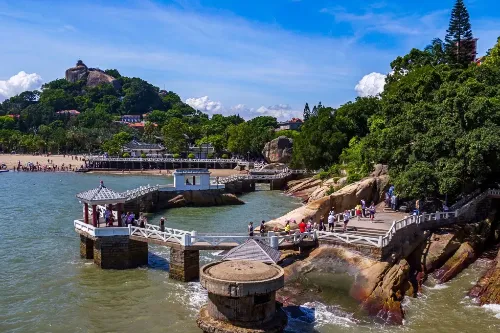
Forty-Four Bridge
The iconic coastal winding bridge gets its name because Lin Erjia built it at the age of forty-four. Stretching about 100 meters, it twists across the garden waters and coastline, equipped with pavilions, curved railings and terraces. It offers panoramic views of the garden and sea scenery, and is the most popular photography spot in the scenic area.
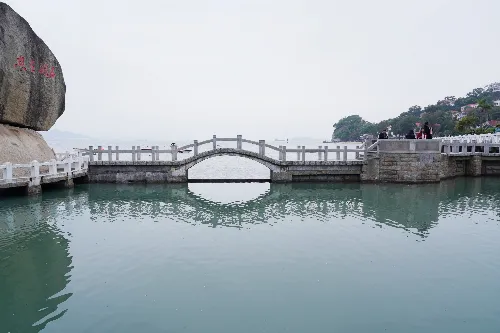
Twelve Caves
A unique rockery cave landscape covering 300 square meters, constructed with natural rocks and artificial stacking. Arranged according to the twelve earthly branches, twelve connected caves of varying sizes and shapes form a winding and mysterious labyrinth, combining ornamental value and recreational fun.
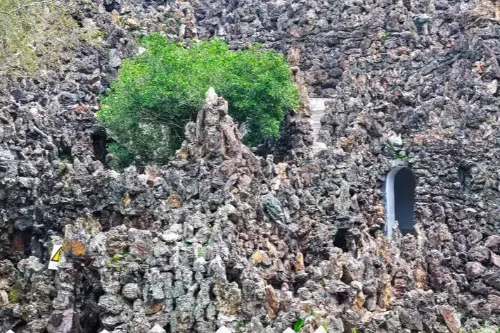
Bushan Garden
Located on the northern hillside of Shuzhuang Garden, Bushan Garden is built along natural terrain with the concept of mountain complementation. Covering 2,000 square meters, it has viewing platforms, green landscapes and leisure trails. Visitors can overlook the entire garden and Gulangyu coastal scenery from high ground.
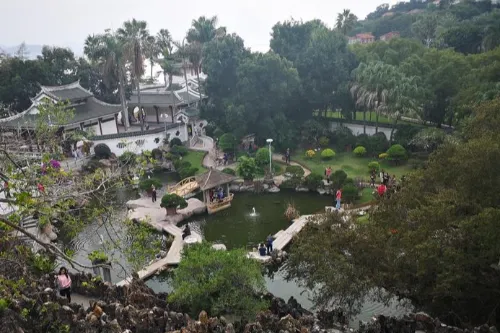
Piano Museum
Situated inside Shuzhuang Garden, the museum consists of two halls with a total building area of 800 square meters. It collects nearly a hundred antique pianos from Australia, Britain, Germany and other countries. As a world-class themed museum, it is the core carrier of Gulangyu’s unique piano culture.

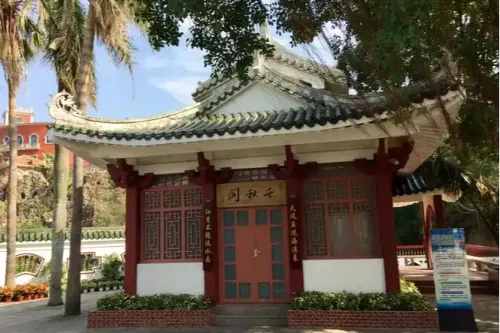
Renqiu Pavilion
A delicate southern Fujian-style waterside pavilion built over the lake. It faces Forty-Four Bridge and the sea, serving as a quiet resting and viewing spot with elegant traditional architectural features.
Tour Route
Shuzhuang Garden Entrance→Canghai Garden→Moon Gate→Forty-Four Bridge→Renqiu Pavilion→Twelve Caves→Bushan Garden→Piano Museum→Scenic Exit
Travel Tips
- The recommended visiting duration is 1 to 1.5 hours to fully explore all core attractions.
- Do not miss the regular automatic antique piano performances in the Piano Museum.
- Visit before 9 a.m. or after 4 p.m. to avoid crowds and enjoy better sightseeing experience.
- Walk slowly in Twelve Caves and watch your step on uneven stone steps.
- Forty-Four Bridge is the best spot to appreciate coastal scenery.
- It is recommended to arrange a half-day itinerary to match other attractions on Gulangyu Island.
Notes
- Climbing rockeries, railings and entering non-public areas are strictly prohibited.
- Touching exhibits and taking photos with flashlights are forbidden in the Piano Museum.
- Children must be accompanied by adults due to multiple water areas in the garden.
- Pets, smoking and spitting are not allowed inside the scenic area.
- Please keep quiet and avoid loud noises during the visit.
- Follow on-site guidance and maintain order during peak holidays.
- Wear comfortable non-slip shoes for frequent steps and slopes.
Transportation
- Take a ferry from Xiamen Ferry Terminal to Gulangyu Piano Pier with a 5-minute voyage.
- No motor vehicles are allowed on Gulangyu Island; it takes about 15 minutes on foot from the pier to the garden.
- Island sightseeing battery cars are available for a short ride to the scenic spot.
- Take city buses No.2, No.3, No.8, No.19 and No.29 to Ferry Bus Station for ferry access.
Opening Hours
The garden opens from 6:00 to 21:00 during summer from May 1st to September 30th, and from 6:30 to 21:00 in winter from October 1st to April 30th of the next year. The Piano Museum follows the same opening hours, stopping admission at 17:30 and starting closing arrangements at 20:45.
Ticket Information
The admission ticket costs 30 yuan per person. Search the official WeChat official account "鼓浪屿" for the latest travel information and updates.
Online Booking
Click here to jump to the Trip.com ticketing platform for ticket purchase.