
Nanputuo Temple is located at No. 515 Siman South Road, Siming District, Xiamen City, Fujian Province. It is a national 4A-level tourist attraction, one of the famous Buddhist resorts in southern Fujian, a national key cultural relic protection unit and a key Han Buddhist temple in China. With southern Fujian Buddhist culture as the core feature, the scenic area integrates ancient architectural art, landscape gardens and religious culture. The temple buildings advance layer by layer along the mountain with rigorous and regular layout. Covering a land area of 258,000 square meters and a building area of 21,270 square meters, the temple is nestled between mountains and rivers with beautiful scenery and prosperous incense. It integrates religious pilgrimage, cultural tour and leisure sightseeing, and is one of the most representative humanistic scenic spots in Xiamen.
History and Culture
Nanputuo Temple was first built in the late Tang and Five Dynasties, initially named Sizhou Temple. It was renamed Wujin Rock in the Northern Song Dynasty. The temple was abandoned in the Yuan Dynasty and rebuilt in the early Ming Dynasty with the new name Pu Zhao Temple. In the 23rd year of the Kangxi reign of the Qing Dynasty, General Shi Lang rebuilt the temple on the original site of Pu Zhao Temple. Since it is located to the south of Mount Putuo and enshrines Goddess of Mercy, it was officially named Nanputuo Temple, which has been used ever since.
As the Buddhist center of southern Fujian since its establishment, the temple has witnessed numerous eminent monks throughout history. In modern times, Masters Huiquan, Taixu and Hongyi once preached and taught here, promoting the inheritance and development of southern Fujian Buddhist culture. More than a religious venue, Nanputuo Temple serves as an important carrier of southern Fujian culture and overseas Chinese culture. Its architectural style, Buddhist rituals and vegetarian culture fully reflect the regional characteristics of southern Fujian and enjoy a high reputation at home and abroad.
In 1924, Nanputuo Temple was transformed into a ten-direction monastery. The following year, Minnan Buddhist College was founded, becoming a well-known higher Buddhist institution in China. It has cultivated a large number of Buddhist talents and made important contributions to modern Chinese Buddhist education. Today, the temple still maintains traditional Buddhist rules and cultural heritage, opening to the public and acting as an important window for spreading Buddhist and southern Fujian traditional culture.
Main Attractions
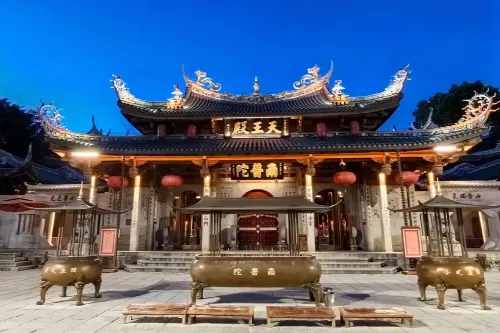
Heavenly King Hall
As the first main hall of Nanputuo Temple, the Heavenly King Hall was constructed in the Qing Dynasty and renovated many times later. It is 12 meters high, with 5 bays in width and 3 bays in depth. The hall houses statues of Maitreya Buddha, Skanda and the Four Heavenly Kings with solemn and exquisite shapes. It is the gateway building of the temple and the first core scenic spot for tourists.
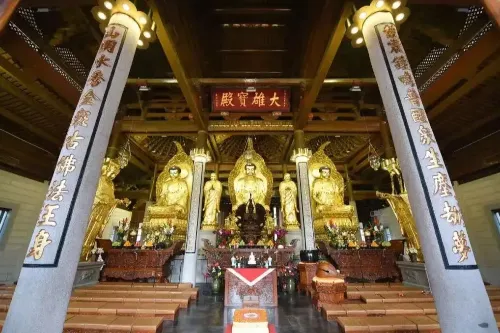
Mahavira Hall
The Mahavira Hall is the core main hall of the temple and the main venue for major Buddhist ceremonies. Standing 14.6 meters high, it has 7 bays in width and 5 bays in depth. Adopting the traditional southern Fujian double-eaved gable and hip roof style, the building features upturned eaves and carved beams and painted rafters. Inside enshrine the Three Buddhas and Eighteen Arhats with simple and elegant statues, and the interior decoration combines Buddhist culture with southern Fujian craftsmanship.
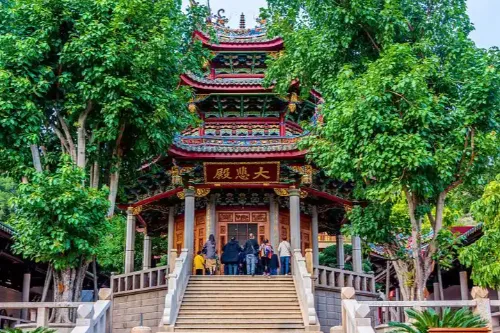
Great Compassion Hall
One of the landmark buildings of Nanputuo Temple, the Great Compassion Hall was built in the Ming Dynasty. It is a three-story octagonal pointed roof pavilion with a height of 16 meters. An octagonal Goddess of Mercy statue is enshrined inside with Buddha statues on four sides. The whole building is connected by tenon and mortise without a single nail, representing the exquisite craftsmanship and classic ancient architecture of southern Fujian.
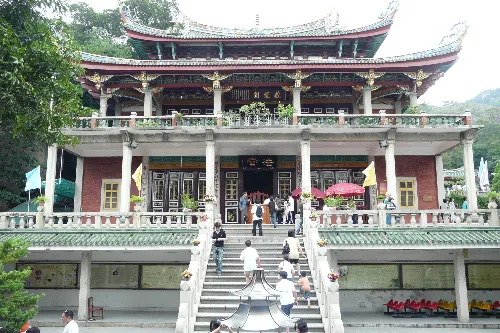
Sutra Depository
Located at the highest point of the temple, the two-story Sutra Depository is used to collect and preserve Buddhist scriptures, cultural relics and ritual vessels. It houses a wealth of precious cultural relics including ancient Buddhist scriptures, calligraphy, paintings and porcelains, among which Ming Dynasty scriptures and handwritings of ancient eminent monks are well preserved, owning both cultural and historical value.
Vegetarian Restaurant
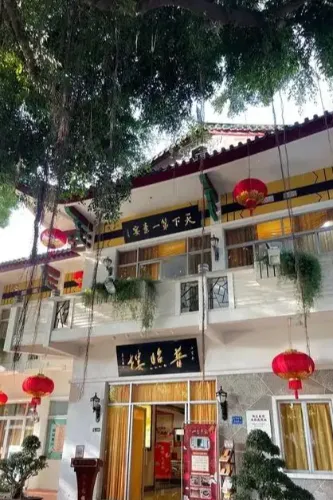
Founded in 1934, Nanputuo Vegetarian Restaurant is a famous vegetarian catering center nationwide. Featured with southern Fujian vegetarian cuisine, it uses natural ingredients and exquisite cooking skills. The vegetarian dishes are excellent in color, aroma and taste. As the core carrier of temple vegetarian culture, it is a must-visit place for tourists to experience local vegetarian food in southern Fujian.
Five Elders Peak
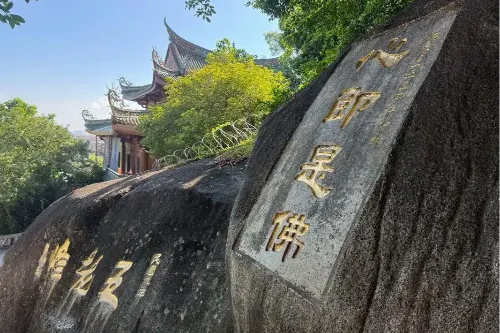
Situated behind Nanputuo Temple, Five Elders Peak is a famous mountain in Xiamen with an altitude of 184.8 meters. It is named after five continuous rolling peaks resembling five old men. Covered with lush forests and equipped with hiking trails, the peak overlooks Xiamen urban area and Lujiang Bay, serving as a supporting natural scenic spot of the temple.
Minnan Buddhist College
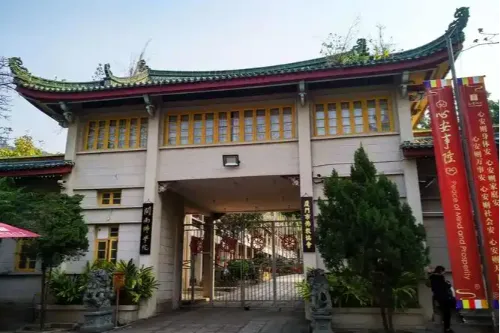
Founded in 1925, Minnan Buddhist College is located inside Nanputuo Temple, divided into male and female departments. As one of the longest-standing higher Buddhist colleges in China, it features simple and elegant buildings and quiet surroundings, functioning as an important base for Buddhist education and cultural research.
Travel Route
Nanputuo Temple Gate → Heavenly King Hall → Mahavira Hall → Great Compassion Hall → Sutra Depository → Vegetarian Restaurant → Minnan Buddhist College → Five Elders Peak Hiking Entrance → Five Elders Peak Observation Deck
Travel Suggestions
- The recommended visiting duration is 2 to 3 hours, and one more hour is needed for hiking, which can balance the visit of ancient buildings and natural scenery.
- It is recommended to visit in the morning with fewer crowds and mild temperature to quietly experience the Buddhist culture.
- Taste authentic Nanputuo vegetarian food; the business hours of the vegetarian restaurant are 11:00-14:00 and 17:00-20:00.
- Wear comfortable sneakers for hiking. The trails of Five Elders Peak are gentle and suitable for visitors of all ages.
- Combine with Xiamen University and Island Ring Road to arrange a one-day travel itinerary.
- Free incense is provided in the temple, and tourists are advised to worship Buddha in a civilized manner.
Notes
- Do not touch Buddha statues and ritual vessels, make loud noises or chase inside the halls, and keep the environment solemn.
- Smoking, open flames and large incense sticks are prohibited within the temple to abide by fire safety regulations.
- Do not feed stray animals randomly, climb ancient buildings or carve and damage cultural relics and public facilities.
- Follow Buddhist etiquette when worshipping, and taking photos of Buddha statues inside the halls is strictly forbidden.
- Walk along designated hiking routes on Five Elders Peak and watch your step to prevent slipping.
- Respect Buddhist beliefs and temple rules, and do not distribute leaflets or conduct commercial promotion.
- Pets are not allowed to enter the scenic area.
Transportation
- Bus: Take bus No.1, 15, 21, 45, 71, 841 or 959 to Nanputuo Stop, then walk 50 meters to the scenic spot.
- Subway: Take Metro Line 3 to Xiamen Railway Station and transfer to bus No.21 or 1; take Metro Line 1 to Zhenhai Road Station and transfer to bus No.45 or 71.
- Taxi and Online Car-hailing: Navigate directly to Nanputuo Temple Main Gate, with a 10 to 20-minute ride in downtown Xiamen.
- Self-driving: Charged parking lots are available nearby with limited parking spaces. Public transportation is recommended on holidays.
Opening Hours
The daily opening hours are 8:00 to 17:30, and the time will be adjusted to 7:30 to 18:00 on special Buddhist festivals. The opening hours of Five Elders Peak are consistent with the temple. Indoor venues such as the Sutra Depository stop admission at 17:00, and tourists are requested to arrange their time reasonably.
Ticket Information
Nanputuo Temple is open to the public for free. Paid manual explanation service is available. Follow the official WeChat official account of "南普陀寺" for the latest scenic spot information.
Online Booking
Click here to jump to the Trip.com ticketing platform for ticket purchase.