
Anhui Museum (New Building) is located at No. 87 Huaining Road, Shushan District, Hefei City, Anhui Province, on the south side of Swan Lake. It is a national first-class museum. The new building was officially completed and opened to the public on September 29, 2011. Its architectural design adopts the Huizhou-style concept of "Five Directions Connected, Four Waters Returning to the Hall", integrating traditional Huizhou elements with modern architectural aesthetics. The hospital covers an area of 55,000 square meters, with a total construction area of 41,380 square meters, including 38,540 square meters above ground and 1,890 square meters underground. The main building has six floors above ground and one basement floor in part, with a height of 37.7 meters. The basic exhibition hall covers 8,500 square meters and the temporary exhibition hall 2,040 square meters. The museum houses more than 310,000 cultural relics (sets), featuring Shang and Zhou bronze wares, Han Dynasty stone reliefs, ancient ceramics, Song and Yuan gold and silver wares, the Four Treasures of the Study, and Huizhou carvings. It is a comprehensive national-level museum that systematically displays the regional history and culture of Anhui.
History and Culture
The predecessor of Anhui Museum was Anhui Provincial Museum, which opened on November 14, 1956. It was officially renamed Anhui Museum on December 28, 2010, forming an operation pattern of "One Museum, Two Buildings" (the New Building in Shushan and the Old Building in Luyang). Since its establishment, Anhui Museum has been awarded many honors such as National Patriotic Education Base, National Key Protection Unit for Ancient Books, and National Science Popularization Education Base by virtue of its rich collections and high-quality exhibitions.
Based on the historical context of the Jianghuai region, the new building systematically sorts out the development track of Anhui culture. Human history in Anhui dates back more than 2 million years. Prehistoric relics of Lingjiatan Culture and Xuejiagang Culture show the height of early civilization. During the Xia, Shang and Zhou dynasties, many vassal states stood in Jianghuai, where Chu culture merged, and copper mining in southern Anhui made outstanding contributions to bronze civilization. Since the Qin and Han dynasties, Anhui has always been a key intersection of northern and southern cultures. During the Sui, Tang, Song and Yuan dynasties, the Grand Canal boosted economic prosperity, and famous officials such as Bao Zheng were recorded in history. In the Ming and Qing dynasties, Huizhou merchants rose and Huizhou culture flourished. Huizhou architecture, Hui ink and She inkstones, Xin'an painting, and Tongcheng School of Literature together constitute the core symbols of Anhui culture. The exhibition system of the new building takes this historical line as its framework, connecting the millennial cultural heritage of the Jianghuai region.
Main Attractions
Exhibition of Anhui Civilization History
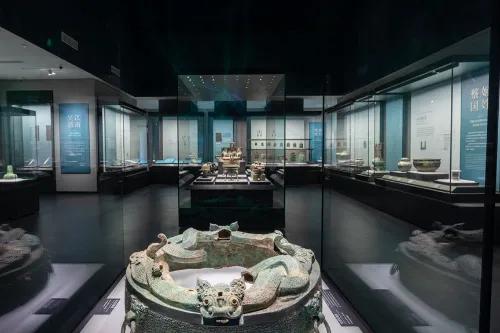
This exhibition is located on the second and third floors of the new building and is the core permanent exhibition of the museum. Arranged chronologically from prehistoric civilization to the Ming and Qing dynasties, it comprehensively shows the historical development of Anhui. The exhibition hall gathers many national treasures, including the Bronze Ding of Zhuke (Chu Ding) from the Warring States Period, the largest round bronze ding of the Eastern Zhou Dynasty and a national first-class cultural relic; the Mirror of King Guang of Wu from the Spring and Autumn Period, an important evidence of the marriage alliance between Wu and Cai; the Gold Festival of E Jun Qi from the Warring States Period, known as an ancient "tax-free customs pass"; as well as precious cultural relics such as Lingjiatan Culture jades, Shouzhou Kiln celadon, and Han Dynasty stone reliefs, fully presenting Anhui's journey from barbarism to prosperous civilization.
Exhibition of Ancient Huizhou Architecture
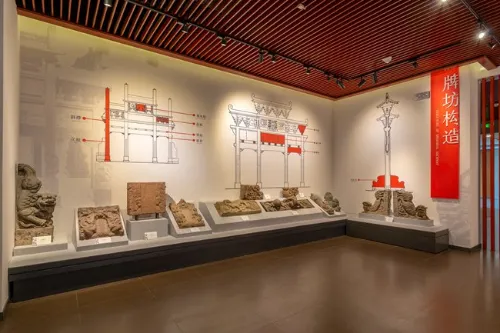
Located on the fourth floor of the new building, the exhibition is divided into four units: ancestral halls, memorial archways, folk houses, and three kinds of carving art. Through original architectural components, models, and multimedia, it fully displays Huizhou architectural art from the Northern Song Dynasty to the Qing Dynasty. An ancient folk house was relocated and restored from Huizhou in the museum to show the original appearance of Huizhou-style residences. Key exhibits include wooden beams carved with Three Kingdoms figures, a plaque for Crown Prince Shaobao, brick carvings of door hoods with figures in Spring Outings, and one-hundred-children brick carvings, which highlight the exquisite craftsmanship of Huizhou wood carving, brick carving, and stone carving. Visitors can immerse themselves in the aesthetic of Huizhou architecture featuring "white walls, black tiles and horsehead walls".
Exhibition of Anhui's Four Treasures of the Study
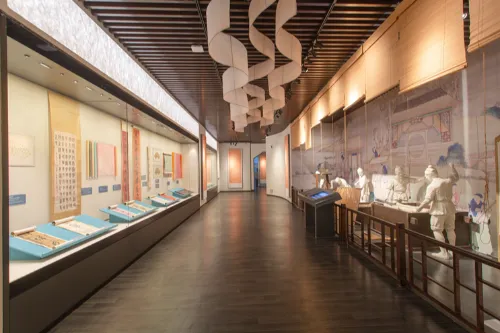
Located on the fifth floor of the new building, this special exhibition displays four treasures of Anhui: Xuan paper, Hui ink, Xuan writing brushes, and She inkstones. It systematically introduces the materials, craftsmanship, history, and cultural value of various stationery items, exhibiting ancient ink sticks, inkstones, writing brushes, Xuan paper products, and related stationery from past dynasties. The exhibits range from practical ancient stationery to fine art collections, fully presenting the unique status of "Anhui's Four Treasures of the Study" in Chinese cultural history.
Exhibition of Jianghuai Treasures
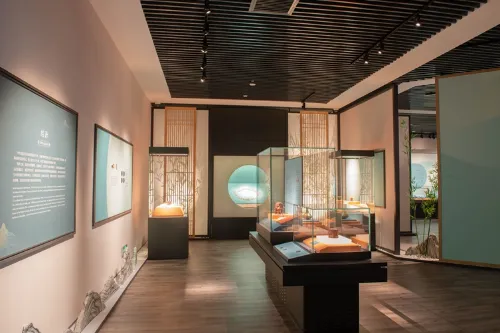
Located on the fifth floor of the new building, this exhibition is divided into five sections: gold and silver wares, jade and stone wares, lacquer wares, iron paintings, and bamboo, wood, ivory and horn artifacts. It gathers fine ancient crafts from Anhui, with representative exhibits including hollow-out double-dragon gold pendants for Xiapei, sunflower-shaped gold cups, diamond-shaped phoenix-patterned silver fruit boxes, carved lacquer cloud-patterned boxes made by Zhang Cheng of the Yuan Dynasty, and jade vases with tubular ears, highlighting the superb craftsmanship and aesthetic standards of ancient artisans in the Jianghuai region.
Xin'an School of Painting
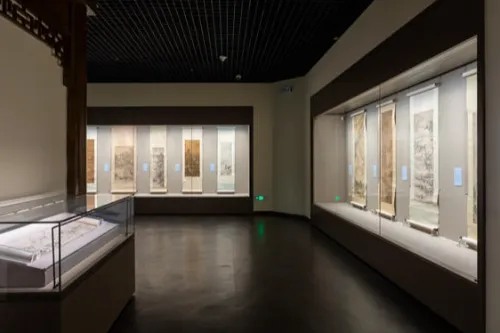
Most members of the "Xin'an School of Painting" were painters native to Huizhou. The exhibition selects more than 30 sets of fine paintings of the Xin'an School, comprehensively showing the painting style and artistic achievements of the school, and highlighting the outstanding accomplishments of Anhui painting art and the unique charm of Huizhou culture.
Visiting Route
A recommended route for Anhui Museum (New Building) is from bottom to top with priority to core exhibits, taking about 3 to 4 hours. After entering through the south gate, visitors first arrive at the service desk on the first floor to pick up guide maps and deposit luggage. Then they can visit the temporary exhibition hall on the first floor to learn about current special exhibitions. Next, take the elevator to the second floor to visit "Exhibition of Anhui Civilization History (I)", focusing on national treasures such as the Bronze Ding of Zhuke, Gold Festival of E Jun Qi, Mirror of King Guang of Wu, and Lingjiatan jades. Continue to the third floor for "Exhibition of Anhui Civilization History (II)" to understand Anhui's history from the Song and Yuan dynasties to the Ming and Qing dynasties. Then go to the fourth floor to visit the "Exhibition of Ancient Huizhou Architecture" and experience the restored ancient folk house and Huizhou three kinds of carvings. Finally, head to the fifth floor to visit the "Exhibition of Anhui's Four Treasures of the Study" and "Exhibition of Jianghuai Treasures" in sequence. After the visit, return to the cultural and creative store on the first floor for stamp collecting to complete the whole tour.
Visiting Tips
- Recommended visiting time: about 2.5 hours for a highlights tour and about 4 hours for an in-depth full tour.
- Before entering, you may follow the official WeChat account of "Anhui Museum" for free audio guides.
- Free guided tours are available at 10:00 and 14:00 daily; please gather at the service desk on the first floor 10 minutes in advance.
- Electronic guide devices are available for rent.
- Stamp collectors are advised to bring their own notebooks; there are 28 themed stamps at service desks and cultural and creative stores on each floor.
- Free luggage storage is provided in the museum, and large luggage can be deposited at the entrance.
- After the visit, you can walk to the Swan Lake area to enjoy the lake view and urban scenery.
Notes
- Touching unprotected cultural relics and display cabinets is prohibited in the museum.
- Flash photography is forbidden in exhibition halls, and photography is not allowed for some cultural relics.
- Except for wheelchairs and baby strollers, the use of scooters, skateboards and other means of transportation is prohibited.
- Drunk people, people in inappropriate dress, and incapacitated persons without guardians are not admitted.
- Admission stops at 16:00 and the museum closes at 17:00; please do not arrive late.
- Children, the elderly, and the disabled must be accompanied by adults.
- Eating, drinking and loud talking are prohibited in the museum; please keep quiet and orderly.
Transportation
- Metro: Take Metro Line 3 to Anhui Museum Station, Exit 1, and walk for about 5 minutes.
- Bus: Take Bus No. 13, 20, 113, 129 or 105 to Anhui Museum South Gate Station; take Bus No. 32, 103, 128 or 166 to Pingtang Station and walk east for 500 meters.
- Self-driving: Navigate to the South Gate or North Gate of Anhui Museum.
Opening Hours
Open from 9:00 to 17:00 Tuesday to Sunday, with last admission at 16:00. Closed every Monday (except statutory holidays). Opening arrangements during holidays are subject to official notices.
Admission
Free admission. Guided tours are chargeable. You may search the official WeChat account "安徽博物院" on WeChat for the latest updates.
Online Booking
Click here to jump to the Trip.com ticketing platform for ticket purchase.