
The Ancient City of Huizhou Scenic Area. It is located in Huicheng Town, She County, Huangshan City, Anhui Province. It is a national 5A-level tourist attraction, and is known as one of the Four Great Ancient Cities of China together with the Ancient City of Lijiang in Yunnan, the Ancient City of Pingyao in Shanxi and the Ancient City of Langzhong in Sichuan. It is also the core birthplace and concentrated exhibition site of Huizhou culture. The scenic area covers a total area of 24.7 square kilometers, with a core area of 132,000 square meters. The existing ancient city wall is 2,436 meters long, and there are more than 400 well-preserved Ming and Qing ancient buildings in the city. The overall architecture features Huizhou-style buildings as the core, integrating memorial archways, ancient streets, dwellings, government offices and gardens. It completely retains the urban pattern and architectural style of the ancient Huizhou Prefecture, and is one of the best-preserved Ming and Qing prefecture cities in China.
History and Culture
The Ancient City of Huizhou was first built in the Qin Dynasty. Since the establishment of She County in the Qin Dynasty, it has a history of more than 2,200 years. Since the Yining period of the Sui Dynasty, this place has been the seat of Huizhou Prefecture. After the Tang, Song, Yuan, Ming and Qing dynasties, it has always been the political, economic and cultural center of Huizhou. The pattern of the prefecture and county sharing the same city lasted for more than 1,300 years, making it a typical representative of the ancient Chinese system of prefecture and county governance in one city.
The Ancient City of Huizhou is the core carrier of Huizhou culture. Cultural schools such as Huizhou Studies, Huizhou Merchants, Huizhou Opera, Huizhou Cuisine, Huizhou-style Architecture, Xin'an Neo-Confucianism and Xin'an Painting School all originated here. During the Ming and Qing dynasties, Huizhou merchants flourished, and the Ancient City of Huizhou became an important birthplace and spiritual home for Huizhou merchants. A large number of memorial archways, ancestral halls and government office buildings preserved in the city completely record the patriarchal clan system, imperial examination culture and official system of Huizhou, possessing extremely high historical, cultural and artistic values.
In 1986, the Ancient City of Huizhou was listed as a National Historical and Cultural City by the State Council, and in 2014 it was successfully rated as a national AAAAA-level tourist attraction. Today, it is still a core place for the inheritance, protection and exhibition of Huizhou culture, and an important physical example for the study of ancient Chinese local administrative systems and regional cultures.
Major Attractions
Huizhou Prefectural Government Office
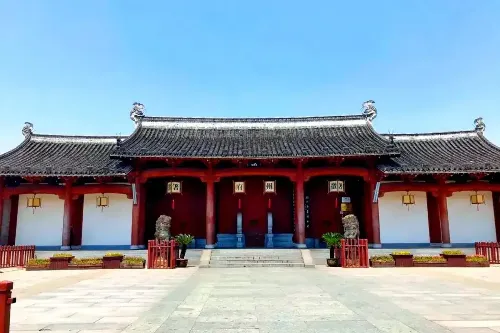
The Huizhou Prefectural Government Office is the core building of the Ancient City of Huizhou, serving as the administrative center of Huizhou Prefecture during the Ming and Qing dynasties. It was first built in the Sui Dynasty, and the existing buildings were reconstructed in 2009 in accordance with the regulations of the Hongzhi period of the Ming Dynasty. It covers a total area of 2.4 hectares with a construction area of 9,948 square meters. Facing south from the north, it is distributed along the central axis with the main gate, ceremonial gate, main hall, second hall, third hall and back garden in sequence. It is the largest and most complete prefectural government complex in the south of the Yangtze River, fully restoring the office and living scenes of the ancient prefectural government.
Xu Guo Memorial Archway
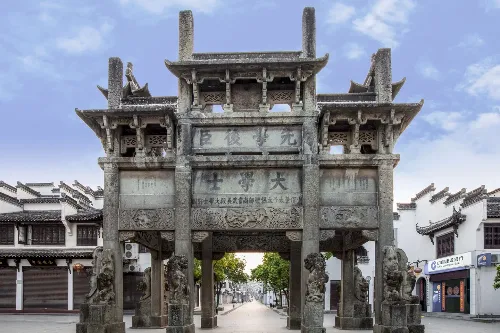
The Xu Guo Memorial Archway, also known as the Grand Secretary Archway, is located in the center of the ancient city. Built in the 12th year of the Wanli reign of the Ming Dynasty for Xu Guo, Grand Secretary of the Ming Dynasty Cabinet, it is a rare eight-pillar archway in China. The archway is 11.4 meters high, 11.5 meters long and 6.77 meters wide, all built with cyan tea garden stones. Exquisitely carved with patterns of dragons, phoenixes, flowers, birds and auspicious beasts, it is the only existing octagonal memorial archway in China, known as the "Arc de Triomphe of the East", and is a national key cultural relic protection unit.
Ancient City Wall of Huizhou
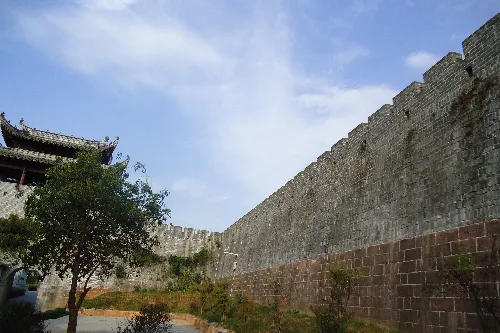
The Ancient City Wall of Huizhou was first built in the Sui Dynasty and rebuilt in the Ming Dynasty. The existing wall is 2,436 meters long, 7 meters high and 3 to 5 meters wide, with four city gates in the east, south, west and north, namely Renhe Gate, Ziyang Gate, Linjiang Gate and Gongji Gate. Built against mountains and near rivers, the wall serves both defense and flood control functions. It is a relatively well-preserved Ming Dynasty prefectural city wall in China, and walking on it offers a panoramic view of the ancient city.
Yuliang Dam
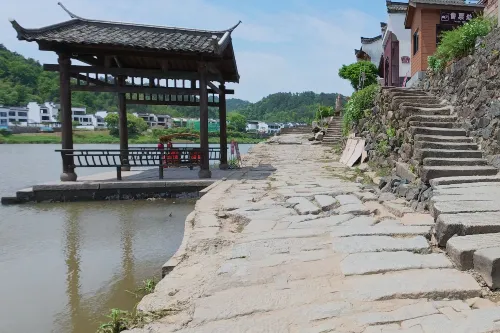
Yuliang Dam is located on the Lianjiang River, 1 kilometer downstream of the Ancient City of Huizhou. First built in the Tang Dynasty and rebuilt in the Ming Dynasty, it is the oldest and largest ancient river dam in the upper reaches of the Xin'an River. The dam is 138 meters long, 27 meters wide at the bottom and 6 meters wide at the top, all built with bluestones. As a national key cultural relic protection unit, it is known as the "Dujiangyan of the South of the Yangtze River" and an outstanding representative of ancient Huizhou water conservancy projects.
Dou Mountain Street
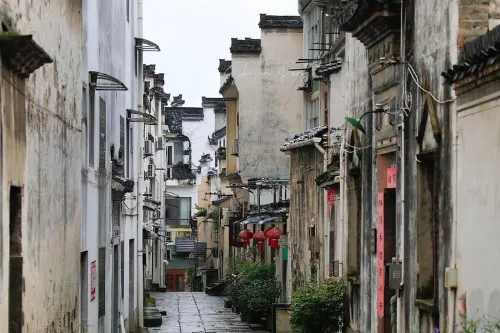
Dou Mountain Street is the best-preserved ancient street of the Ming and Qing dynasties in the Ancient City of Huizhou, named after being located at the foot of Dou Mountain. The street is more than 300 meters long, paved with bluestone slabs. Along the street are distributed Huizhou-style dwellings, ancestral halls, shops and ancient wells from the Ming and Qing dynasties, which was a residential area for ancient Huizhou merchants. The overall buildings feature white walls, black tiles and towering horse-head walls, fully showing the elegant charm of Huizhou-style dwellings.
Tao Xingzhi Memorial Hall
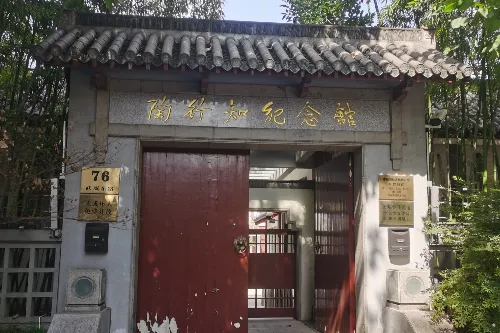
The Tao Xingzhi Memorial Hall is located in the Ancient City of Huizhou, built in memory of Tao Xingzhi, the people's educator. The site was originally the Chongyi School where Tao Xingzhi studied in his childhood. It covers an area of 1,700 square meters with a construction area of 3,600 square meters. The hall displays the life stories, works, manuscripts and physical exhibits of Tao Xingzhi, and is one of the key national memorial halls of Tao Xingzhi.
Tour Route
Tourist Center of Ancient City of Huizhou → Huizhou Prefectural Government Office → Xu Guo Memorial Archway → Dou Mountain Street → Tao Xingzhi Memorial Hall → Ancient City Wall of Huizhou → Yuliang Dam
Travel Tips
- The recommended visiting duration is 3-4 hours to fully explore the core attractions and deeply experience Huizhou culture.
- It is recommended to enter the park before 9 a.m. to avoid crowds and improve the visiting experience.
- Visitors can follow the scenic area guides when visiting the prefectural government office to learn about the ancient regulations and historical stories.
- It is recommended to set aside 30 minutes separately for Yuliang Dam to appreciate the water conservancy project and the natural scenery of the Lianjiang River.
- Visitors can taste local Huizhou snacks such as stinky tofu, Huizhou sesame cakes and She County sesame cakes.
- Wear comfortable flat shoes as there are many bluestone roads and walking sections in the ancient city.
Notes
- Climbing on ancient buildings, memorial archways and city walls, as well as carving or damaging cultural relics are prohibited in the scenic area.
- Xu Guo Memorial Archway and Yuliang Dam are key cultural relic protection units, and close touching and climbing are prohibited.
- Carrying flammable and explosive materials and smoking in ancient buildings are prohibited in the ancient city.
- The passenger flow is large during holidays, so please take good care of personal belongings and visit in order.
- Some streets and alleys in the scenic area are narrow, so please do not stay randomly to block passages.
- Respect the folk culture and cultural relic protection regulations in the scenic area and visit in a civilized manner.
Transportation
- High-speed rail: Take the high-speed rail to Shexian North Station, then take Bus No.101 or No.2 directly to the Ancient City of Huizhou Scenic Area, with a journey of about 20 minutes.
- Bus: Take Bus No.1, No.2, No.3 or No.4 in She County urban area to the Ancient City of Huizhou Station.
- Self-driving: Navigate to the Ancient City of Huizhou Parking Lot, which is a large parking lot with sufficient parking spaces.
- Taxi: Take a taxi in She County urban area to the Ancient City of Huizhou, with a journey of 5-10 minutes at a low cost.
Opening Hours
Summer (March 1st - November 30th): 08:00 - 17:30; Winter (December 1st - February 28th of the next year): 08:00 - 17:00. All attractions in the scenic area are open to tourists normally during the opening hours with no separate closing times.
Tickets
Free admission. However, some attractions in the scenic area still charge fees. You can search the official WeChat account "徽州古城" for the latest updates.
Online Booking
Click here to jump to the Trip.com ticketing platform for ticket purchase.