
Yangguan Scenic Area is located near Antique Beach in the southwest of Dunhuang City, Jiuquan City, Gansu Province. It is a national 4A-level tourist attraction, an important component of Dunhuang Global Geopark, as well as a core pass on the ancient Silk Road and a vital land transportation gateway for ancient China's foreign exchanges. Centered on the ruins of Han-dynasty Yangguan, the scenic area integrates frontier culture, Silk Road culture, military culture and Gobi desert natural scenery, serving as one of Dunhuang's landmark cultural tourism destinations. The core sightseeing zone covers an area of approximately 100,000 square meters, preserving historical relics including the Han Yangguan beacon tower, ancient pass city ruins and ancient Silk Road trail remains. The overall planned protection scope encompasses surrounding Gobi land, beacon tower clusters and ancient river channels, forming a cultural and historical scenic spot integrating relic sightseeing, cultural experience and research education.
History and Culture
Yangguan was first built during the Yuanfeng reign of Emperor Wu of the Western Han Dynasty. It got its name for lying south of Yumen Pass, as ancient Chinese deemed areas south of mountains and north of rivers as "yang (sunny)". Established by the Western Han court to fend off the Xiongnu, govern the Western Regions and secure unimpeded traffic on the Silk Road, it and Yumen Pass were collectively known as the "Gateway to the Western Regions". As the only thoroughfare connecting the Central Plains with the Western Regions, Central Asia and Europe, it occupied a pivotal position in Han-dynasty military defense, trade exchanges and cultural communication.
During the Han and Tang dynasties, Yangguan functioned as a key military and administrative hub as well as a trade junction. The imperial court stationed a pass commandant here to manage travel documents, frontier defense and merchant activities. Countless envoys, caravans, monks and soldiers traveled through this pass to and from the Western Regions. Silk, tea and porcelain were transported westward via the Silk Road, while melons, fruits, spices, jewels and exotic art were brought eastward, fostering in-depth integration between the Central Plains and the Western Regions.
After the Tang Dynasty, as overland Silk Road trade gradually declined, Yangguan lost its primary function as a frontier pass. Eroded by wind and sand over centuries, the pass city structures crumbled little by little, leaving only beacon towers and other relics standing today. Yangguan gained everlasting fame through poems by literati across dynasties. The line from Wang Wei's poem "I urge you to drain one more cup of wine; West of Yangguan, no old friends will you find" turned Yangguan into an enduring cultural symbol embodying parting sentiments, frontier spirit and Silk Road heritage, making it a vital representative of China's frontier culture.
Main Scenic Spots
Ruins of Yangguan Beacon Tower
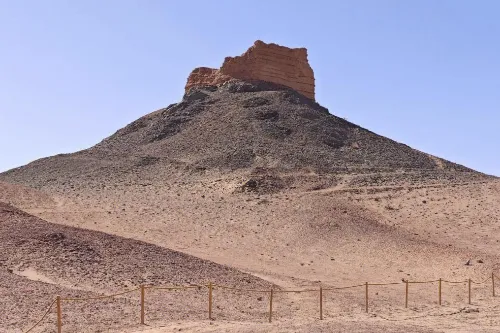
The Yangguan Beacon Tower Ruins stand as the core historical relic of the scenic area. Constructed from rammed earth in the Han Dynasty, it is the best-preserved historic remnant of the Yangguan pass. Situated on high ground in the northern part of the scenic zone, it served as a critical military communication facility in ancient times, sending alerts of enemy invasions through smoke and bonfire signals. It bears witness to frontier defense history dating back to the Han Dynasty and offers tangible evidence of Yangguan’s role as a military stronghold.
Yangguan Museum
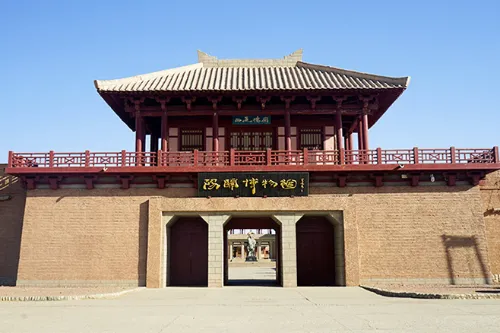
Yangguan Museum is a thematic museum within the scenic area, built in architectural styles replicating Han-dynasty designs. Its collections feature cultural relics, documents, weapons, daily necessities and replica travel permits related to Han-era Yangguan and the Silk Road. Exhibitions systematically outline Yangguan’s historical evolution, military systems, Silk Road commerce and frontier culture, acting as the primary venue for visitors to learn about Yangguan’s history.
Ancient Silk Road Trail Ruins
The Ancient Silk Road Trail Ruins are authentic remnants of the historic Silk Road, located in the central zone of the scenic area. They retain tracks worn by merchants and envoys over thousands of years, surrounded by Gobi terrain and gravel flats that recreate the rugged landscape of westbound Silk Road journeys, allowing visitors to experience the desolate, profound atmosphere of the ancient trade route firsthand.
Restored Yangguan Pass City
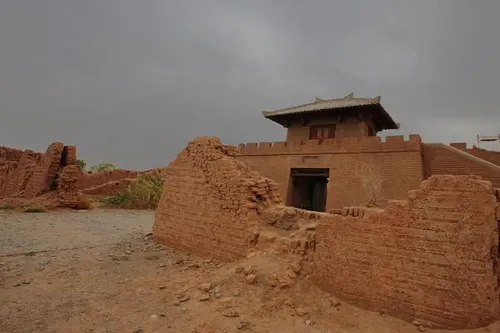
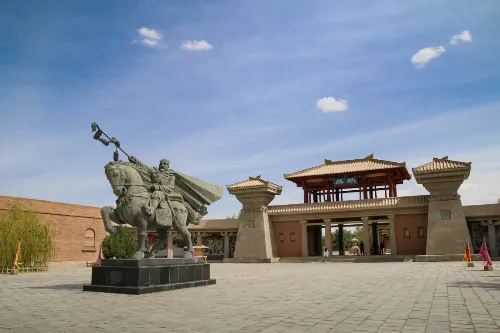
The Restored Yangguan Pass City was reconstructed following Han-dynasty pass city layouts and historical records. It encompasses city gates, walls, commandant’s mansion, barracks and courier stations, recreating the full layout and frontier appearance of Han-era Yangguan Pass and illustrating the military functions and daily life of ancient frontier fortifications.
Nanhu Wetland
Nanhu Wetland lies adjacent to Yangguan Scenic Area, an oasis wetland amid the Gobi fed by Wowachi Lake. Surrounded by water and green vegetation, it forms a stark contrast with the barren desert. It serves as the core natural landscape of Yangguan Scenic Area and the vital water source that sustained ancient Yangguan, boasting both ecological and historical value.

Tour Route
Scenic Area Entrance→Restored Yangguan Pass City→Yangguan Museum→Ancient Silk Road Trail Ruins→Ruins of Yangguan Beacon Tower→Nanhu Wetland→Scenic Area Exit
Travel Tips
- A 2 to 3-hour visit is recommended to fully explore core historical relics and cultural venues
- Prioritize a visit to Yangguan Museum to grasp background history and enhance your sightseeing experience
- Climb the beacon tower relics for panoramic views of the Gobi and ruins, ideal for photography
- Plan a combined itinerary with Yumen Pass and Yardang Geopark to cover classic west-line Dunhuang attractions
- Try Han costume photography and Silk Road cultural souvenir shopping within the scenic area to immerse yourself in frontier cultural vibes
Precautions
- Climbing, carving and touching relics such as the Yangguan beacon tower are prohibited to strictly protect cultural heritage
- The scenic area sits in a Gobi desert region with high summer temperatures and strong ultraviolet rays; adequate sun protection is required
- Some areas within the scenic spot consist of rough Gobi dirt roads; wear comfortable slip-resistant footwear
- Flammable and explosive items are banned from the scenic area; comply with all fire prevention regulations
- Follow guidance from scenic staff and do not venture unaccompanied into undeveloped Gobi zones
Transportation
- Self-driving: Drive southwest from downtown Dunhuang along Provincial Highway S314; total distance roughly 70 kilometers with a 1.5-hour drive, and a parking lot is available at the scenic area
- Tour shuttle buses: Scheduled direct shuttle buses run daily between downtown Dunhuang and Yangguan Scenic Area for round trips
- Charter/shared cars: Charter or share vehicles from downtown Dunhuang, suitable for touring multiple west-line sites in one trip
- Public transit: No direct public buses available; self-driving, tour shuttles or chartered cars are preferred options
Opening Hours
Yangguan Scenic Area operates year-round. Summer hours (April 1 to October 31): 8:00 to 20:00. Winter hours (November 1 to March 31 of the following year): 8:30 to 18:30. Ticket sales stop one hour before closing time. Opening times remain unchanged during public holidays, following the standard schedule.
Ticket Fees
The entry ticket costs 50 yuan per person. You may search for the official WeChat public account "敦煌阳关景区" to obtain the latest updates and information.
Online Booking
Click here to jump to the Trip.com ticketing platform for ticket purchase.