
Nanshan Cultural Tourism Zone in Sanya City is located at the foot of Nanshan Mountain, Yazhou District, Sanya City, Hainan Province. It is a national 5A-level tourist scenic area. With ecological construction as the foundation and Buddhist culture as the core, the scenic area integrates ecological tourism, Buddhist culture, longevity culture, folk customs, etc. The area of the scenic area is 50 square kilometers, of which the sea area is 10 square kilometers. Here, there are magnificent buildings such as the world's first Jade and Gold Avalokiteshvara Bodhisattva statue and the 108-meter-tall Sea Avalokiteshvara Holy Statue, as well as many Buddhist buildings like Nanshan Temple and the Gate of Non-duality. The architectural style combines the characteristics of traditional Chinese architecture and Buddhist culture, possessing great artistic value.
History and Culture
Nanshan Cultural Tourism Zone has a long history and profound cultural heritage. Nanshan Mountain was called Aoshan in ancient times and is a famous mountain in southern Hainan. Since ancient times, Nanshan has been a Buddhist holy land with numerous Buddhist legends and historical sites.
When the famous Buddhist monk Master Jianzhen of the Tang Dynasty made his fifth attempt to cross the sea to Japan, he drifted to Nanshan and stayed here for one and a half years, spreading Buddhist culture. In the Song Dynasty, a temple was built on Nanshan, becoming a holy land for Buddhist believers to worship.
In modern times, Nanshan has been further developed and protected. In 1995, the construction of Nanshan Cultural Tourism Zone began. After years of development, it has become a comprehensive tourist scenic area integrating Buddhist culture, ecological tourism, and leisure vacations.
Main Attractions
Sea Avalokiteshvara Holy Statue
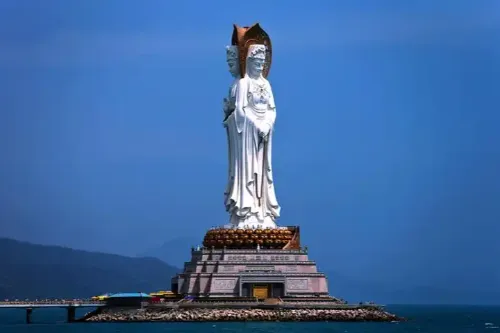
The Sea Avalokiteshvara Holy Statue is 108 meters high, 15 meters taller than the Statue of Liberty, and is the largest Avalokiteshvara statue in the world. The statue is in the form of three-in-one, with one side holding a lotus flower, one side holding a golden book, and one side holding Buddhist beads. It stands on a lotus throne with 108 petals, looking solemnly majestic. The statue broke ground on the 19th day of the ninth lunar month in 1999 and was completed on April 24, 2005.
Nanshan Temple
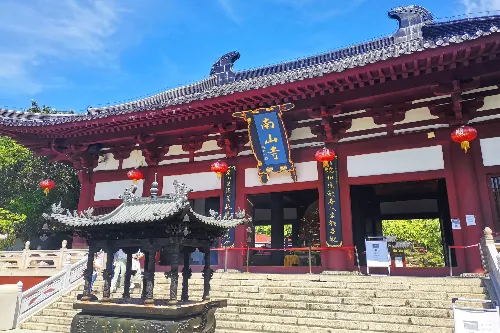
Nanshan Temple is the largest Han Chinese Buddhist temple in southern China. Covering an area of 400 mu, it is in the style of the Tang Dynasty and has buildings such as the Hall of the Two Guardian Kings, the Mahavira Hall, the East and West Side Halls, and the Bell and Drum Towers. The temple buildings are magnificent and solemn, being an important attraction for Buddhist believers to worship and tourists to visit.
Jade and Gold Avalokiteshvara
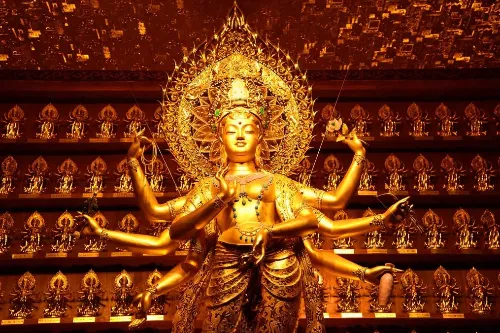
The Jade and Gold Avalokiteshvara consists of four parts: the golden body of Avalokiteshvara, the Buddha's radiance, the Thousand-leaf Treasure Lotus, and the Sumeru base carved from red sandalwood. It is 3.8 meters high and made with more than 100 kilograms of gold, more than 120 carats of South African diamonds, thousands of red and blue sapphires, emeralds, corals, turquoise, pearls, and more than 100 kilograms of jadeite and other rare treasures. It is exquisitely made using traditional Chinese imperial goldsmithing and gemstone inlay techniques, and can be called a rare treasure, known as the "Treasure of the Island."
Gate of Non-duality
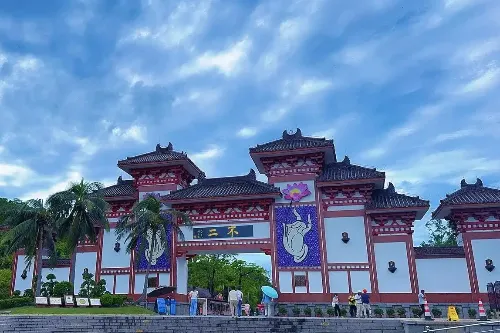
The Gate of Non-duality is the gate landscape of Nanshan Cultural Tourism Zone, with a architectural style of the Southern and Northern Dynasties. It is 20.8 meters high and consists of large-scale buildings in the style of the Tang Dynasty, group sculptures, scripture pillars, stone carvings, reliefs, and gardens. The Gate of Non-duality Square is surrounded by tall kapok trees and bright red kapok flowers. In the square, Sumeru Mountain is built, where many Dharma-protecting heavenly gods reside. After bypassing Sumeru Mountain, you will enter the "Yuantong Scripture Pillar," and around it are group sculptures of the "Eight Classes of Divine and Demonic Beings."
Tour Route
One-day tour route: Enter from the scenic area gate (the Gate of Non-duality). First, visit the Gate of Non-duality Square to understand its architectural style and cultural connotation. Then go to Nanshan Temple and visit buildings such as the Hall of the Two Guardian Kings and the Mahavira Hall to feel the solemnity of Buddhist culture. After that, go to the Sea Avalokiteshvara Holy Statue. You can choose to walk or take an electric vehicle to get there, and worship and take photos at the foot of the statue. Have lunch at the vegetarian restaurant in the scenic area and enjoy Nanshan Vegetarian Food. In the afternoon, go to the Jade and Gold Avalokiteshvara to admire this rare treasure. Finally, you can stroll in the garden landscape of the scenic area, feel the peaceful atmosphere, and leave the scenic area from the gate.
Tour Suggestions
- It is recommended to buy tickets online in advance to avoid queuing at the scenic area gate.
- The scenic area is large, and you can choose to take an electric vehicle for sightseeing. The ticket price for the electric vehicle is 30 yuan per person, which can save physical strength and time.
- When visiting religious places such as temples, pay attention to dressing appropriately and do not wear overly revealing or casual clothes.
- When tasting Nanshan Vegetarian Food, order according to your own taste and appetite to avoid waste.
- When visiting the scenic area in summer, take sun protection measures, such as applying sunscreen, wearing a hat and sunglasses, to prevent sunburn.
Precautions
- When entering religious places such as temples, abide by relevant regulations, do not make loud noises or play around, and respect religious beliefs and customs.
- When visiting the Sea Avalokiteshvara Holy Statue, do not climb or touch the statue to maintain its solemnity and sanctity.
- Smoking is prohibited in the scenic area. Pay attention to protecting the environment and do not litter.
- If you want to take photos in the scenic area, pay attention not to affect other tourists and the progress of religious activities.
- When consuming in the restaurants and shops in the scenic area, check the prices carefully to avoid being overcharged.
Transportation
- Bus: You can take buses such as No. 16, No. 25, and No. 55 and get off at Nanshan Temple Station to reach the scenic area. The bus fare varies from 2 to 10 yuan according to different routes.
- Taxi: Taking a taxi from Sanya City to the scenic area costs about 80-120 yuan, and the specific price may fluctuate according to the driving route and time.
- Self-driving: Starting from Sanya City, go along the G98 Hainan Ring Expressway, get off at the Nanshan exit, and drive according to the signs to reach the scenic area. There is a parking lot in the scenic area, and the parking fee for a small car is 10 yuan per day.
Opening Hours
The opening hours of the scenic area are from 08:00 to 17:00 (admission stops at 16:30). However, during special holidays or events, the opening hours may be adjusted. Tourists can pay attention to the official announcements of the scenic area in advance.
Tickets
The ticket price is 108 yuan per person.
You can search for the official WeChat public account "海南南山文化旅游" on WeChat to get the latest updates or purchase tickets online.
Online Booking
Click here to jump to the Trip.com ticketing platform for ticket purchase.