
Jingting Mountain Scenic Area is located in Xuanzhou District, Xuancheng City, Anhui Province. It is a national 4A-level tourist attraction, a national forest park, and a provincial-level scenic area, as well as a famous historical and cultural mountain in China, known as the "Poetic Mountain of the South of the Yangtze River". The core planned area of the scenic spot is 53.1 square kilometers, consisting of Jingting Mountain, Magu Mountain, the Twin Pagodas Scenic Area and other parts. The main peak stands at 317 meters above sea level, and the forest coverage rate in the scenic area exceeds 95%, boasting an excellent ecological environment. Integrating natural scenery, cultural landscapes, religious culture and poetry culture, Jingting Mountain features beautiful mountains and clear waters, a long cultural heritage and numerous ancient sites. It is home to more than a hundred historical relics including ancient buildings, ruins and cliff carvings, making it a representative cultural and ecological tourist destination in southern Anhui.
History and Culture
The cultural history of Jingting Mountain dates back to the Wei, Jin, Southern and Northern Dynasties. Xie Tiao, a poet of the Southern Qi Dynasty, wrote famous works such as Visiting Jingting Mountain when he served as the governor of Xuancheng, bringing Jingting Mountain into literary history for the first time and laying its cultural foundation. Li Bai, a poet of the Tang Dynasty, climbed Jingting Mountain seven times and composed the eternal quatrain "All birds have flown away high and alone; the last cloud wanders on, carefree and lone. We gaze at each other, never growing tired—only Jingting Mountain and I inspire". This poem made Jingting Mountain famous throughout the country. Later, numerous literati and scholars including Bai Juyi, Du Mu, Han Yu, Liu Yuxi, Su Shi and Huang Tingjian successively visited and wrote poems, leaving thousands of verses in praise of Jingting Mountain, forging its core cultural status as the "Poetic Mountain of the South of the Yangtze River".
Jingting Mountain has a long-standing religious culture and has been a sacred mountain for both Buddhism and Taoism since the Tang Dynasty. Guangjiao Temple on the mountain was first built during the Dazhong reign of the Tang Dynasty, a famous Buddhist temple in the south of the Yangtze River and one of the ancestral temples of the Huangbo Sect. After thousands of years of ups and downs, the reconstructed temple has become the core religious cultural landscape of the scenic area. Historically, dozens of pavilions, terraces, academies and temples were built on Jingting Mountain, which were continuously renovated and expanded by governments and literati of successive dynasties, forming a rich accumulation of ancient architectural remains and culture. In modern times, Jingting Mountain has been systematically protected and developed. It was listed as a provincial-level scenic area in Anhui Province in 1987 and rated as a national AAAA-level tourist attraction in 2009, becoming an important carrier for inheriting Chinese poetry culture and integrating ecological culture and tourism.
Major Attractions
Guangjiao Temple
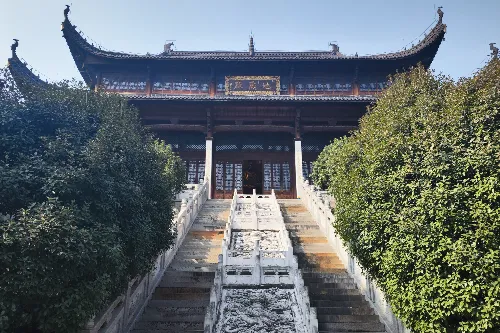
Guangjiao Temple is situated at the southern foot of Jingting Mountain. Founded in 848 AD (the 2nd year of the Dazhong reign of the Tang Dynasty) by the eminent Tang monk Huangbo Xiyun, it is a renowned Buddhist temple in the south of the Yangtze River and the ancestral temple of the Huangbo Sect, once as famous as Jiuhua Mountain, Putuo Mountain and other great temples. The temple has been repaired and expanded many times in the Tang, Song, Yuan, Ming and Qing dynasties. The existing buildings were reconstructed in 2005 in a Tang Dynasty style, covering more than 100 mu. It consists of the Mountain Gate, Heavenly King Hall, Mahavira Hall, Scripture Collection Hall, Guanyin Hall and other structures, with a magnificent momentum. The temple preserves ancient stone inscriptions, Buddha statues and other cultural relics, serving as the core carrier of religious culture on Jingting Mountain.
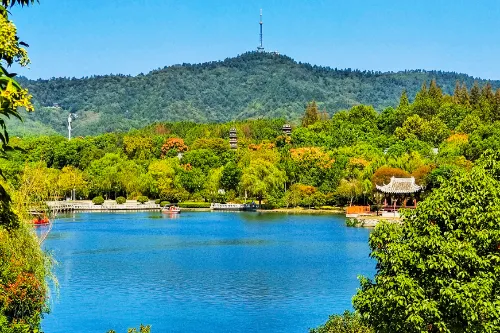
Jingting Lake
Jingting Lake is the core waterscape of Jingting Mountain, with a water area of about 80 mu, surrounding the foot of Jingting Mountain. The lake is clear and green, forming a lovely contrast with the green mountains. Along the lake, there are waterfront walkways, viewing platforms, trestles and other facilities with a total length of about 1.2 kilometers. Visitors can stroll around the lake to enjoy the lake and mountain scenery, making it a popular spot for leisure sightseeing and photography, as well as an iconic area combining ecological landscapes and cultural leisure.
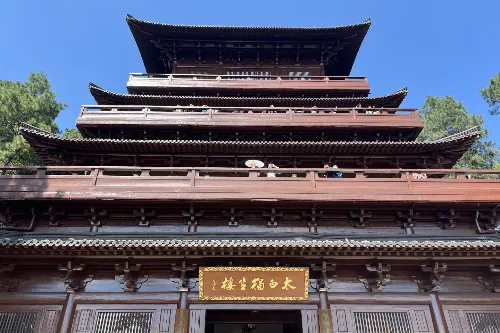
Taibai Sitting Alone Tower
Taibai Sitting Alone Tower is located on the mountainside of the main peak of Jingting Mountain, built in memory of Li Bai's visit to Jingting Mountain. First constructed in the Tang Dynasty, the existing building was rebuilt in 2014, standing 31.7 meters high with five floors in a Tang Dynasty architectural style. The tower displays Li Bai's poems, life stories and calligraphy and paintings of poems praising Jingting Mountain by literati of successive dynasties. Climbing to the top offers a panoramic view of Xuancheng urban area and the whole Jingting Mountain. It is the iconic cultural building of the scenic area and the core spot to experience the culture of the poetic mountain.
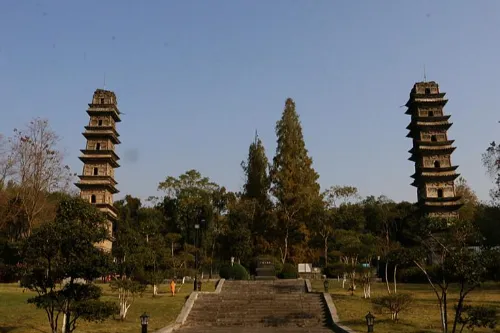
Twin Pagodas of Jingting Mountain
Also known as the Twin Pagodas of Guangjiao Temple, the Twin Pagodas of Jingting Mountain are located beside the ruins of Guangjiao Temple. Built in 1096 AD (the 3rd year of the Shaosheng reign of the Northern Song Dynasty), they are a national key cultural relic protection unit. The twin pagodas are wooden-styled pavilion-style brick pagodas, facing each other from east to west with the same shape, each having seven stories and a height of about 17 meters. The pagodas are carved with Buddha statues and scriptures, being the most complete existing ancient pagodas of the Song Dynasty in southern Anhui with extremely high cultural relic and architectural artistic values.
Acacia Spring
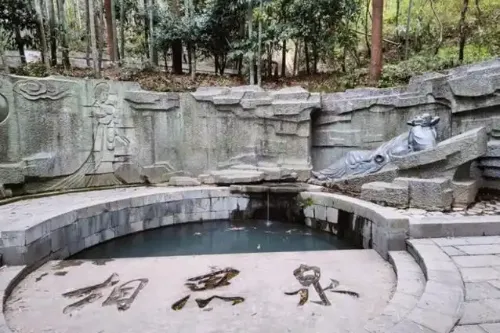
Acacia Spring is a natural mountain spring landscape in the middle of Jingting Mountain. The spring water is clear, sweet and never dries up all year round. Legend has it that it was named after Li Bai's feeling when parting with his friends. Stone railings and stone inscriptions are built beside the spring, surrounded by bamboo forests with a quiet environment. It is a characteristic scenic spot in the area combining natural landscapes and cultural allusions, as well as a good place for tourists to rest and fetch water.
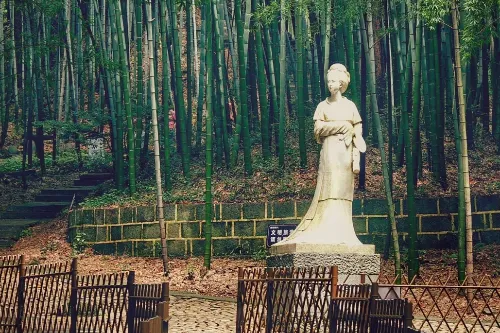
Statue of Princess Yuzhen
The Statue of Princess Yuzhen is located in the core tourist area of Jingting Mountain. It is a white marble sculpture with a height of 3.8 meters, built in memory of Princess Yuzhen of the Tang Dynasty who lived in seclusion on Jingting Mountain. Princess Yuzhen had a close friendship with Li Bai and spent her later years in seclusion here, becoming an important part of Jingting Mountain's cultural history. The statue is surrounded by green plants, blending harmoniously with the natural landscape.
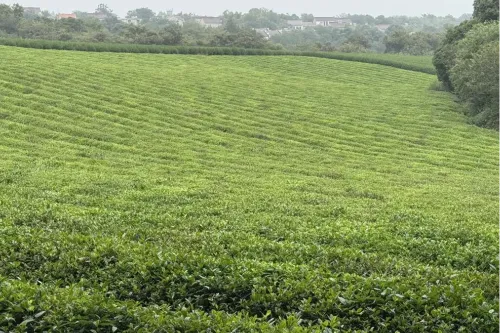
Jingting Mountain Tea Garden
Jingting Mountain Tea Garden is located in the southeast of the scenic area, covering about 200 mu, serving as the core planting area of Jingting Lvxue tea. Jingting Lvxue is a famous historical tea in China and was a tribute tea during the Ming and Qing dynasties. The tea garden is built along the mountain in layers. Visitors can enjoy the tea planting landscape and learn about tea culture, making it a characteristic spot integrating ecological agriculture and tourism.
Tour Routes
The classic full-view tour route of Jingting Mountain is about 5 kilometers long, taking about 3.5 hours on foot: Scenic Area Gate → Jingting Lake → Guangjiao Temple → Twin Pagodas of Jingting Mountain → Acacia Spring → Statue of Princess Yuzhen → Taibai Sitting Alone Tower → Main Peak Viewing Platform → Tea Garden → Scenic Area Exit. The leisure route is about 2.5 kilometers long, taking about 1.5 hours on foot, suitable for the elderly and children: Scenic Area Gate → Jingting Lake → Guangjiao Temple → Acacia Spring → Statue of Princess Yuzhen → Return to the Gate. The in-depth mountaineering route is about 6 kilometers long, taking about 4 hours on foot, allowing visitors to reach the main peak and enjoy the natural scenery and cultural landscapes in all directions.
Travel Tips
- Recommended duration: 3 to 4 hours for full-view tour, 1.5 to 2 hours for leisure tour, 4 to 5 hours for mountaineering tour
- Best visiting seasons: Spring from March to May for flower viewing and outings, autumn from September to November with pleasant climate and beautiful scenery
- Visiting methods: You can choose to walk or take the scenic sightseeing bus
- Cultural experience: Focus on visiting Taibai Sitting Alone Tower and Guangjiao Temple to deeply experience poetry culture and Buddhist culture
- Leisure matching: After the tour, you can experience the tea culture of Jingting Lvxue and taste local specialties of Xuancheng
- Photo spots: Jingting Lake trestle, top floor of Taibai Sitting Alone Tower, Twin Pagodas Square and Acacia Spring are core photo locations
Notes
- It is forbidden to bring flammable, explosive materials, controlled knives and other dangerous goods into the scenic area
- Smoking, picnicking and burning debris are prohibited in the scenic area; strictly abide by forest fire prevention regulations
- Some sections of the mountaineering trails are steep; the elderly and children must be accompanied by family members and pay attention to safety underfoot
- Climbing on cultural relics and ancient sites, carving and smearing are prohibited; protect the ancient buildings and natural vegetation in the scenic area
- Swimming and fishing are prohibited in the scenic area; stay away from dangerous water areas
- Do not feed wild animals; keep a safe distance and maintain the ecological environment
- There are many tourists during holidays; it is recommended to travel at off-peak hours and abide by the visiting order of the scenic area
Transportation
- Public transport: Take Bus No.1, 3, 4 or 6 in Xuancheng urban area to the gate of Jingting Mountain Scenic Area directly
- High-speed rail: After arriving at Xuancheng Railway Station, take a taxi for about 10 minutes with a 3-kilometer ride to the scenic area; after arriving at Xuancheng High-speed Railway Station, take a taxi for about 15 minutes with a 5-kilometer ride to the scenic area
- Self-driving: Navigate to "Jingting Mountain Scenic Area"; the scenic area has a large parking lot with about 500 parking spaces
- Long-distance bus: After getting off at Xuancheng Bus Passenger Station, take Bus No.3 directly to the scenic area, or take a taxi for about 8 minutes
Opening Hours
Peak season (March 1st to November 30th): 8:00 - 17:30, with entry stopping at 17:00. Off-season (December 1st to February 28th of the next year): 8:00 - 17:00, with entry stopping at 16:30. The opening hours of Guangjiao Temple in the scenic area are the same as those of the scenic area, and Taibai Sitting Alone Tower is open from 8:30 to 17:00.
Tickets
Ticket price is 50 yuan per person. You can search the official WeChat account "敬亭山旅游" on WeChat for the latest updates.
Online Booking
Click here to jump to the Trip.com ticketing platform for ticket purchase.