
The Fuxi Temple is located at No. 110 Fuxi Road, Xiguan, Qinzhou District, Tianshui City, Gansu Province. It is a national 4A-level tourist attraction and a key national cultural relic protection unit. It is also the largest, best-preserved, and earliest surviving Ming and Qing dynasties ancestral temple complex in China dedicated exclusively to the worship of Fuxi, the legendary ancestor of the Chinese nation, and is renowned as the "Number One Temple of China." The scenic area covers a total of 35,000 square meters. The ancient architectural complex has undergone multiple renovations, with the surviving core ancient buildings now covering an area of over 6,600 square meters. The overall layout follows a court-style architectural plan facing south, forming a well-organized four-courtyard, four-entry system. It comprises 88 ancient structures of various sizes, with a rigorously symmetrical and well-arranged architectural layout, surrounded by corridors and verandas, and with courtyards progressing layer by layer. The overall complex is magnificent, solemn, and imbued with antique dignity. As the core cultural landmark of the "Hometown of Emperor Fuxi," the Fuxi Temple serves as a sacred site for the preservation of Fuxi culture and for hosting Chinese ancestral root-seeking and worship activities. It bears significant value in tracing the origins of ancient Chinese civilization and in inheriting the culture of the Book of Changes, and it is also a highly representative example of Ming and Qing dynasty ancient architecture in Northwest China.
History and Culture
The construction history of Fuxi Temple can be traced back to the Yuan Dynasty. Its rudiment was first built in 1347, the 7th year of the Zhizheng reign of the Yuan Dynasty, initially a folk shrine for worshipping Fuxi. The Ming Dynasty was a critical period for large-scale construction of Fuxi Temple. From 1483 to 1484, the 19th to 20th year of the Chenghua reign of the Ming Dynasty, the government presided over large-scale expansion and renovation, laying the main layout of the existing temple and formally forming an official ritual venue for worshipping Fuxi.
After taking shape in the Ming Dynasty, Fuxi Temple underwent nine large-scale renovations in the Ming and Qing dynasties. Among them, the ninth renovation from 1885 to 1887, the 11th to 13th year of the Guangxu reign of the Qing Dynasty, was the largest and most complete. It fully finalized the complete layout of four halls and four courtyards, and the main structural pattern of core ancient buildings preserved today basically follows the form of this renovation. In 1963, Fuxi Temple was announced as a Key Cultural Relic Protection Unit of Gansu Province, later upgraded to a National Key Cultural Relic Protection Unit. Around 2021, it was successfully rated a National 4A-level Tourist Attraction, realizing dual upgrading of cultural relic protection and cultural tourism development.
The core cultural essence of Fuxi Temple is rooted in Fuxi Culture. As the birthplace of Fuxi, Tianshui has maintained the folk custom of worshipping Fuxi for thousands of years. As the cultural ancestor of the Chinese nation, Fuxi created the Eight Trigrams, pioneered primitive writing, made nets by knotting ropes, and established marriage systems, ushering in the origin of Huaxia civilization. More than just a ritual building for worshipping ancient sages, Fuxi Temple is a physical carrier of Fuxi Culture. The annual Public Sacrifice Ceremony to Fuxi is an important national folk cultural event, attracting Chinese people at home and overseas to seek roots and worship ancestors, serving as an important bond for the cultural identity of Chinese people worldwide.
Major Scenic Spots
Memorial Archway
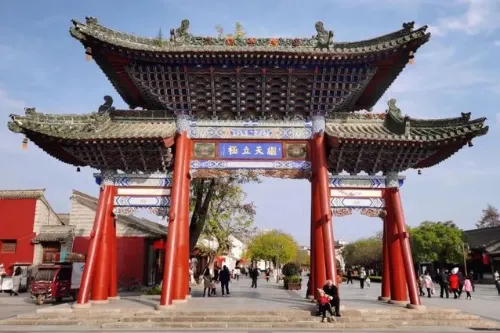
The memorial archway of Fuxi Temple stands at the southernmost end of the scenic area, a landmark front building of the temple adopting the typical stone-and-wood antique archway style of the Ming and Qing dynasties. The archway is simple and grand overall with exquisite carving techniques. Its beams and columns are decorated with traditional relief patterns including dragons, phoenixes, cloud patterns and auspicious beasts, featuring delicate textures and smooth lines, implying blessings of good fortune and lasting cultural heritage. As the first gateway of the scenic area, the archway defines the ritual boundary of the sacrificial space, highlights the solemn and sacred sacrificial atmosphere of Fuxi Temple, and is the first popular check-in spot for tourists entering the scenic area.
Main Gate
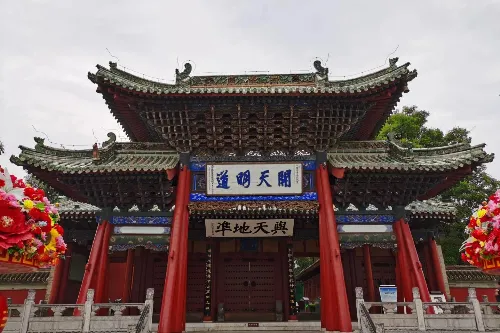
The Main Gate is the primary entrance building of Fuxi Temple, a typical official-style architecture of the Ming Dynasty. Facing south with regular width, it is covered with glazed cylindrical tiles on the roof, with upturned flying eaves presenting a solemn and magnificent look. The building features a stable structure, and its wooden beams and columns retain original craft characteristics of the Ming and Qing dynasties. The door leaves and lintels are decorated in a simple antique style, matching the architectural positioning of ritual ancestral temples. Connecting outer streets and alleys with inner courtyards, the Main Gate acts as the ceremonial entrance of the entire architectural complex, separating secular space from sacrificial space.
Ceremonial Gate
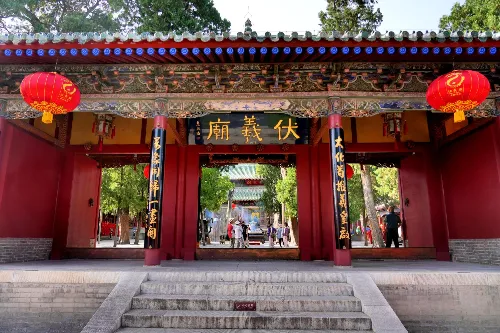
Located to the north of the Main Gate, the Ceremonial Gate is a transitional building of traditional ritual architecture, exclusively used for grand ancient sacrificial ceremonies and official pilgrimages. During daily visits, tourists mostly pass through side gates, while the central gate is opened only for major sacrificial activities to embody the solemn hierarchy of sacrificial rituals. The Ceremonial Gate features an exquisite architectural form unified with the overall style of the temple compound. It links the front courtyard and leads to the main hall area, perfecting the progressive spatial layout of the temple.
Xiantian Hall
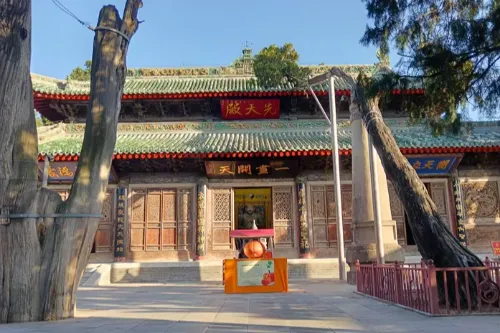
Xiantian Hall is the core main hall and central building of Fuxi Temple, as well as the key venue housing the sacred statue of Fuxi. First built in the Ming Dynasty and fully preserved after renovations in the Qing Dynasty, it is a seven-bay hall with a double-eaved hip-and-gable roof covered with glazed tiles. It boasts thick and grand beams, exquisite painted beams and gorgeous color paintings, ranking among the best-preserved main halls of Ming ancestral temples in Northwest China. A giant painted clay sitting statue of Fuxi with solemn and serene looks stands in the center of the hall, reproducing the classic image of the cultural ancestor. Color paintings and inscriptions left over successive dynasties on the walls and beams carry profound historical and cultural heritage, making it the core spot for tourists to pay homage and experience Fuxi Culture. A broad platform lies in front of the hall, serving as the venue for ancient sacrificial kowtows and rituals.
Taiji Hall
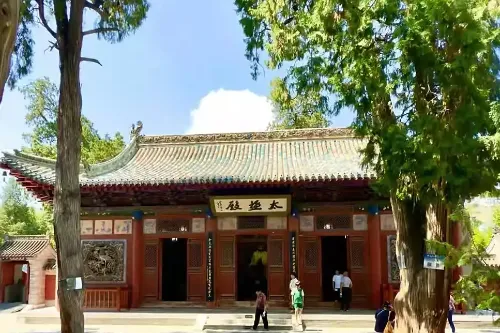
Taiji Hall stands to the north of Xiantian Hall as the rear hall of Fuxi Temple. Its architectural scale is smaller than Xiantian Hall with regular width layout and an elegant yet solemn style, forming a primary-secondary layout echoing the main hall. Taiji Hall is mainly used for supporting sacrificial rituals and displaying relevant cultural exhibits. It showcases historical materials and relics related to Fuxi’s Eight Trigrams culture and ancient prehistoric civilization, systematically sorting out Fuxi’s feats of inventing the Eight Trigrams and pioneering civilization. It is an important venue for tourists to gain in-depth understanding of Fuxi Culture and Yi learning culture.
Ancient Cypress Grove
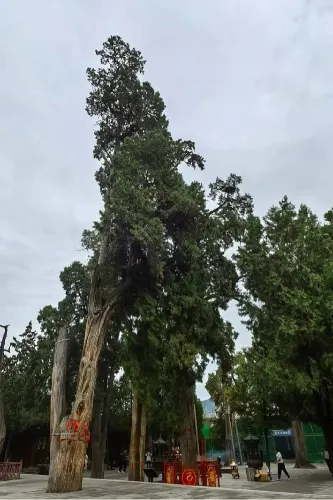
Multiple thousand-year-old cypresses are preserved in the courtyards of Fuxi Temple, all planted in the Ming and Qing dynasties. After hundreds of years of wind and rain, they remain luxuriant, sturdy and upright. Scattered on both sides of the platform in front of Xiantian Hall and along courtyard corridors, the ancient cypresses feature primitive and vigorous shapes, setting off the ancient buildings and creating a quiet and solemn atmosphere. The ancient cypresses are living witnesses to the vicissitudes of Fuxi Temple, and also a distinctive natural and cultural landscape of the scenic area, adding profound traces of time to the ancient temple.
Stele Pavilions and Forest of Steles
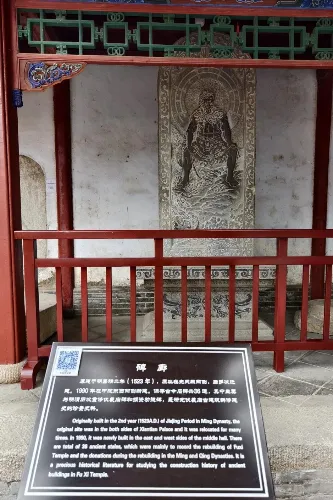
Many stele pavilions and forest of steles are distributed across the courtyards of the scenic area, preserving dozens of stone steles dating from the Yuan, Ming, Qing dynasties to modern times, including records of temple reconstructions, sacrificial poems, inscriptions by celebrities of past dynasties, and historical steles recording Fuxi Culture. The inscriptions detail the construction and renovation history of Fuxi Temple, ritual traditions of worshipping Fuxi through ages, and nostalgic sentiments of literati, serving as precious physical historical materials for researching the history of Fuxi Temple, ancient architecture history of Northwest China and folk customs of Fuxi worship.
Tour Route
Scenic Area Entrance Memorial Archway → Main Gate → Ceremonial Gate → Ancient Cypress Landscape Area in Front Courtyard → Stele Pavilions and Forest of Steles → Xiantian Hall (Main Hall) → Front Platform → Taiji Hall → Rear Courtyard Cultural Exhibition Area → Scenic Area Exit
Tour Suggestions
- A visiting duration of 2 to 3 hours is recommended to tour all scenic spots thoroughly, gain a detailed understanding of Fuxi Culture and ancient architectural features, and avoid superficial sightseeing.
- The scenic area is suitable for visits all year round. The Public Sacrifice Ceremony to Fuxi is held around the 13th day of the fifth lunar month every year with strong festival vibes, allowing visitors to experience traditional ancestor worship customs; spring and autumn boast pleasant weather ideal for sightseeing.
- Prioritize visiting core venues such as Xiantian Hall and Taiji Hall, and learn about the temple’s history via stele inscriptions to deeply absorb the cultural connotation of the Chinese cultural ancestor.
- It is advised to take guided tours, either with human tour guides or scan QR codes for audio guides, to accurately learn about ancient architectural craftsmanship and allusions of Fuxi Culture and enhance your travel experience.
- Take a slow pace during your visit. The quiet courtyards of the scenic area are perfect for quietly admiring ancient architectural details and the ancient cypress landscape to immerse yourself in traditional cultural atmosphere.
Notes
- The scenic area is a cultural relic protection unit and a ritual worship venue. Touching ancient architectural components, stone steles, statues and other cultural relics, as well as carving, graffiti and climbing ancient buildings are prohibited throughout the site.
- The ancient cypresses in the compound are ancient and famous trees. Breaking branches, shaking trunks and treading vegetation are forbidden. Please consciously protect the natural and cultural landscapes of the scenic area.
- Loud talking, chasing and horseplay are banned inside the scenic area to maintain a quiet and solemn atmosphere for visiting and worship, and show respect to traditional cultural etiquette.
- Open flames and flammable and explosive articles are forbidden to be brought into the scenic area, and smoking is banned within the compound to eliminate fire hazards.
- Aerial photography with drones is prohibited. Flash photography is not allowed inside core halls to prevent damage to cultural relic color paintings and statues.
- Please strictly abide by the opening hours of the scenic area. Ticket checking stops at 17:30; do not stay beyond closing time and follow the management of scenic staff.
- The scenic area receives large crowds during holidays and sacrificial ceremonies. Off-peak travel is recommended. Please follow on-site order for orderly touring and worship.
Transportation
- Public Transport: Take bus No.5, 7, 21, 22, 24 and other bus lines in Tianshui City to Fuxi Temple Bus Stop, then walk directly to the scenic entrance with convenient transport access.
- Self-driving: Navigate to "Tianshui Fuxi Temple Scenic Area Parking Lot". Exclusive parking spaces are available around the scenic area for self-driving tourists, and road conditions within the urban area are smooth.
- Intercity Transport: Out-of-town tourists can arrive at Tianshui Railway Station or Tianshainan Railway Station, then transfer to city buses, taxis or online car-hailing services for a direct trip to the scenic area with convenient travel time.
Opening Hours
Tianshui Fuxi Temple opens all year round. Daily opening hours are 08:00 – 18:00, with ticket entry stopped at 17:30 every day. There are no regular closed days. It opens normally during legal holidays and folk sacrificial activities, and entry rules and tour routes may be slightly adjusted during some festivals according to activity demands.
Ticket Fee
Ticket price: 20 RMB per person. Search the official WeChat public account "天水智慧旅游" for the latest updates.
Online Booking
Click here to jump to the Trip.com ticketing platform for ticket purchase.