
Taohuayuan Scenic Area is located 34 kilometers southwest of Changde City, Hunan Province, covering a total area of 157.55 square kilometers, among which the core scenic area is about 12 square kilometers. As a national 5A-level tourist attraction, it is also a Major Historical and Cultural Site Protected at the National Level, a National Forest Park, and a National Scenic Area. Integrating the beauty of landscapes and idyllic countryside, the grandeur of temples, pavilions and terraces, the richness of poems, essays and inscriptions, and the wonder of historical legends, it bears profound cultural heritage. Ancient trees and tall bamboos are scattered all over the scenic area, with the Yuanjiang River flowing through it. The interdependent mountains and rivers, along with the charming scenery, perfectly reproduce the wonderful artistic conception of "fresh fragrant grasses and falling blossoms in riotous profusion" depicted in The Peach Blossom Spring by Tao Yuanming.
History and Culture
Taohuayuan has a long history dating back 6,000 to 7,000 years, when primitive ancestors lived and multiplied here. Its administrative setup has undergone numerous changes over the course of history. During the Xia and Shang dynasties, it belonged to the ancient Baipu tribe; in the Zhou Dynasty, it was part of Qianzhong; after Emperor Qin Shi Huang unified the six kingdoms, it remained under the jurisdiction of Qianzhong Commandery. In the early Western Han Dynasty, it was placed under the jurisdiction of Linyuan County in Wuling Commandery and was then named Wutou Village.
In the 24th year of the Jianwu reign in the Eastern Han Dynasty (48 AD), General Fubo Ma Yuan stationed his troops here during his southern campaign. Relics such as "Ma Yuan's Stone Chamber" and "Camp Islet" still remain nearby. When his soldiers were afflicted by a plague, local villagers offered "Sansheng Soup" (Leicha) to cure them, and the custom of drinking Leicha has been passed down to this day.
In the Jin Dynasty, the first building here, "Taoyuan Temple", was constructed. In the 2nd year of the Yongchu reign in the Liu Song Dynasty of the Southern and Northern Dynasties (421 AD), Tao Yuanming, the great poet of the Eastern Jin Dynasty, wrote Poem on the Peach Blossom Spring with a Preface, depicting an ideal land of peace and prosperity. Since then, Taohuayuan has gained widespread fame.
In the Tang Dynasty, the scenic area was protected and developed. The Taoyuan Temple was rebuilt in the early Tang Dynasty. In the 2nd year of the Jianzhong reign (781 AD), the architectural complex took initial shape and the boundary of the mountain was defined. In the early years of the Yuanhe reign in the Tang Dynasty (807 AD), Liu Yuxi wrote the inscription "Splendid Scenery of Taoyuan" and erected a stele after visiting the area. Many renowned poets and writers of the Tang Dynasty left poems and essays about Taohuayuan.
The Song Dynasty witnessed the heyday of Taohuayuan, which underwent large-scale development and restoration. In the 1st year of the Qiande reign of Emperor Taizu of the Song Dynasty (963 AD), the imperial court separated the areas on both banks of the middle and lower reaches of the Yuanjiang River from Wuling County and established Taoyuan County, a name that has been retained to this day. In the 1st year of the Zhenghe reign (1111 AD), the Taichuan Palace was built, and later Emperor Huizong of the Song Dynasty personally bestowed upon it the plaque "Taichuan Longevity Palace". Throughout the Song Dynasty, numerous poets and ci writers created poems, ci poems and prose works here.
During the reign of Emperor Shun of the Yuan Dynasty, Taohuayuan was destroyed in wars. Although restoration work was carried out in the Ming and Qing dynasties, it never regained the prosperity it enjoyed in the Tang and Song dynasties. Even so, many poets and government officials of the Ming and Qing dynasties still left their literary works here.
After the founding of the People's Republic of China, the Party and the government attached great importance to the protection, restoration and development of Taohuayuan. In January 1959, the People's Committee of Hunan Province designated Taohuayuan as a Key Cultural Relic Protection Unit of Hunan Province. In March 1964, the Taohuayuan Cultural Relic Administration Institute was established. In 1987, the People's Government of Hunan Province listed Taohuayuan as a Provincial Scenic Area. In June 1992, Taohuayuan was rated as a National Forest Park. In March 1995, Jiang Zemin, the former President of the People's Republic of China, inspected Taohuayuan and wrote an inscription as a souvenir.
In 2011, Taohuayuan was placed under the direct administration of Changde City and underwent a series of upgrading and renovation projects. It reopened to the public on September 22, 2017, and successfully upgraded to a national 5A-level tourist attraction in 2020.
Major Attractions
Ten-Thousand-Mu Peach Grove
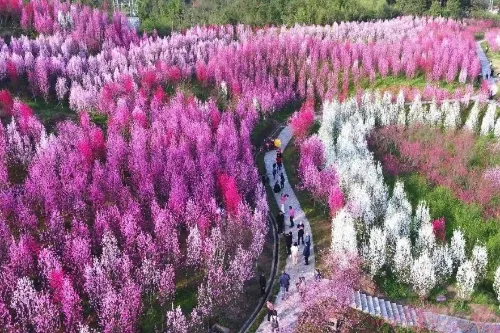
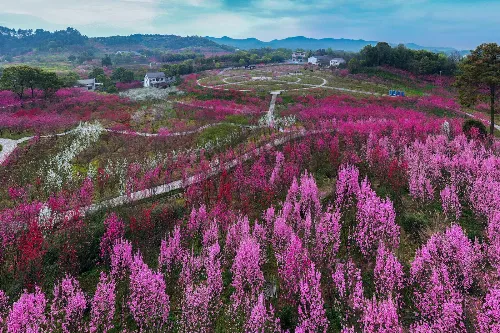
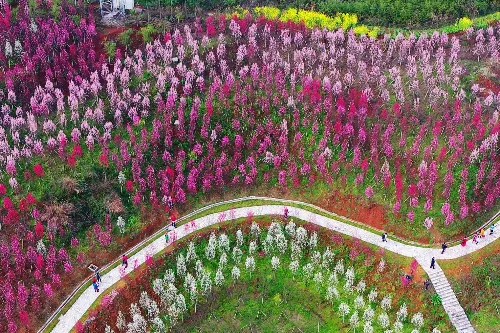
Located at Taoxian Ridge in the north of the main scenic area, the Ten-Thousand-Mu Peach Grove serves as a world peach grove expo garden, gathering more than 100 peach tree varieties from all over the world. Wandering in it, visitors feel as if they are in a sea of peach blossoms. Meanwhile, romantic love legends passed down here add a unique charm to the peach grove.
Peach Blossom Mountain
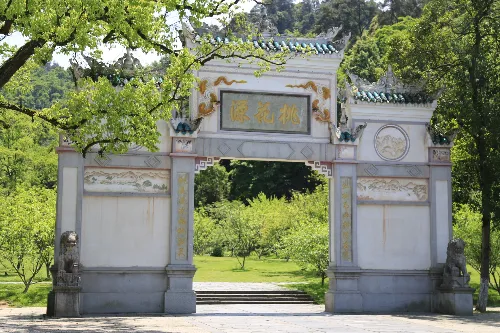
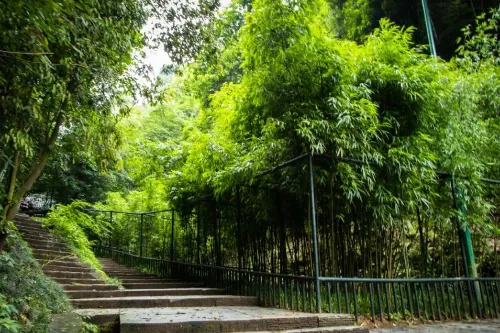
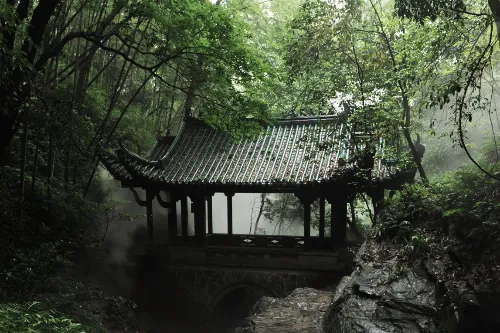
Also known as "Master Tao's Mountain", Peach Blossom Mountain is a place to commemorate and experience the artistic conception of Tao Yuanming's The Peach Blossom Spring. It gathers 15 Major Historical and Cultural Sites Protected at the National Level and 1 Key Cultural Relic Protection Unit at the Provincial Level, boasting extremely profound cultural deposits.
Since the Tang Dynasty, ancient buildings have been built along the mountain in an orderly manner. Countless poems, couplets and inscriptions left by literati of past dynasties have embodied the spiritual core of the poetry culture, literati culture and hermit culture derived from The Peach Blossom Spring, strongly confirming Taohuayuan's status as the prototype of the ideal land of peace and prosperity.
Taoyuan Mountain
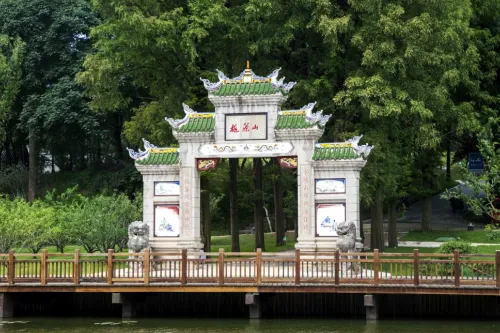
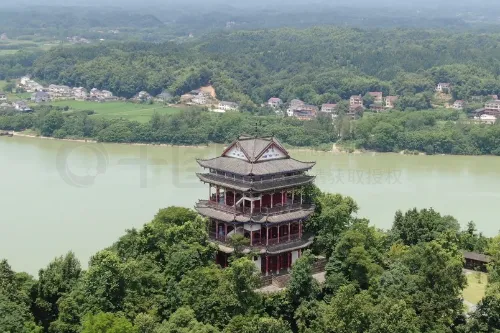
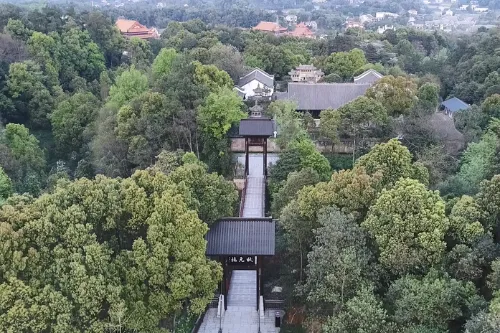
Located on the bank of the Yuanjiang River, Taoyuan Mountain has been a sacred place and cultural center of Taoism since the Eastern Jin Dynasty, and is the origin of Taohuayuan as a "blessed land of caves". Du Guangting, a Taoist priest in the late Tang and Five Dynasties, recorded in Blessed Lands of Caves: "The 35th cave, Taoyuan Mountain, covers a circumference of 70 li and is named the Land of White Horse and Mysterious Light, located in Wuling County of Langzhou."
The magnificent architectural complexes in the mountain, such as the Shuifu Pavilion, Taichuan Longevity Palace and Taichuan Academy, showcase the unique charm of Taoist culture.
Wuliu Lake
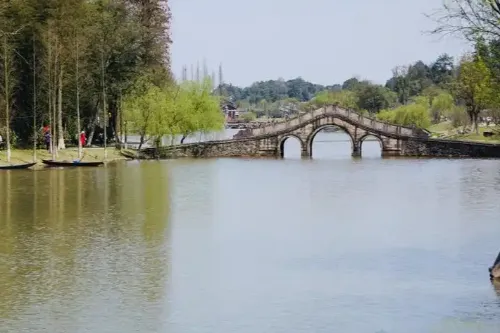
Named after Tao Yuanming's courtesy name "Mr. Wuliu", Wuliu Lake is situated between Peach Blossom Mountain and Taoyuan Mountain, and can be called the "open-air cultural living room" of the Taohuayuan tourist area. The shimmering lake and mist-shrouded mountains, together with the folk houses on both banks, set off each other, fully displaying the idyllic charm.
Cultural attractions such as the Taoyuan Arts and Crafts Museum, Liu Yuxi's Humble Cottage and the stele inscribed with "Splendid Scenery of Taoyuan" by him are all gathered here, bringing visitors a rich cultural experience.
Qin Stream
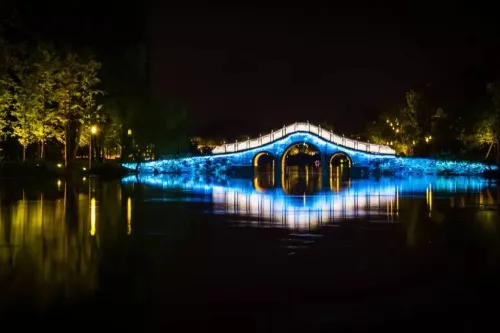
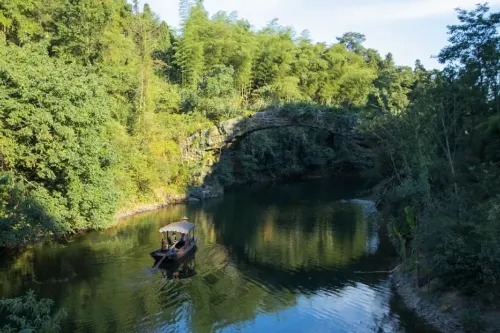
Also known as Shui Stream, Qin Stream is an important tributary of the Yuanjiang River, and is said to be the only way for the fisherman from Wuling to enter Taohuayuan. The winding water surface of Qin Stream, lined with green bamboos and peach blossoms on both banks, presents a natural and primitive scenery.
During the day, visitors can take boats on Qin Stream, imagining themselves as the fisherman from Wuling to explore the traces of the ideal land. At night, Qin Stream turns into a "river theater", staging the large-scale real-scene landscape performance The Peach Blossom Spring. Through 18 scenes of idyllic farming life and production, the performance vividly reproduces the ideal land depicted by Tao Yuanming.
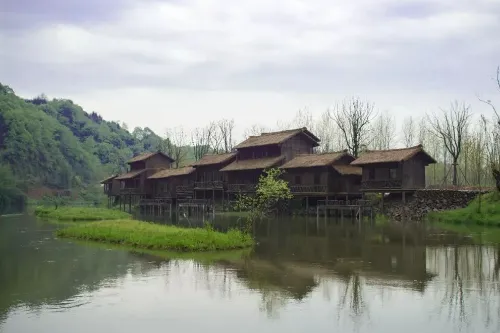
Qin Valley
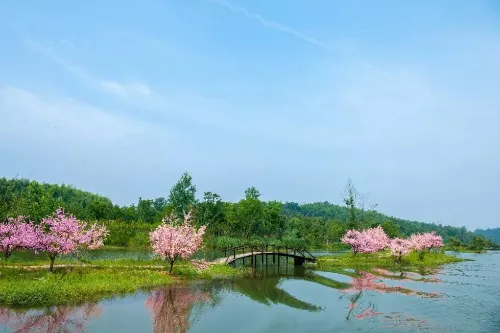
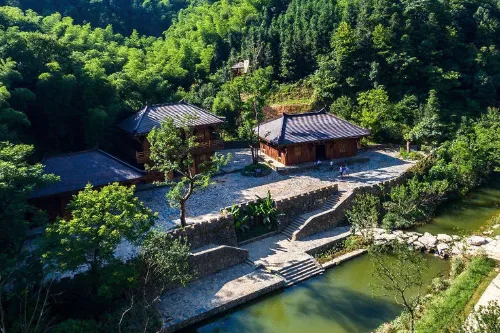
Stretching about 3.7 kilometers long, Qin Valley is adjacent to Qin Stream in the south and Peach Blossom Mountain in the north. Based on the rural society under the idyllic farming culture, it perfectly presents the scene described in The Peach Blossom Spring: "The land was flat and broad, with neat houses and fertile fields, beautiful pools, mulberry trees and bamboos scattered around. The paths crisscrossed, and the barking of dogs and crowing of chickens could be heard everywhere."
Visitors can experience a self-sufficient, peaceful and quiet idyllic life here, and feel the ideal life of a land of peace and prosperity that the Chinese people have long dreamed of.
Recommended Travel Routes
One-Day Tour Route: Start from the Taohuayuan Tourist Center and take the No. ① Regional Shuttle Bus to Wuliu Town. First, tour Wuliu Town to experience its unique charm, and you can visit the Historical and Cultural Experience Hall and the Leicha Experience Hall. Then head to Wuliu Lake to enjoy the beautiful lake and mountain scenery, and visit attractions such as the Humble Cottage. Afterwards, enter Peach Blossom Mountain and visit the Peach Blossom Mountain Archway, Chrysanthemum Garden, Stele Corridor, Square Bamboo Pavilion, Immortal-Meeting Bridge, Taoyuan Temple and Ma Ji Exhibition Hall in sequence. Later, go to Taoyuan Mountain to visit the Taoyuan Arts and Crafts Museum, the Hundred Beds Museum, Taichuan Academy, Zhuangyuan Bridge and Shuifu Pavilion. You can also overlook Bailin Islet to admire the stunning scenery of "Fisherman's Village at Sunset". If time allows, watch the large-scale stream cruising real-scene performance The Peach Blossom Spring after dinner. There is a long walking distance for the whole trip, and you can choose to take the scenic spot shuttle bus according to your physical condition.
Two-Day Tour Route: On the morning of the first day, visit the Ancient Town of Taohuayuan. After lunch, go to Wuliu Town and take a boat tour on Qin Stream. Alternatively, take the No. 2 free shuttle bus from the tourist center to the entrance of Qin Valley, then enter Qin Valley via the Tang Poetry Bridge Wharf to experience the idyllic life. Watch the real-scene performance The Peach Blossom Spring at night. On the second day, after breakfast, visit Wuliu Town and Wuliu Lake, then enter Peach Blossom Mountain and proceed to Taichuan Longevity Palace. Return home in the afternoon. The two-day trip is relatively relaxing, allowing you to experience the charm of the scenic area in a more in-depth way.
Travel Tips
- Spring (March - April) is the best time to appreciate peach blossoms. During this period, peach blossoms are in full bloom all over the scenic area, presenting a fascinating sight. It is advisable to check the peach blossom blooming period in advance to choose the optimal viewing time.
- Given the large area of the scenic area, it is recommended to wear comfortable sports shoes for convenient walking during the visit.
- Arrive half an hour early when going to watch the real-scene performance The Peach Blossom Spring to get a better viewing spot. Since the performance is held outdoors, the scenic area will provide raincoats in case of rain.
- When tasting Leicha, you can ask the shopkeeper about its production process and cultural connotation to enhance your travel pleasure.
Notes
- Smoking and open flames are strictly prohibited in the scenic area. Please pay attention to forest fire prevention.
- Protect the cultural relics, historical sites and natural environment in the scenic area. Do not scribble or damage them arbitrarily.
- When boating on Qin Stream, follow the instructions of the staff and wear a life jacket to ensure safety.
- The scenic area is crowded during the peak tourist season. Please book tickets and accommodation in advance to avoid delaying your trip.
- Some projects in the scenic area require additional fees. You can check the detailed charging standards before visiting.
Transportation
- By Bus: Multiple bus stations in Changde City operate regular bus services to Taohuayuan Scenic Area. Changde Central Bus Station has many departures to the scenic area every day, with a travel time of about 1 hour.
- By Self-Driving: Depart from downtown Changde, drive along the Hangrui Expressway, exit at the Taohuayuan Interchange, and then follow the navigation instructions to the scenic area. The whole journey takes about 40 minutes. The scenic area has a parking lot, with the parking fee of 10 yuan per trip for small vehicles, 15 yuan per trip for medium-sized vehicles and 20 yuan per trip for large vehicles.
Opening Hours
The scenic area is open from 7:30 to 17:30. It is recommended that visitors arrange their travel time reasonably and arrive at the scenic area before the admission closure time to fully visit all attractions. Please note that the opening hours of some attractions or projects in the scenic area may be adjusted. For the latest information, you can check the official website of the scenic area or consult the tourist center.
Tickets
The ticket price is 88 yuan per person.
You can search for the official WeChat official account "中国桃花源" to get the latest updates or buy tickets online.
Online Booking
Click here to jump to the Trip.com ticketing platform for ticket purchase.