
The Kongtong Mountain Scenic Area is located in Kongtong District, Pingliang City, Gansu Province. It is a National 5A Tourist Attraction, a National Geopark, a National Nature Reserve, a National Key Scenic Area, and also one of the birthplaces of Taoism in China. The total planning area of the scenic area is 84 square kilometers, with an altitude ranging from 1456 to 2123.5 meters, a vertical height of 667.5 meters, and the main peak at 2123 meters. The scenic area features typical Danxia landforms, with a forest coverage rate of over 95%. Its peaks stand majestically, cliffs tower high, forests stretch endlessly, shrouded in mist and clouds, streams and clear springs flow, like an ethereal fairyland. It is both as grand as northern mountains and as beautiful as southern landscapes. The scenic area also has numerous ancient buildings, basically restoring the forty-two building complexes in the historically known "Nine Palaces, Eight Platforms, Twelve Courtyards".
Historical and Cultural Background
Kongtong Mountain is said to be the retreat place of the Taoist immortal Guangchengzi, known as the "First Mountain of Taoism in the World". After the Yellow Emperor, the ancestor of the Chinese nation, defeated Chi You, he came here to consult Guangchengzi on governance and health preservation. From the Yellow Emperor's question to the Heavenly Masters, Qin Shi Huang, Han Wu Di, Emperor Taizong of Tang, Emperor Chengzu of Ming, and many other emperors have visited Kongtong Mountain, either to seek immortals and ask for advice, or to hold enfeoffment ceremonies. During the Qin and Han dynasties, Kongtong Mountain was a must-pass on the ancient Silk Road - the Jitou Road. After the unification of the Sui Dynasty, monks and Taoist priests successively founded temples and palaces. During the Tang Dynasty, Chan master Renzhi built the Xuanyuan Palace, Shuhua Temple and other temples, Taoist temples, and pagoda courtyards on Kongtong Mountain. Emperor Chengzu of Ming Zhu Di inscribed a monument on Kongtong Mountain, ordering the protection of temples and Taoist temples, making Kongtong Mountain the royal Taoist center in northern China during the Ming Dynasty. Here also has the historical culture of the integration of Confucianism, Buddhism, and Taoism, and many literati and poets have left many poems for it.
Main Attractions
Huangcheng (Imperial City)
Huangcheng (Taihe Palace) is located on the main peak Mazaoshan of Kongtong Mountain. It is the main building of Taoism in the whole mountain and also the most complete group of Ming Dynasty buildings preserved in Kongtong Mountain. There are eight main halls including Lingguan Hall and Taibai Hall, covering an area of about 200 square meters. The architectural style is "Palace on Palace, Hall in Hall, Treasury behind Hall".
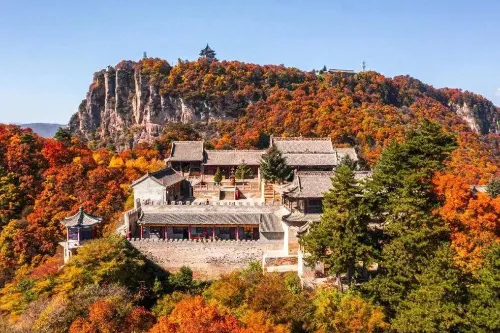
Jade Emperor Tower
The Jade Emperor Tower is located behind the Zhenwu Hall, also known as the Lingxiao Hall. It enshrines the Jade Emperor, the supreme ruler of Taoism, with golden boys and jade girls on both sides, and four standing hall gods. On the mountain walls, there are murals of the Big Dipper and the Southern Dipper who control life and death.
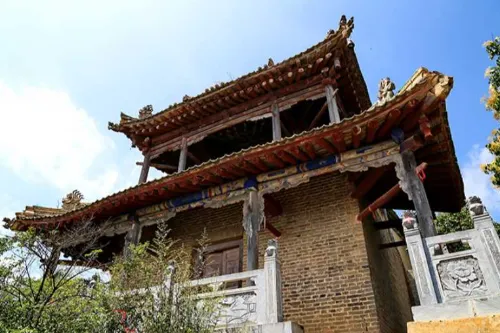
Chessboard Ridge
Also known as Tieqiping, Chessboard Ridge is located at the bottom of the Leisheng Peak architectural complex, facing Danzheng Gorge. Named after the legend of Guangchengzi and Chisongzi playing chess here, it is a three-sided (overhanging) platform covering about 360 square meters, with millennium-old giant pine trees at its center and the Sansheng Hall and Bodhisattva Hall.
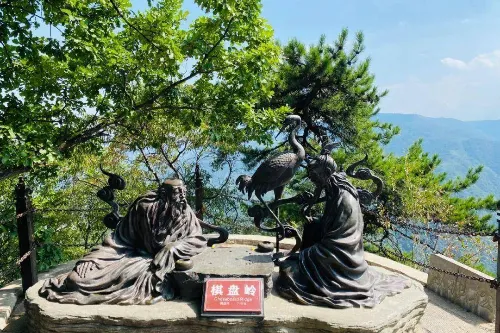
Mo Zhen Guan (Needle Grinding Temple)
Mo Zhen Guan is located above the Lanyun Pavilion. It was first built during the Jiajing period of the Ming Dynasty. It is a hexagonal double-eaved brick and stone structure, and one of the better-preserved Ming Dynasty buildings on the mountain. It is a place to commemorate the successful cultivation of Wuliang Zushi (Unlimited Ancestor) by Liushan Laomu (Mother of the Liushan Mountain). It is also one of the best places to overlook the eastern and central landscapes of the Kongtong Mountain Scenic Area.
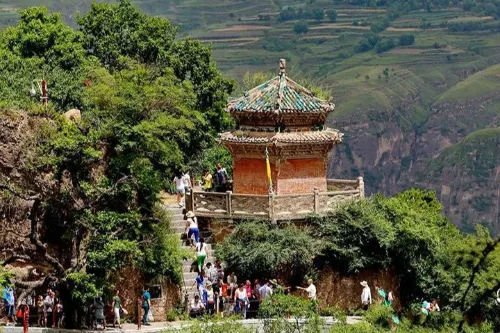
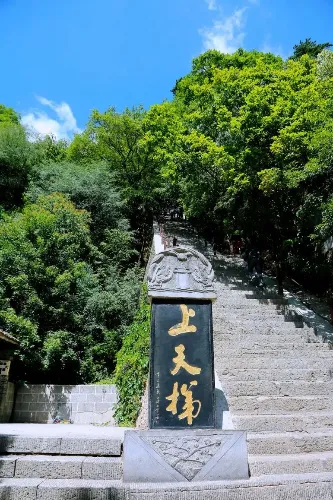
Upper Ladder
The Upper Ladder was built during the Zhenguan period of the Tang Dynasty and was hosted by Chan master Renzhi. It is the only way to climb to the top of the mountain. Stone cliffs stand on both sides, with stone steps built in the middle. It is more than 80 meters long, about 2.5 meters wide, with more than 369 steps. The slope is divided into three sections: 45 degrees, 65 degrees, and 75 degrees. Iron pillars and chains protect the dangerous parts of the mountain path. On the middle section of the cliff, there is an inscription of "The Place Where the Yellow Emperor Asked Questions".
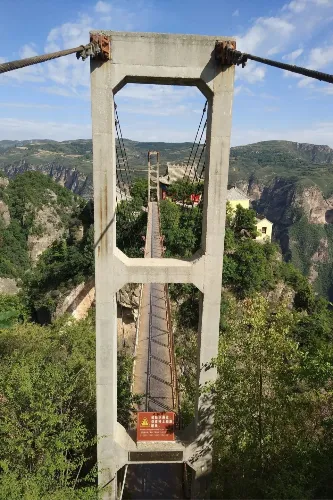
Through Sky Bridge
Facing the Lion Ridge in the south, it is a suspended iron cable cable-stayed bridge leading to the Tiantai Mountain. The bridge is 74 meters long, with the bridge deck more than 100 meters above the abyss. It connects Tiantai Mountain and Lion Ridge. Tiantai Mountain is surrounded by cliffs, extremely dangerous, rarely visited by people. In ancient times, this scene was called "Lion Looking at Tiantai Mountain".
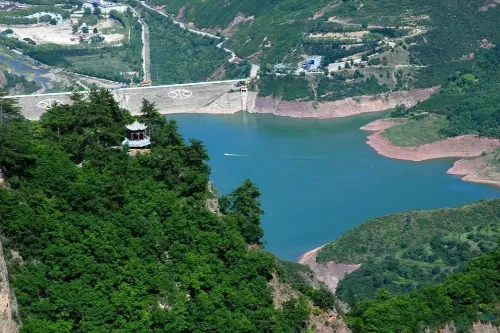
Dan Zheng Lake
It is named because there are often sounds of playing the Zheng (a plucked zither) in the canyon where it is located. Dan Zheng Lake is located below the Kongtong Mountain Scenic Area, surrounded by mountains on three sides and a reservoir dam on one side, with beautiful scenery. The cable car to Kongtong Mountain passes over Dan Zheng Lake.
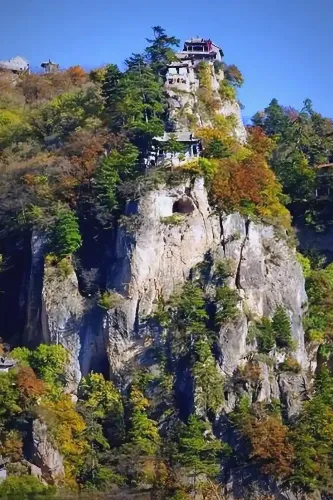
Leisheng Peak
Famous for its steepness, the building complex is built along the ridge, shaped like a wandering dragon. It has the reputation of "a unique view of Kongtong Mountain". It is a model of the perfect combination of Taoist architecture and natural landscapes.
Middle Platform
Located in the center of the entire Kongtong Mountain, with the highest point at 1927 meters above sea level. In ancient times, it was a huge and magnificent architectural complex, with trees and flowers planted everywhere, and the most prosperous.
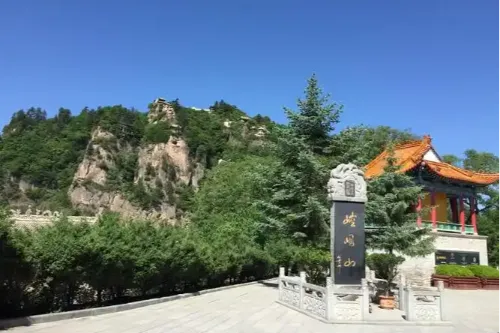
Tour Routes
You can start from Kongtong Ancient Town, take the scenic area transportation or cableway to reach the Middle Platform, then visit the Upper Ladder, Huangcheng, Jade Emperor Tower and other attractions in turn, then go to Leisheng Peak, Mo Zhen Guan, and finally to Chessboard Ridge. After enjoying the beautiful scenery, return along the original route or choose other downhill routes. If you have time, you can also go to Dan Zheng Gorge, Yan Zhi Gorge and other scenic areas to wander around.
Travel Suggestions
- Understand the opening hours and ticket policies of the scenic area in advance and arrange your itinerary reasonably.
- Prepare comfortable sports shoes to make the mountain climbing process more relaxed.
- Bring clothes according to the weather conditions, as the temperature on the mountain may be lower than that at the foot of the mountain.
- If time permits, you can choose to stay in the scenic area for a longer period of time to slowly feel its cultural atmosphere and natural scenery.
Notes
- Comply with the regulations of the scenic area and do not arbitrarily damage the environment and cultural relics.
- During the mountain climbing process, pay attention to safety and follow the guidance of signs and staff.
- Some areas in the scenic area may have weak signals. Inform your family or friends of your itinerary in advance.
- During the peak tourist season, there are many tourists in the scenic area. Please take good care of your personal belongings and pay attention to personal safety.
Transportation
- Self-driving: Starting from Xi'an, take the Fuyin Expressway for 3 hours to get off at the Pingliang West Exit, then drive 2 kilometers west along Kongtong Avenue to reach the destination; starting from Lanzhou, take the Qinglan Expressway for 3 hours to get off at the Pingliang West Exit, then drive 2 kilometers west along Kongtong Avenue to reach the destination; starting from Yinchuan, take the Jingzang Expressway and transfer to the Fuyin Expressway for 3.5 hours to get off at the Pingliang West Exit, then drive 2 kilometers west along Kongtong Avenue to reach the destination.
- Passenger transportation: All cities have passenger stations that depart for Pingliang every day. After arriving at the Pingliang Passenger Station, you can take the tourist special line, Bus No. 13, Bus No. 21, or Bus No. 9 to directly reach the Kongtong Mountain Scenic Area.
Opening Hours
Usually, the ticket sales time in the off-season (November-March) is from 08:00 to 16:00, and the park closes at 18:00.
Usually, the ticket sales time in the peak season (April-October) is from 07:30 to 16:30, and the park closes at 19:00.
Specifically subject to the annual announcement of the scenic area.
Tickets
The ticket price is 107 yuan per person.
You can search for the official WeChat public account "崆峒山智慧旅游" to get the latest information or purchase tickets online.
Online Booking
Click here to jump to the Trip.com ticketing platform for ticket purchase.