
Junshan Island Scenic Area is located in Junshan District, Yueyang City, Hunan Province, lying in the Dongting Lake. It is a national - level scenic and historic area as well as a national 5A - level tourist attraction. Covering a total area of 0.96 square kilometers, the scenic area consists of 72 peaks of varying sizes, with the highest point reaching an altitude of 63.3 meters. Famous for its stunning natural scenery and profound cultural heritage, Junshan Island is one of the important birthplaces of China's love culture and Taoism culture. The vegetation coverage rate on the island exceeds 90%, boasting more than 400 species of various plants. Among them, rare tree species such as silver osmanthus and yew podocarpus are widely distributed, earning the island the reputation of "the Pearl of Dongting Lake". Thanks to its unique geographical location, it forms distinctive seasonal landscapes, namely "admiring exotic flowers in spring, viewing the Dongting Lake in summer, gazing at the bright moon in autumn and enjoying the snow - covered scenery after snowfall in winter".
Historical Culture
The history of Junshan Island can be traced back to the Neolithic Age. Archaeological discoveries have proved that there were traces of primitive human activities on the island. During the Warring States Period, Junshan Island was incorporated into the territory of the State of Chu. Qu Yuan mentioned Junshan Island many times in the "Chu Ci" and left famous lines like "The waves of Dongting roll, and leaves fall from the trees". After unifying China, Emperor Qin Shi Huang conferred the title of "Xiangshan Mountain" on Junshan Island and erected a stone tablet to commemorate it.
Junshan Island is one of the "Seventy - two Blessed Lands" of Taoism. According to legend, Ehuang and Nüying, the two concubines of Emperor Shun, came here to look for their husband. Their tears stained the green bamboos, leaving stripes on them and thus forming the "Xiangfei Bamboo", which has become a symbol of love culture. In the Tang Dynasty, many temples such as Dongting Temple and Langyin Pavilion were built on the island, and Taoism culture flourished unprecedentedly at that time. Poets like Li Bai, Du Fu and Liu Yuxi once visited Junshan Island and created timeless poems such as "Viewing the Dongting Lake".
During the Ming and Qing Dynasties, Junshan Island became a gathering place for literati and scholars. Many cliff carvings and ancient buildings have been preserved to this day, such as the "Dragon Saliva Well" and the "Flying Bell". Among them, Langyin Pavilion was built in memory of the legend of Lü Dongbin and has been well - preserved up to now.
Major Attractions
Xiangfei Shrine
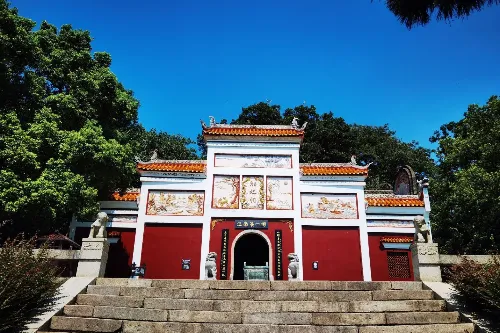
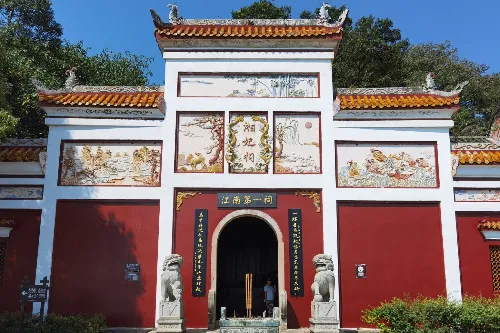
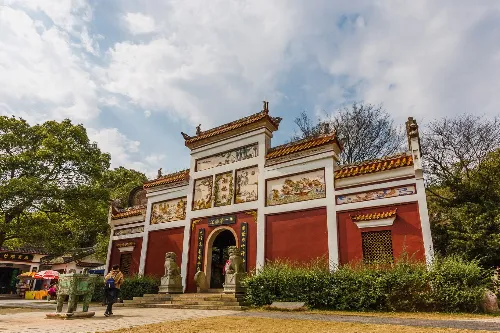
Xiangfei Shrine was built to commemorate Ehuang and Nüying, the two concubines of Emperor Shun. First constructed in the Tang Dynasty, the existing buildings were reconstructed during the Guangxu period of the Qing Dynasty, covering an area of 3,600 square meters. Statues of the two concubines are enshrined in the shrine, and the shrine is surrounded by Xiangfei Bamboos. As the legend goes, the stripes on the bamboos were formed by the tears of the two concubines, which have become a unique cultural symbol of Junshan Island. More than 10 stone tablets from successive dynasties are preserved in the shrine, among which the stone tablet inscribed with "The Tomb of the Two Concubines of Emperor Yu" dates back to the Song Dynasty.
Junshan Silver Needle Tea Garden
Located in the northeast of the island, the Junshan Silver Needle Tea Garden covers an area of about 13.33 hectares. It is the birthplace of Junshan Silver Needle, one of China's top ten famous teas. First founded in the Tang Dynasty, the tea garden has a history of more than 1,400 years. The silver needle tea produced here has plump buds covered with fine white hairs. Due to its needle - like shape and apricot - yellow tea liquor, it is praised as "gold inlaid with jade". Tourists can participate in tea picking and tea making experiences to learn about the production process of yellow tea.

Dongting Temple
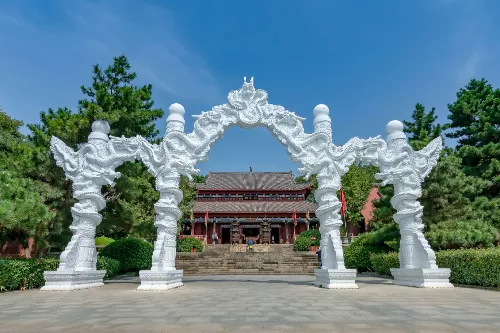
First built in the Northern Song Dynasty, Dongting Temple is a temple dedicated to the God of Dongting Lake. The existing buildings were renovated during the Qianlong period of the Qing Dynasty, covering an area of 2,400 square meters. The temple houses statues of the God of Dongting Lake and the Eight Immortals. In front of the main hall stand a pair of stone lions from the Ming Dynasty, which are 2.8 meters high and have a majestic appearance. Stone carvings such as the "Record of Dongting Temple" are preserved in the temple, recording the history of water control in the Dongting Lake area.
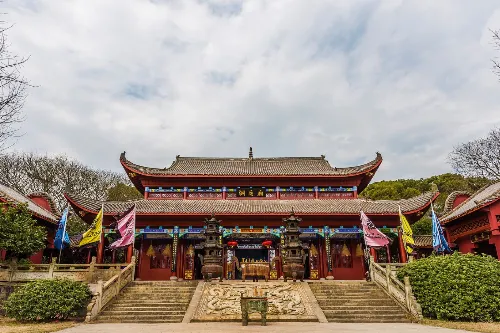
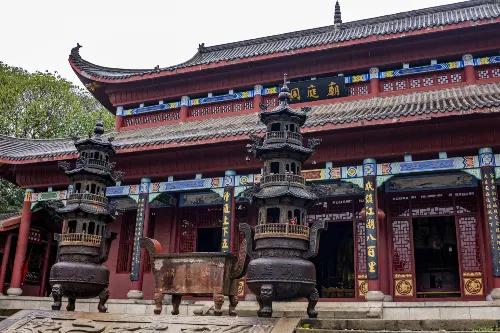
Dragon Saliva Well
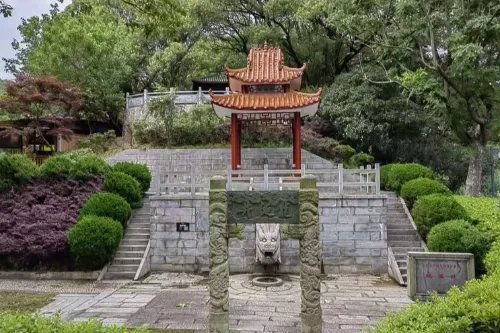
Dragon Saliva Well is a famous ancient well on Junshan Island. It has a diameter of 1.2 meters and a depth of 8 meters. The well water is clear, sweet and never dries up all year round. As the legend goes, this well is connected to the Dragon Palace under the Dongting Lake, hence the name "Dragon Saliva". The area around the well mouth is paved with blue stone slabs, and the words "Dragon Saliva Well" are carved on the well wall, which were written by Mi Fu, a famous calligrapher in the Song Dynasty.
Langyin Pavilion
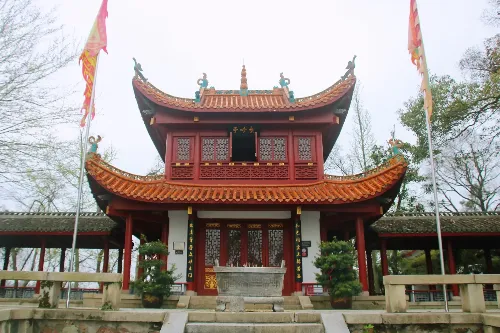
Located at the highest point of Junshan Island, Langyin Pavilion was first built in the Tang Dynasty to commemorate the legend of Lü Dongbin "singing loudly and flying across the Dongting Lake". The existing pavilion was reconstructed in 1981. With a height of 7 meters, it has a hexagonal pointed roof. Climbing the pavilion, visitors can have a bird's - eye view of the whole Dongting Lake and look far into the Yueyang Tower in the distance. A statue of Lü Dongbin is placed inside the pavilion, and the walls around are inlaid with inscriptions by celebrities from successive dynasties.
Recommended Travel Route
Recommended one - day tour route: In the morning, take a cruise ship from Yueyang Port to land on the island. First, visit Xiangfei Shrine to learn about Xiangfei culture, which takes about 1 hour. Then go to Junshan Silver Needle Tea Garden to experience tea picking and tea making, which takes about 1.5 hours. At noon, taste special delicacies such as Dongting whitebait in restaurants on the island, which takes about 1 hour. In the afternoon, visit Dongting Temple and Dragon Saliva Well to feel the charm of Taoism culture, which takes about 1.5 hours. Finally, climb Langyin Pavilion to overlook the Dongting Lake and return to the cruise ship terminal before 16:30 to leave the island. The total walking distance is about 3 kilometers. Tourists with limited physical strength can take a sightseeing bus.
Travel Tips
- Spring (March - May): Various flowers are in full bloom on the island, especially wild azaleas and cherry blossoms. It is advisable to wear light clothes and take a camera to take photos of the flower sea.
- Summer (June - August): The Dongting Lake is abundant in water. Tourists can take a boat to enjoy the beautiful scenery in the lake, but they need to pay attention to sun protection and take sunscreen and sun hats with them.
- Autumn (September - November): The weather is clear and pleasant, making it suitable for climbing Langyin Pavilion to view the lake. At this time, the new Junshan Silver Needle tea is on the market, and tourists can taste the fresh tea.
- Winter (December - February): If it snows, the whole Junshan Island will be covered in white. Tourists can enjoy the "snow - covered Dongting Lake" scenery and must keep warm.
- After landing on the island, it is recommended to take a sightseeing bus to the farthest scenic spot first and then walk back to save energy.
- When purchasing Junshan Silver Needle tea, it is recommended to go to regular tea gardens on the island to avoid buying inferior tea.
Notes
- The operation of cruise ships and speedboats is greatly affected by the weather. They may be suspended in severe weather such as strong winds and heavy rains. Please check the weather forecast before traveling.
- Some scenic spots on the island are cultural relic protection units. Do not touch the stone carvings and ancient buildings during the visit and keep quiet.
- The waters of the Dongting Lake are complex. Do not swim or play in non - designated areas to avoid dangers.
- There are a large number of tourists during the peak tourist seasons (the May Day Holiday and the National Day Holiday). It is recommended to book cruise tickets in advance to avoid long queues.
- There are not many restaurants on the island. You can choose farm - stay restaurants for lunch. It is recommended to try special dishes such as scrambled eggs with whitebait and braised fish of Junshan.
- Tourists with children should pay attention to safety. Some scenic spots have steep steps, so please take good care of the children.
Transportation
- Cruise ship: There are direct cruise ships from Yueyang Port (Yueyang Tower Wharf) to Junshan Island. Boats depart every hour from 08:00 to 17:00 every day. The voyage takes about 20 minutes, and the round - trip ticket price is 70 yuan per person.
- Speedboat: Speedboat services are available at Yueyang Tower Wharf. The one - way trip takes 10 minutes, and the ticket price is 50 yuan per person, which is suitable for tourists in a hurry.
- Urban transportation: Take No.15, No.17 or No.50 bus in Yueyang City to Junshan Island Station. After getting off the bus, walk for 10 minutes to reach the cruise ship terminal.
Opening Hours
The scenic area is open all year round. The opening hours are from 07:30 to 18:00 in summer (April 1 - October 31) and from 08:00 to 17:30 in winter (November 1 - March 31 of the next year). The last cruise ship departs at 17:00. Please arrange the time to land on the island properly.
Ticket Price
The ticket price is 70 yuan per person.
You can search for the official WeChat official account "岳阳文旅公司" to get the latest updates or buy tickets online.
Online Booking
Click here to jump to the Trip.com ticketing platform for ticket purchase.