
Jiuli Lake Scenic Area is located in Zhongshan Town, Xianyou County, Putian City, Fujian Province. It is a national 4A-level tourist attraction, national water conservancy scenic spot and provincial scenic area of Fujian, as well as a renowned Taoist sacred land in Fujian. Boasting four unique views of lakes, caves, waterfalls and rocks, it is famous for its spectacular waterfalls, hailed as the extraordinary waterfall scenery under heaven. Together with Wuyi Mountain and Yuhua Cave, it is known as one of the Three Great Scenic Spots of Fujian. The planned total area reaches about 35 square kilometers, and the core sightseeing area covers around 5 square kilometers. The altitude within the scenic area ranges from 400 to 600 meters, with forest coverage rate exceeding 85 percent. It features superior natural ecology and integrates natural scenery, Taoist culture and leisure wellness tourism.
History and Culture
Jiuli Lake enjoys profound historical heritage and ranks as one of the important birthplaces of Chinese Taoist culture. Legend has it that nine brothers of the He family refined elixirs and saved common people here in the Han Dynasty, and finally ascended to immortality riding carps, hence the name Jiuli Lake. The Taoist culture here dates back more than two thousand years. Regarded as Jiuli Grotto, the 28th cave among the Thirty-six Taoist Grotto-Heavens, it is also listed in the Seventy-two Blessed Lands, holding an important status in the development of Taoism.
The scenic spot became a popular leisure resort for literati and dignitaries in the Tang and Song dynasties. Distinguished figures including Cai Xiang and Zhu Xi of the Song Dynasty, Xu Xiake and Chen Jingbang of the Ming Dynasty paid visits here, leaving abundant poems, travel notes and cliff carvings. Xu Xiake, a famous traveler in the Ming Dynasty, traveled to Jiuli Lake twice and compiled Travel Notes on Jiuli Lake, which serves as vital historical material for studying the ancient landscape of the area.
Dream-praying culture stands as the distinctive cultural symbol of Jiuli Lake. Originating in the Tang and Song dynasties and thriving in the Ming and Qing dynasties, it is the birthplace of Chinese dream-praying culture and praised as a living fossil of Chinese dream culture. People of all ages and social classes came here to pray for dreams, forming a complete set of traditional customs. In 2011, the Jiuli Lake Dream-praying Custom was included in the Representative List of Intangible Cultural Heritage of Fujian Province.
Major Scenic Spots
Jiuli Lake
Situated at the center of the scenic area, Jiuli Lake is the core lake landscape covering an area of approximately 8000 square meters. The clear water is surrounded by green mountains. It is the sacred site where the nine He brothers refined elixirs and attained immortality, and the origin of the scenic area's name. Remains such as elixir refining stove and immortal spring scatter along the lakeside, making it an ideal place to appreciate natural views and experience Taoist culture.
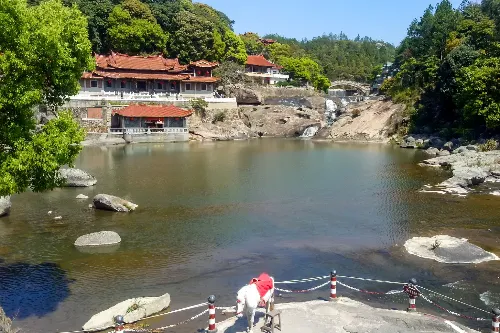
Jiuli Waterfalls
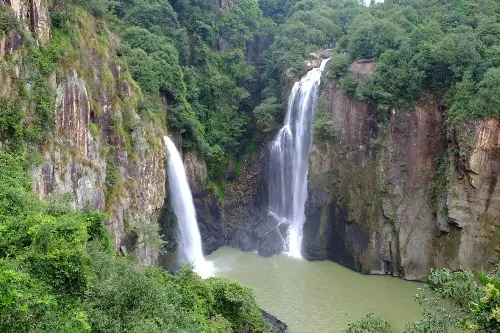
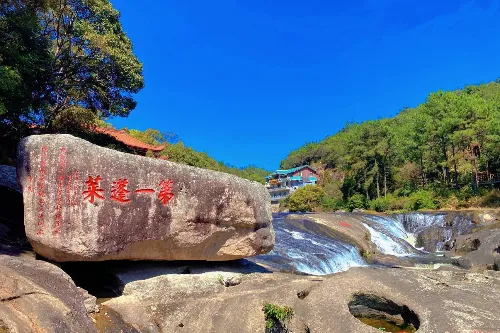
Serving as the landmark landscape, Jiuli Waterfalls consist of nine cascades stretching over ten li with a total drop of more than 400 meters. Major waterfalls include Leihong Waterfall, Main Waterfall, Beaded Curtain Waterfall and Jade Pillar Waterfall. The main waterfall has a height of about 100 meters and width of 60 meters, possessing the largest vertical drop among all cascades. The flowing water of Beaded Curtain Waterfall looks like hanging silk curtains, while twin streams of Jade Pillar Waterfall resemble jade pillars. The magnificent water scenery tops the natural attractions here.
Cliff Carvings
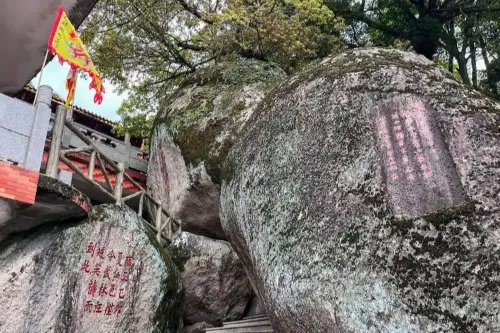
Cliff carvings scatter around the lakeshore, waterfalls and hiking paths. More than 100 existing works date back to Tang, Song, Yuan, Ming and Qing dynasties. The calligraphy styles cover seal, clerical, regular, running and cursive scripts, mainly themed on scenery appreciation and travel records. Inscriptions such as Jiuli Lake, Watching Waterfall and Clear Water and Green Mountains remain intact. It is one of the best-preserved ancient cliff carving groups in Fujian, boasting high historical and artistic value.
Nine Immortals Temple
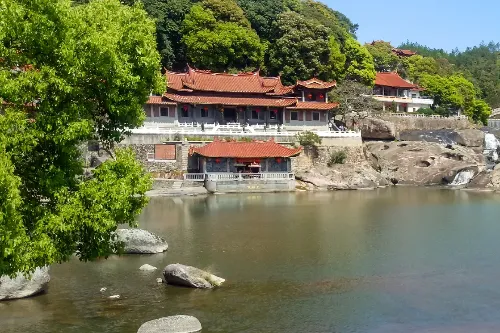
First built in the Han Dynasty, Nine Immortals Temple is a Taoist shrine dedicated to the nine He immortals. The existing buildings were reconstructed in Ming and Qing dynasties, covering a construction area of around 1200 square meters. Nestled against mountains and facing water, the ancient and elegant hall houses statues of the nine immortals. Ancient steles and incense burners are preserved inside, acting as the core carrier of local Taoist and dream-praying culture.
Penglai Stone Scenery
Lying on the west side of Jiuli Lake, Penglai Stone Scenery is famous for grotesque natural stones. Dozens of unique rocks including Sword Testing Stone, Dragon Rubbing Stone and Stream Resting Stone scatter here. The peculiar stones set off beautifully with lake water and waterfalls, and each stone carries legends about the nine immortals, integrating natural landscape and fairy tales perfectly.
Tour Route
Scenic Entrance→Jiuli Lake→Nine Immortals Temple→Cliff Carving Group→Leihong Waterfall→Main Waterfall→Beaded Curtain Waterfall→Jade Pillar Waterfall→Penglai Stone Scenery→Scenic Exit
Travel Tips
- Spend 3 to 4 hours sightseeing to fully visit core attractions without hurry
- The best visiting time is March to May and September to November with pleasant weather and abundant waterfall water
- Stick to official paths while visiting waterfall areas to enjoy panoramic views of nine cascades
- Wear comfortable sneakers as there are numerous mountain trails
- Combine with Maixie Rock Scenic Area to arrange a one-day tour
- Take breaks and capture photos at pavilions and viewing platforms inside the scenic area
Precautions
- Ground near waterfalls is slippery, stay away from cliff edges to avoid falls
- No open fire and littering to protect ecological environment
- Climbing cliff carvings and strange rocks is forbidden to protect cultural relics
- Bring rain gear on rainy days and walk slowly on slippery mountain roads
- Keep quiet in religious buildings and do not touch cultural relics casually
- Children and elderly visitors must be accompanied and shall not wander alone in remote areas
- Refuse unofficial fortune-telling and blessing services to prevent property loss
Transportation
- Self-driving: Depart from Putian urban area, drive along Yongpu Expressway to Zhongshan Town. The whole journey is 50 kilometers and takes 1 hour 20 minutes. It is 30 kilometers and 40 minutes' drive from Xianyou County Seat. Large parking lot is available onsite
- Public Transport: Take special tourist buses at Xianyou Bus Station. Departure time: 7:30, 9:00, 13:00, 15:00. The ride lasts about 1 hour
- Chartered Car: Book chartered cars in Putian urban area for group travel
Opening Hours
Summer period from May 1st to October 7th: 8:00-18:00, entry stops at 17:30. Winter period from October 8th to April 30th of next year: 8:00-17:30, entry stops at 17:00. Religious venues follow the same opening schedule with no temporary closure.
Ticket Fee
The admission ticket costs 50 yuan per person. Search official WeChat service account "九鲤湖旅游" for latest scenic information.
Online Booking
Click here to jump to the Trip.com ticketing platform for ticket purchase.