
Langya Mountain Scenic Area is located in Langya District, Chuzhou City, Anhui Province, about 5 kilometers southwest of Chuzhou City, and serves as an important ecological barrier in eastern Anhui. It is a national key scenic area and a national 5A-level tourist attraction, featuring "the beauty of mountains and rivers, the elegance of forests and springs, and the grace of historical sites", integrating natural landscapes, humanistic history, and religious culture. The total area of the scenic area is about 115 square kilometers, belonging to the northern subtropical humid monsoon climate with distinct four seasons. The forest coverage rate is as high as over 90%, and the negative oxygen ion content is extremely high, earning it the reputation of a "natural oxygen bar". There are more than 10 ancient building complexes and nearly 300 cliff carvings in the scenic area, including landmark buildings such as Langya Temple, Zuiweng Pavilion, and Fengle Pavilion, making it an important window to display the culture of eastern Anhui and Ouyang Xiu culture.
Historical and Cultural Background
Langya Mountain has a long history and got its name because Sima Zhou, the Prince of Langya in the Western Jin Dynasty, once stationed his army here. Since the Tang Dynasty, Langya Mountain has gradually become a resort for literati and poets. Famous scholars of all dynasties such as Wei Yingwu, Ouyang Xiu, and Su Shi have left their footprints and masterpieces here. In the sixth year of Qingli in the Northern Song Dynasty (1046), Ouyang Xiu was demoted to be the Prefect of Chuzhou. He often visited here and wrote the eternal masterpiece "Ode to the Zuiweng Pavilion", which made Langya Mountain famous all over the world.
Langya Mountain is also a Buddhist sacred place. Langya Temple was first built in the sixth year of Dali in the Tang Dynasty (771), co-constructed by Li Youqing, the governor of Chuzhou, and the mountain monk Fachen. It was initially named "Baoying Temple" and renamed several times later. In the Northern Song Dynasty, it was renamed "Langya Temple" and became one of the famous Buddhist temples in the Jianghuai region. The temple preserves precious cultural relics such as the cliff inscriptions by Li Youqing of the Tang Dynasty and the stone carvings of "Ode to the Zuiweng Pavilion" written by Su Shi of the Song Dynasty, which have extremely high historical and artistic value.
In addition, Langya Mountain has an indissoluble bond with Bao Zheng, a famous minister of the Song Dynasty. When Bao Zheng served as the Prefect of Chuzhou, he built the "Xingxin Pavilion" in the mountain and wrote "Ode to the Xingxin Pavilion". During the Ming and Qing dynasties, the development and construction of Langya Mountain reached its peak, forming the core landscape pattern of "one temple, one pavilion and one spring", and became a cultural landmark in eastern Anhui.
Main Attractions
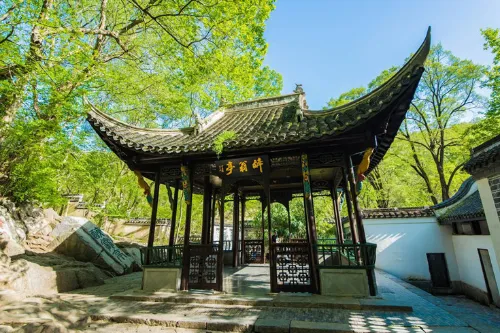
Zuiweng Pavilion
The core attraction of the scenic area. Zuiweng Pavilion is located on the hillside of Langya Mountain, first built in the seventh year of Qingli in the Northern Song Dynasty (1047), named by Ouyang Xiu himself and he wrote "Ode to the Zuiweng Pavilion" for it. The existing pavilion was rebuilt in the seventh year of Guangxu in the Qing Dynasty (1881), covering an area of about 500 square meters, and is known as the first of the four famous pavilions in China. Inside the pavilion, there are stone carvings of "Ode to the Zuiweng Pavilion" in Su Shi's handwriting. Around the pavilion, there are buildings such as "Erxian Hall", "Baosong Study" and "Yizai Pavilion", forming a group of classical garden buildings with exquisite layout and simple style.
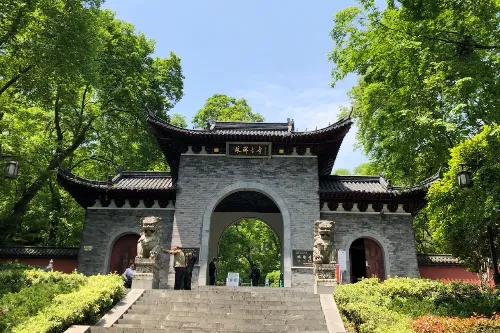
Langya Temple
The core attraction of the scenic area. Langya Temple is the main Buddhist temple of Langya Mountain, first built in the Tang Dynasty, and the existing buildings were rebuilt during the Tongzhi period of the Qing Dynasty. The temple covers an area of about 30,000 square meters, with main buildings including the Mountain Gate, Heavenly King Hall, Mahavira Hall, and Scripture Collection Building, which are built along the mountain in a scattered and orderly manner. The "Langya Ancient Temple" memorial archway in the temple is a relic of the Ming Dynasty. The Mahavira Hall preserves bronze Buddha statues of the Ming Dynasty and woodcarved Buddha statues of the Qing Dynasty, which have high cultural relic value. Behind the temple is the "South Heavenly Gate", from which you can climb high and overlook the urban area of Chuzhou.
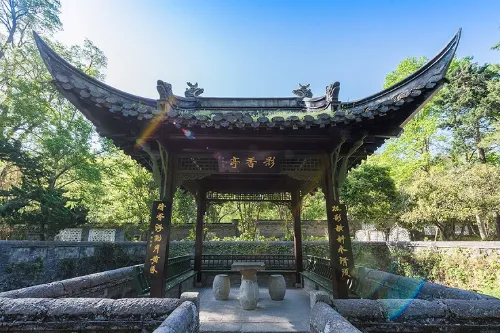
Yingxiang Pavilion
Built in the first year of Hongxi in the Ming Dynasty (1425 AD), it was originally named "Jianmei Pavilion". In the 24th year of Kangxi in the Qing Dynasty (1685 AD), Wang Cikui, the Prefect of Chuzhou, renamed the pavilion "Yingxiang". It means that sitting in the pavilion, you can both admire the ancient plum tree north of the pavilion and smell the fragrance of plum blossoms. On the walls of the courtyards on both sides opposite the pavilion are engraved "Cold Current and Sparse Shadow" inscribed by Yin Mengbi, a native of Wuxing in the late Ming Dynasty, and "Green Accumulation and Clear Fragrance" written by Wang Cikui, the Prefect of Chuzhou, in the 24th year of Kangxi in the Qing Dynasty (1685 AD).
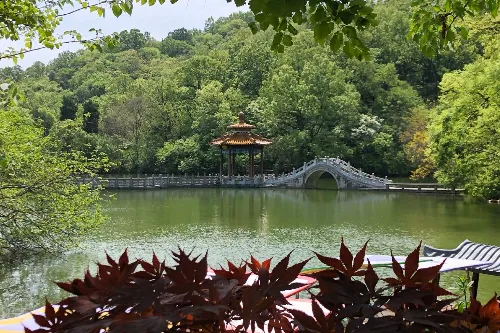
Shenxiu Lake
The core attraction of the scenic area. Shenxiu Lake is located in the middle of Langya Mountain, named after the sentence "Looking at the lush and deep and beautiful place" in "Ode to the Zuiweng Pavilion". The lake covers an area of about 15,000 square meters, with clear water and lush forests around, forming interesting reflections. There is a small island in the lake with a "Huxin Pavilion" built on it, which can be reached via a zigzag bridge. There are landscapes such as "Xixin Pavilion" and "Lansheng Pavilion" by the lake, which are good places for tourists to rest and enjoy the scenery.
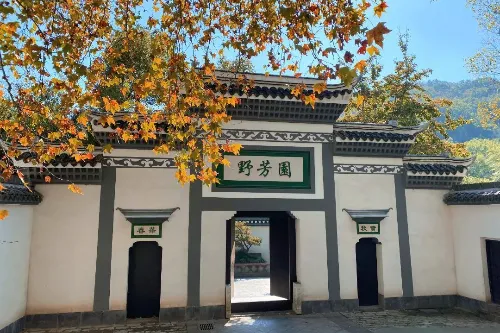
Yefang Garden
The core attraction of the scenic area. Built in August 1985, it takes its name from the sentence "Wild flowers bloom and emit delicate fragrance" in Ouyang Xiu's "Ode to the Zuiweng Pavilion" of the Northern Song Dynasty. It features Suzhou-style garden architecture, with pavilions, halls, platforms, verandas, corridors, arch bridges, rockeries, winding paths and lawns backed by green mountains, presenting a pleasant scenery. It includes Shangxin Study, Chenxi Hall, and Stele Corridor inside.
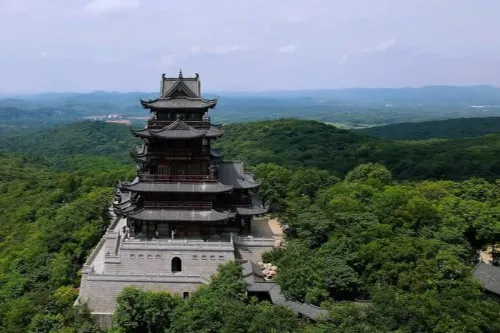
South Heavenly Gate
The core attraction of the scenic area. It is the southeastern highest point of Langya Mountain, with ancient building complexes such as "Langya Pavilion" and "Huifeng Pavilion" on it. Langya Pavilion is 24 meters high, with a total of seven floors, including two underground floors and five above-ground floors.
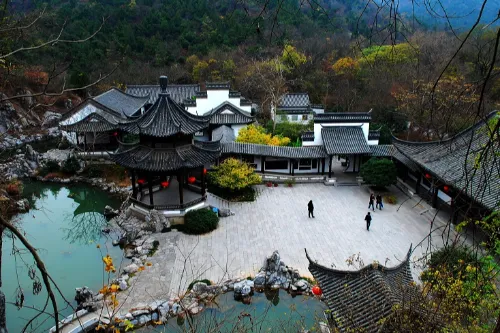
Tongle Garden
The core attraction of the scenic area. The garden's name is derived from the sentence "When drunk, I can share joy with others" in Ouyang Xiu's "Ode to the Zuiweng Pavilion", divided into east and west courtyards. "Ouyang Xiu's Mansion" is the main building in the Ouyang Xiu Memorial Hall. The plaque "A Generation of Literary Master" in the hall is inscribed by Ouyang Zhongshi, a contemporary famous calligraphy educator and a descendant of Ouyang Xiu; in the middle stands a statue of Ouyang Xiu nearly 3 meters high, and the four walls are hung with murals comprehensively introducing Ouyang Xiu's life.
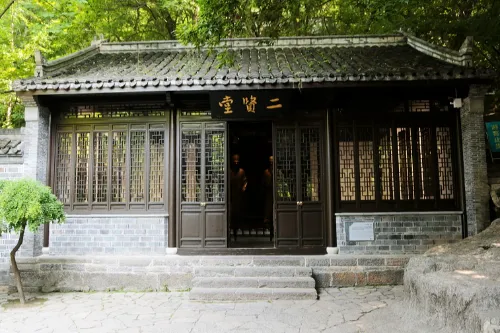
Erxian Hall
Built in the second year of Shaosheng in the Northern Song Dynasty (1095 AD), it was constructed by the people of Chuzhou to commemorate two former prefects of Chuzhou, Wang Yucheng and Ouyang Xiu. Inside the hall, there are statues of the two sages, and photos of Ouyang Xiu's handwriting and his works are kept in glass cabinets. On the gable walls on both sides hang wooden carved scrolls of "Ode to the Zuiweng Pavilion" and "On Factions".
Baosong New Study
It is a place for collecting treasures of the Song Dynasty, built by Feng Ruoyu, the Shaoqing of the Taipu Temple in Nanjing, in the second year of Tianqi in the Ming Dynasty (1622 AD). Two huge stone carvings are inlaid on the inner walls, on which the full text of Ouyang Xiu's "Ode to the Zuiweng Pavilion" is engraved in regular script written by Su Shi. The stone tablet is 2.36 meters high and 90 centimeters wide. Because Ouyang Xiu's prose and Su Dongpo's calligraphy are on the same stone tablet, it is indeed a treasure of inscriptions in historical relics, so it is praised by later generations as the "Double Peerless Stele of Ouyang's Prose and Su's Calligraphy". Next to the "Baosong Study" is a three-room brick and wood structure tile house built by the people of Chuzhou to commemorate and thank Feng Ruoyu and his son Feng Yuanbiao for protecting "Ouyang's Prose and Su's Calligraphy", named "Feng Gong Shrine".
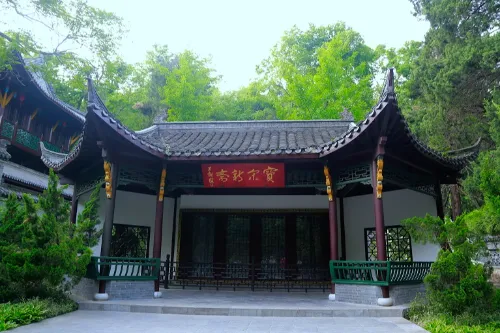
Tour Routes
Recommended one-day tour route: Scenic Area Gate → Langya Temple → Shenxiu Lake → Zuiweng Pavilion → Erxian Hall → Baosong New Study → South Heavenly Gate → Langya Pavilion. This route covers the main attractions of the scenic area, allowing you to enjoy natural scenery and experience historical culture, taking about 5-6 hours in total. Tourists can also adjust the route according to their own interests and time, such as taking a cable car up the mountain to save energy, or taking a boat tour on Shenxiu Lake.
Travel Suggestions
- It is recommended to enter the scenic area as early as possible after it opens at 7:30 in the morning to avoid tourist peaks and enjoy the quiet mountain scenery.
- Wear comfortable sports shoes, as there are many steps and mountain roads in the scenic area, which are convenient for sightseeing.
- Pay attention to sun protection and heatstroke prevention in summer, and you can bring a sun hat, sunscreen and enough drinking water; keep warm in winter, especially when climbing mountains.
- It is recommended to learn about relevant literary works such as Ouyang Xiu's "Ode to the Zuiweng Pavilion" in advance to better experience the cultural connotation of the scenic area.
- Reserve enough time to visit Langya Temple and experience the charm of Buddhist culture and ancient architecture.
- You can take a boat tour on Shenxiu Lake to enjoy the lake and mountain scenery and relax.
Notes
- Abide by the scenic area regulations and do not climb dangerous areas such as ancient trees and rocks at will.
- Protect the environment of the scenic area, do not spit or litter everywhere, and cherish cultural relics, historical sites, flowers and trees.
- Pay attention to safety during mountain climbing, especially when the road is slippery on rainy days, it is recommended to wear non-slip shoes.
- Some sections of the scenic area are relatively steep, so it is recommended that the elderly and children visit accompanied by their families.
- If you need to take photos of cultural relics or exhibits, please check whether photography is allowed in the scenic area and abide by relevant regulations.
- In case of severe weather or special circumstances, the scenic area may temporarily close some attractions or adjust opening hours, please pay attention to the scenic area notices.
Transportation
- Bus: Take Chuzhou Bus No.4, No.11, No.15 or K1 to "Langya Mountain Scenic Area" Station and get off.
- Taxi: It takes about 15 minutes to take a taxi from the center of Chuzhou City to Langya Mountain Scenic Area, with a fare of about 15-20 yuan.
- Self-driving: The scenic area has a large parking lot. Self-driving cars can go from the center of Chuzhou City along Langya Ancient Road, with a total distance of about 5 kilometers. The parking lot fee is 10 yuan per time for small cars and 20 yuan per time for large cars.
- Tourist Special Line: There are multiple tourist special lines in Chuzhou City directly to Langya Mountain Scenic Area. For details, you can consult local travel agencies or check the scenic area official website.
Opening Hours
Open all year round, the opening hours are 7:30-18:00 every day (admission stops at 17:30). The scenic area may adjust the opening hours during legal holidays and tourist peak seasons (such as Spring Festival, May Day, National Day, etc.), subject to the official notice of the scenic area. Tourists need to pay attention to the opening hours when visiting and arrange their trips reasonably.
Tickets
The ticket price is 60 yuan per person.
You can search for the official WeChat public account "琅琊山景区" to get the latest news or buy tickets online.
Online Booking
Click here to jump to the Trip.com ticketing platform for ticket purchase.